
Last updated September 23, 2026
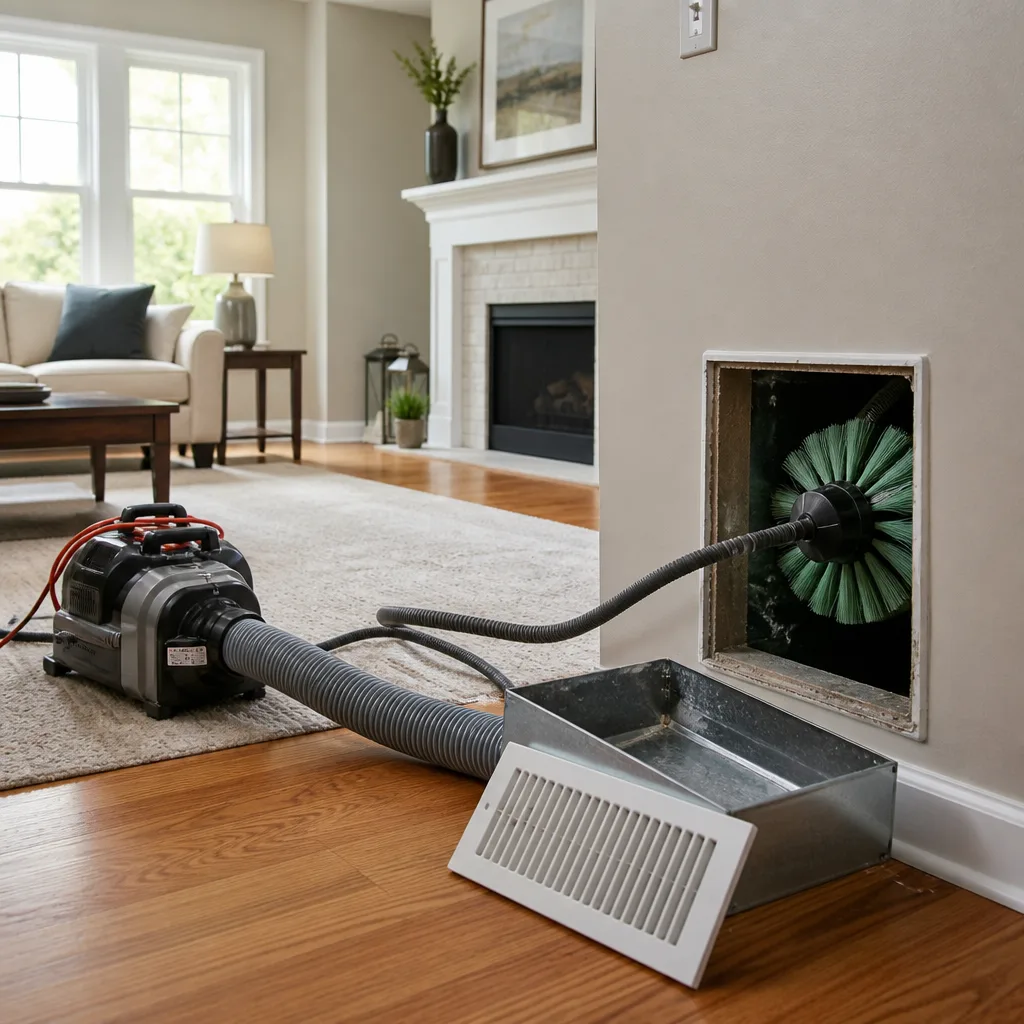
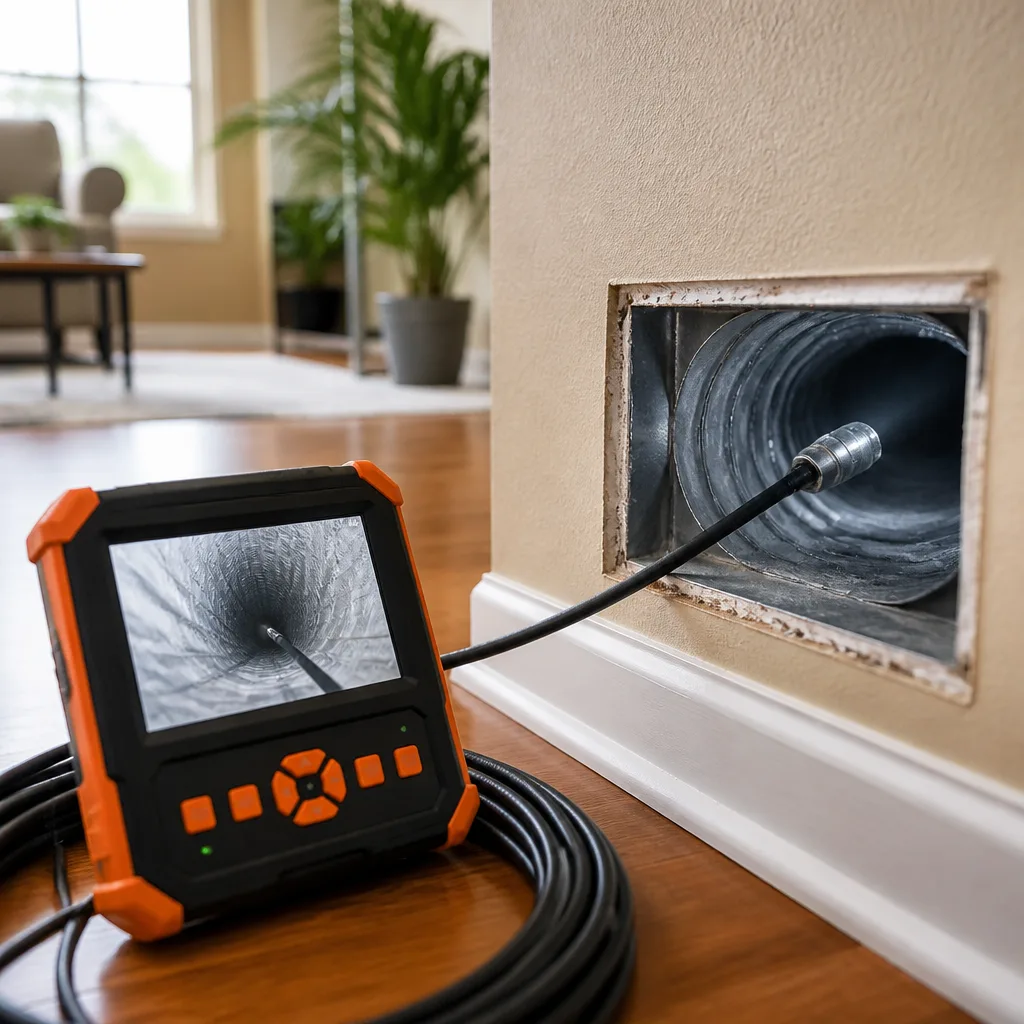
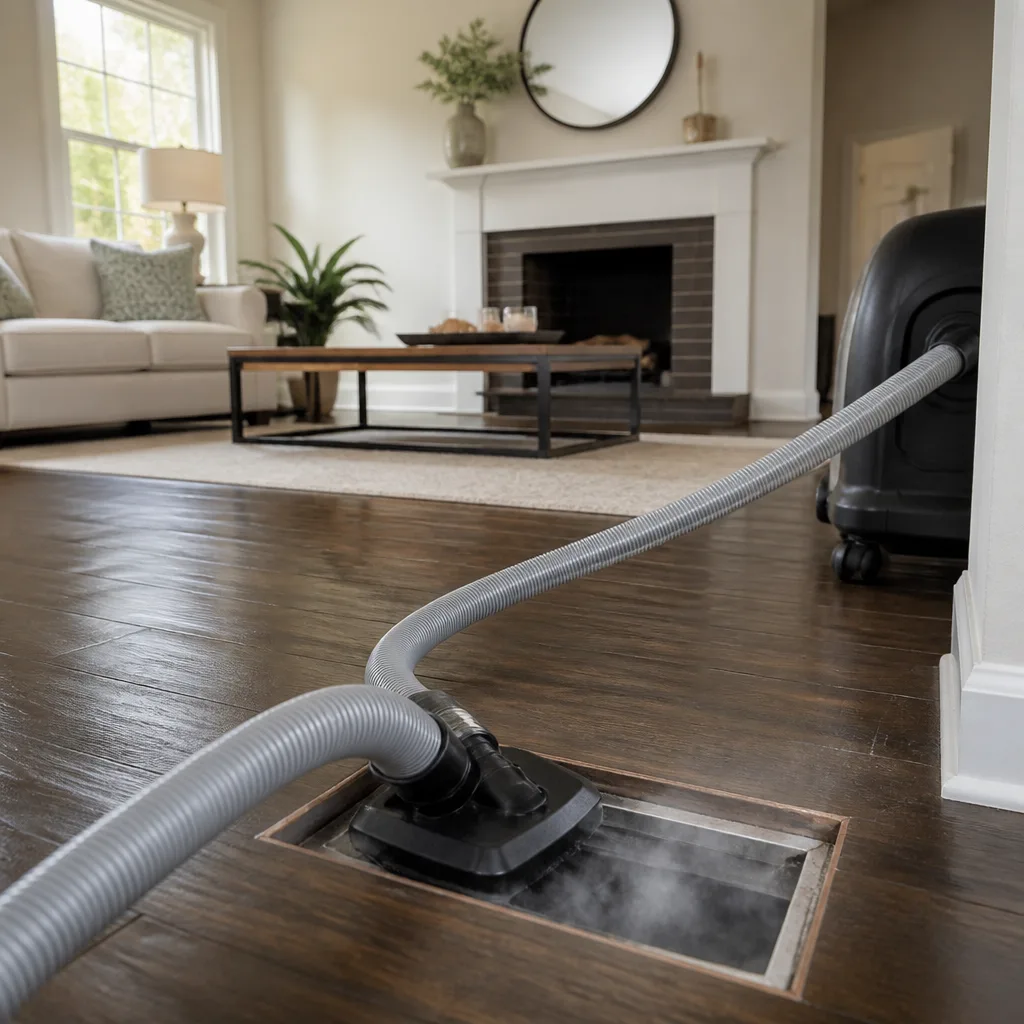
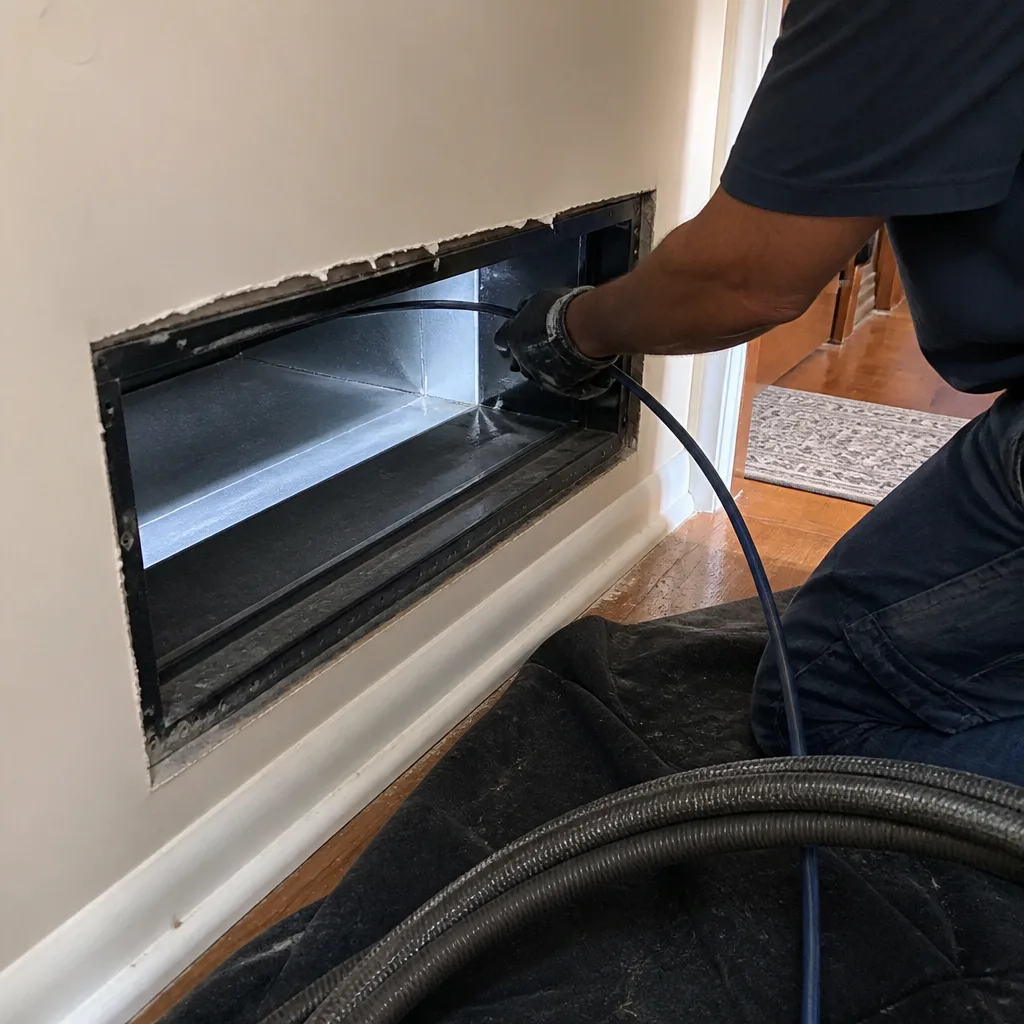
Whole-system duct and dryer vent check with before-and-after photos - you see exactly what came out of your vents
That "$99 whole-house special" is a bait ad - the real number appears once they are in your hallway, or the "clean" is a shop-vac at the register. We photograph the inside of your ducts before and after instead.
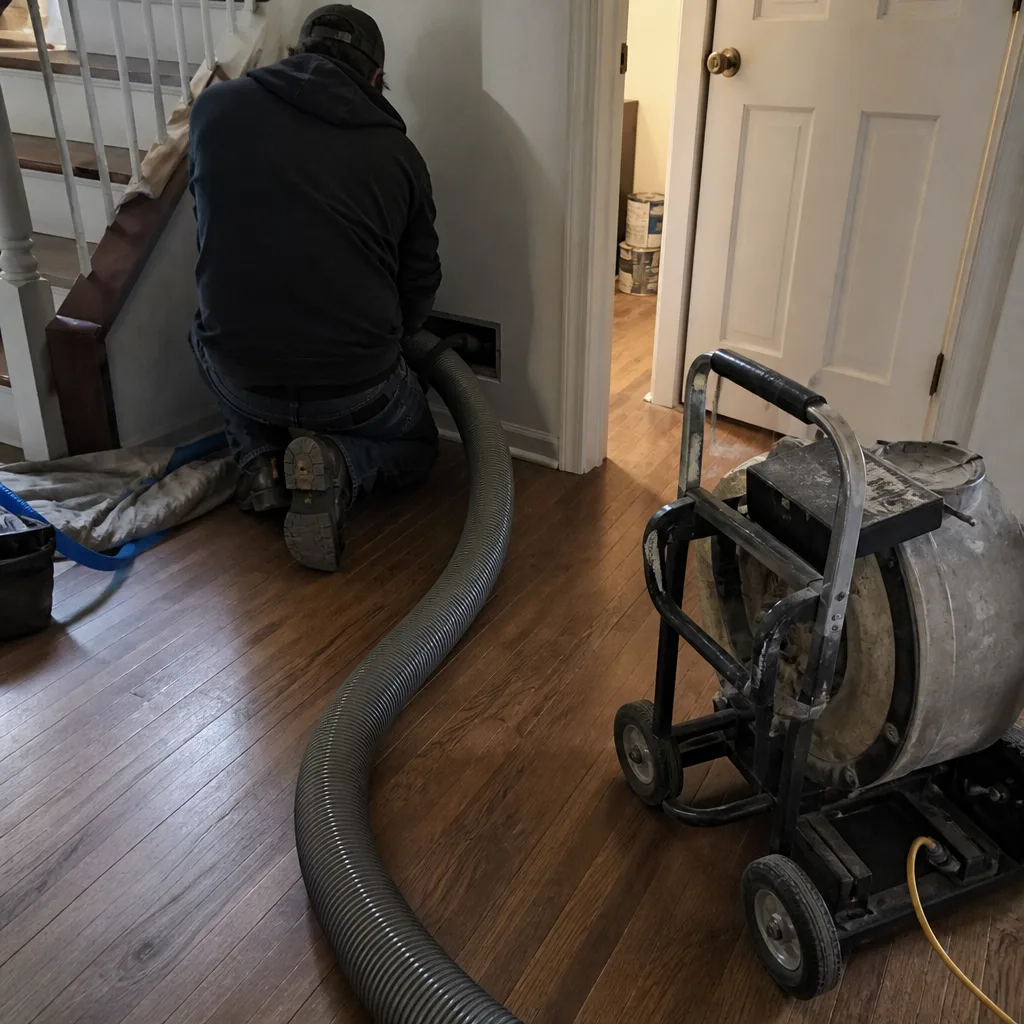 Before
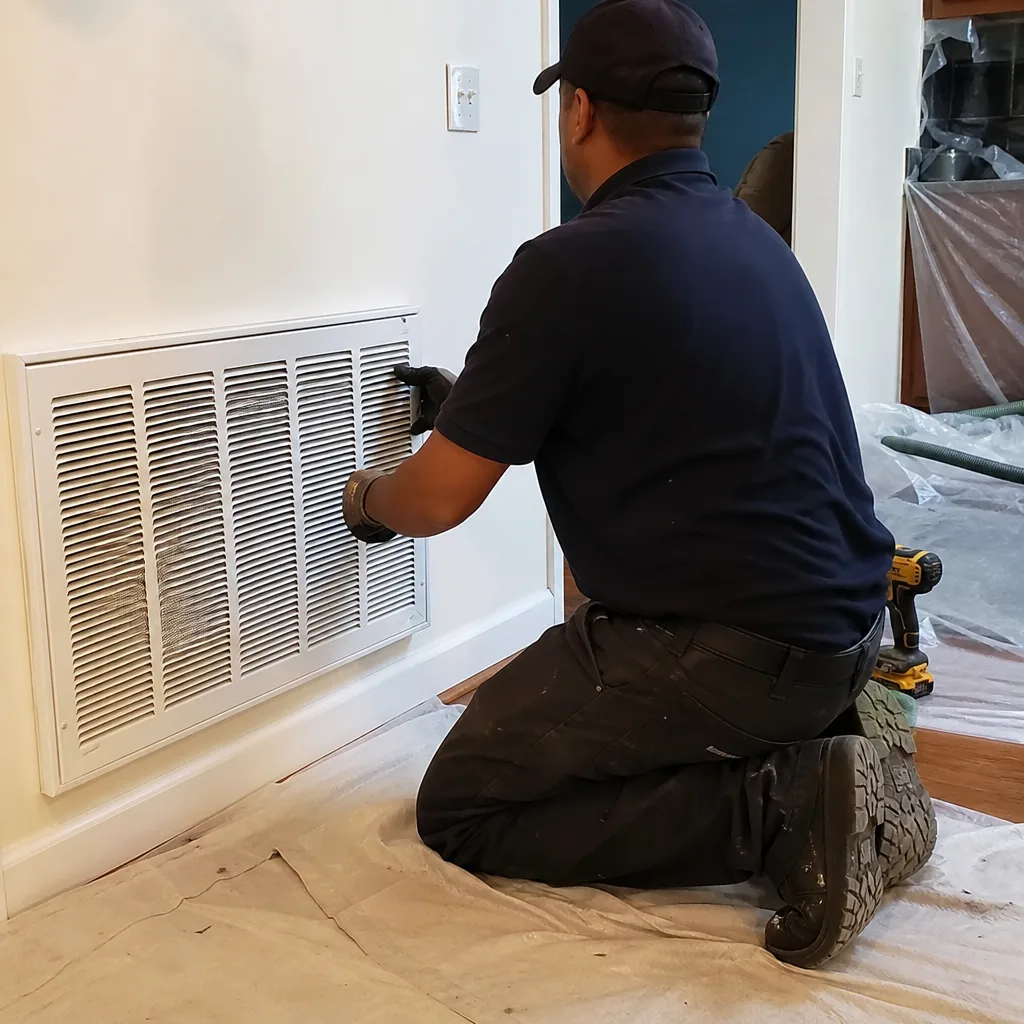 After
After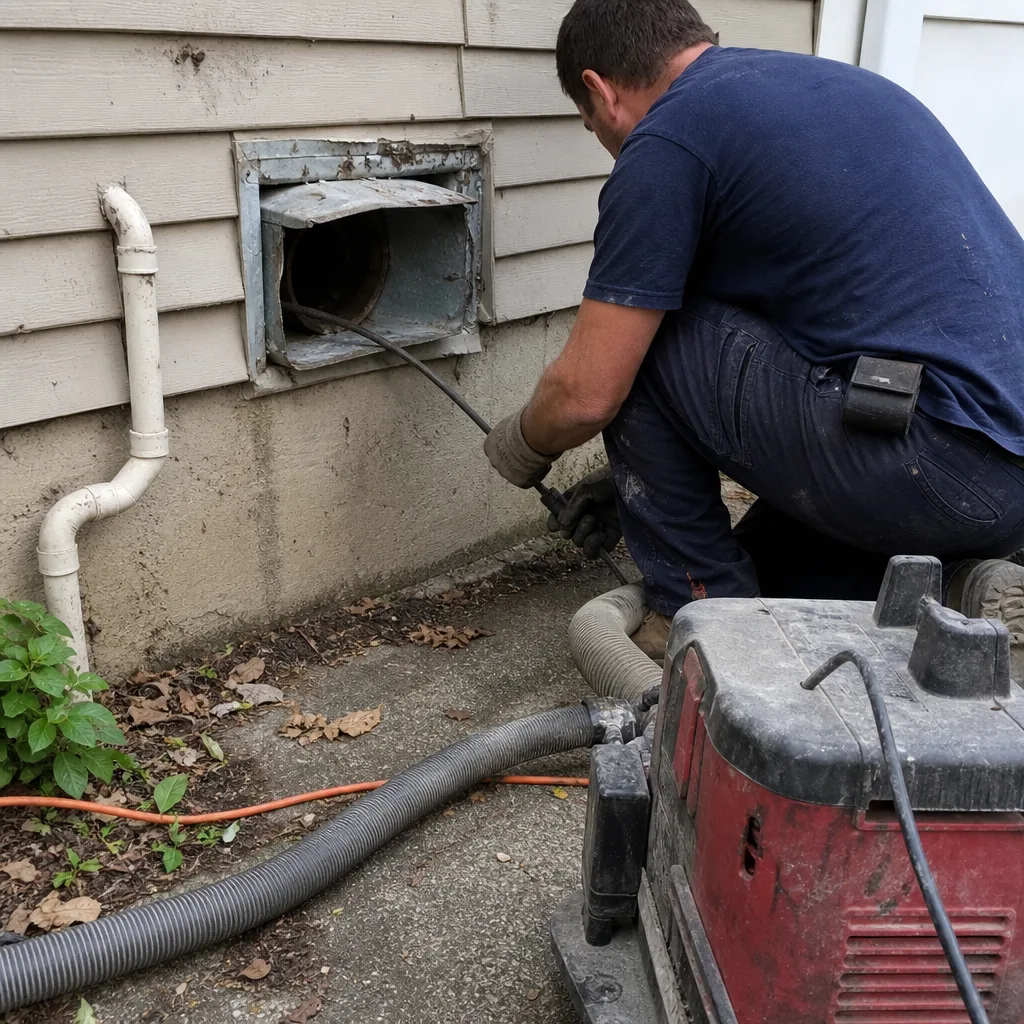 Before
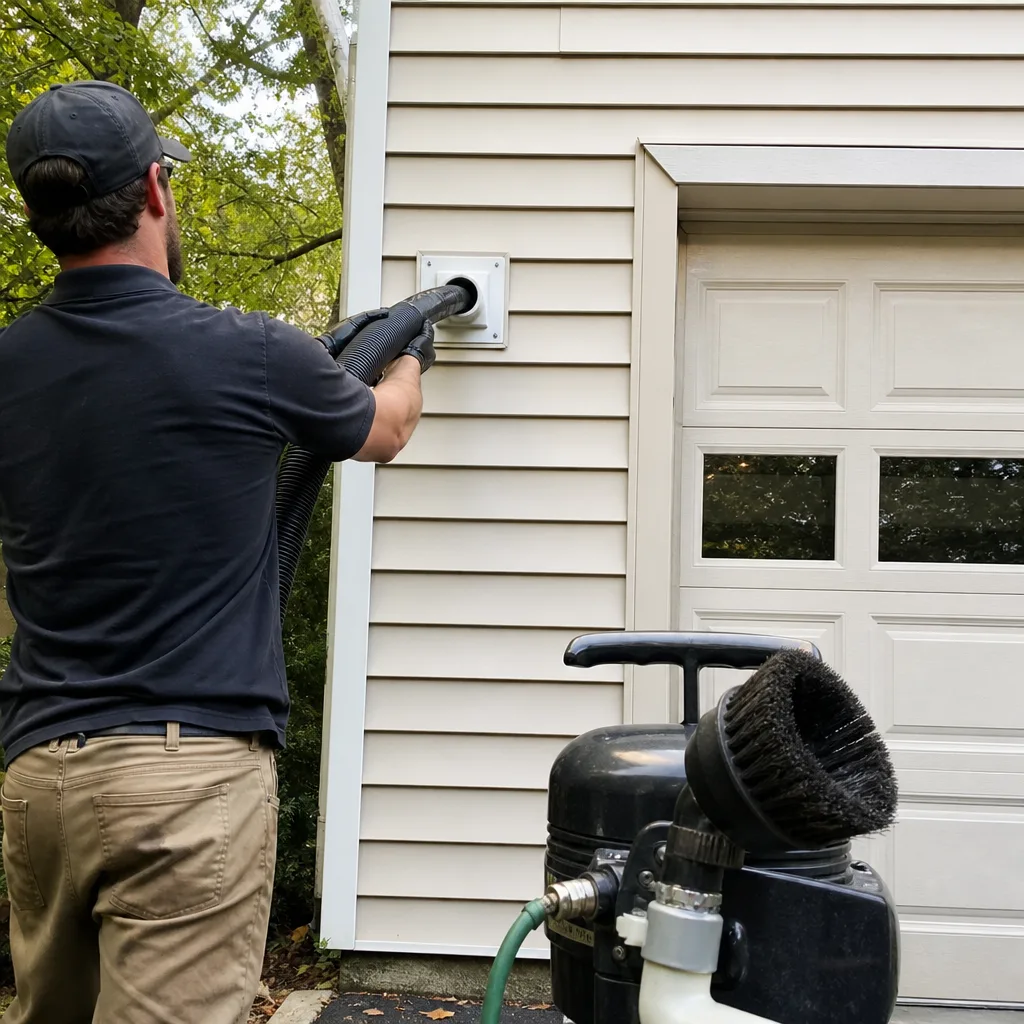 After
After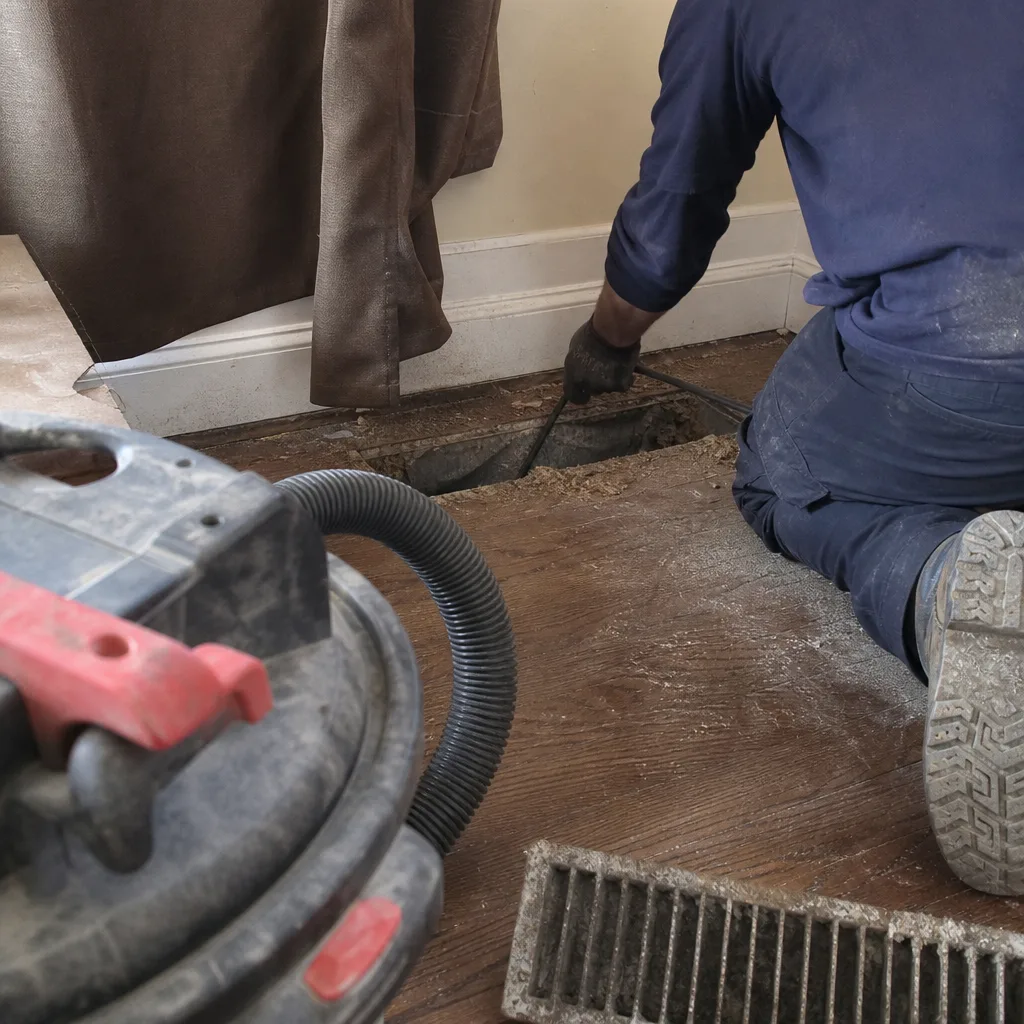 Before
 After
AfterAir Duct Cleaning Permits, Codes & Inspections in VA: What You Need to Know
Here’s the distinction that costs Leesburg homeowners thousands at closing: vacuuming dust from your ducts is maintenance. Replacing a collapsed flex duct run, sealing a plenum with mastic, or rerouting a return - these are mechanical alterations under Virginia’s Uniform Statewide Building Code. We’ve arrived at homes in Lansdowne and Belmont Country Club where a previous cleaning company performed exactly this kind of work without permits, leaving the seller to discover the gap during buyer inspection. Our Complete Guide to Air Duct Cleaning in Leesburg maps where Virginia law draws the line, what Loudoun County requires, and how to protect your home’s mechanical permit history before anyone touches your ductwork.
Quick Answer
Air duct cleaning alone - the removal of debris from existing duct runs using negative-pressure extraction - does not require a permit in Virginia. However, any repair, replacement, or modification of ductwork, including plenum sealing, duct board patching, or flex duct re-runs, triggers USBC Section 603 and requires a Loudoun County mechanical permit plus a Virginia Class A, B, or C contractor license. Unpermitted duct alterations can void HVAC-related insurance claims and create title defects during home sale.
Table of Contents
- Cleaning vs. Repair: Where Virginia Draws the Line
- USBC Section 603 and Loudoun County Mechanical Code
- Common Post-Cleaning Repairs That Require Permits
- Insurance Risks of Unpermitted Ductwork
- How to Request Your Home’s HVAC Permit History
- Duct Cleaners vs. HVAC Contractors Under Virginia Law
- What CleanRun Documents on Every Job
- Common Mistakes to Avoid
- When to Call a Professional
- Frequently Asked Questions
 Before
 After
AfterCleaning vs. Repair: Where Virginia Draws the Line
Virginia’s Uniform Statewide Building Code (USBC) operates on a binary that surprises most homeowners. Maintenance - defined as “the upkeep of existing facilities, equipment, and systems” - is exempt from permit requirements under Section 108.2. Mechanical alterations, defined as “any change, addition, or modification in construction or occupancy,” require a permit under Section 108.1.
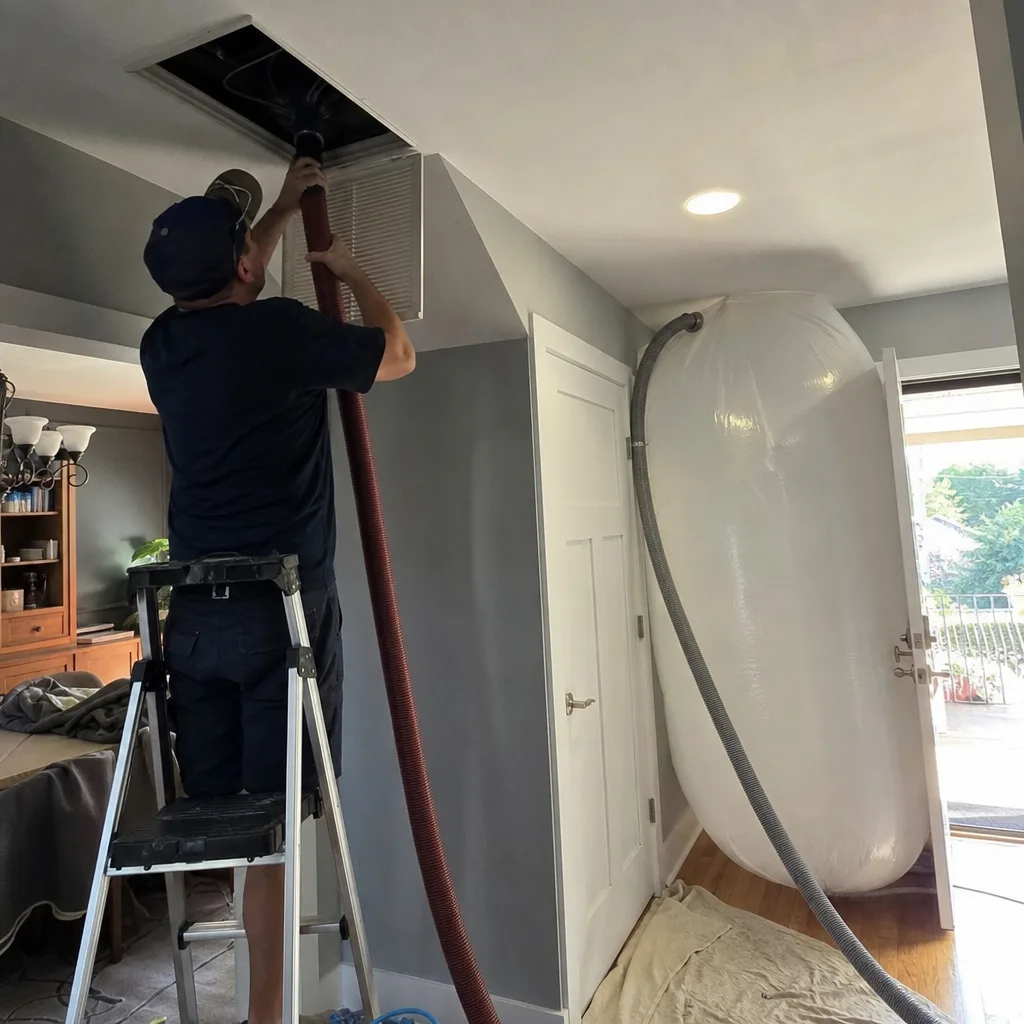
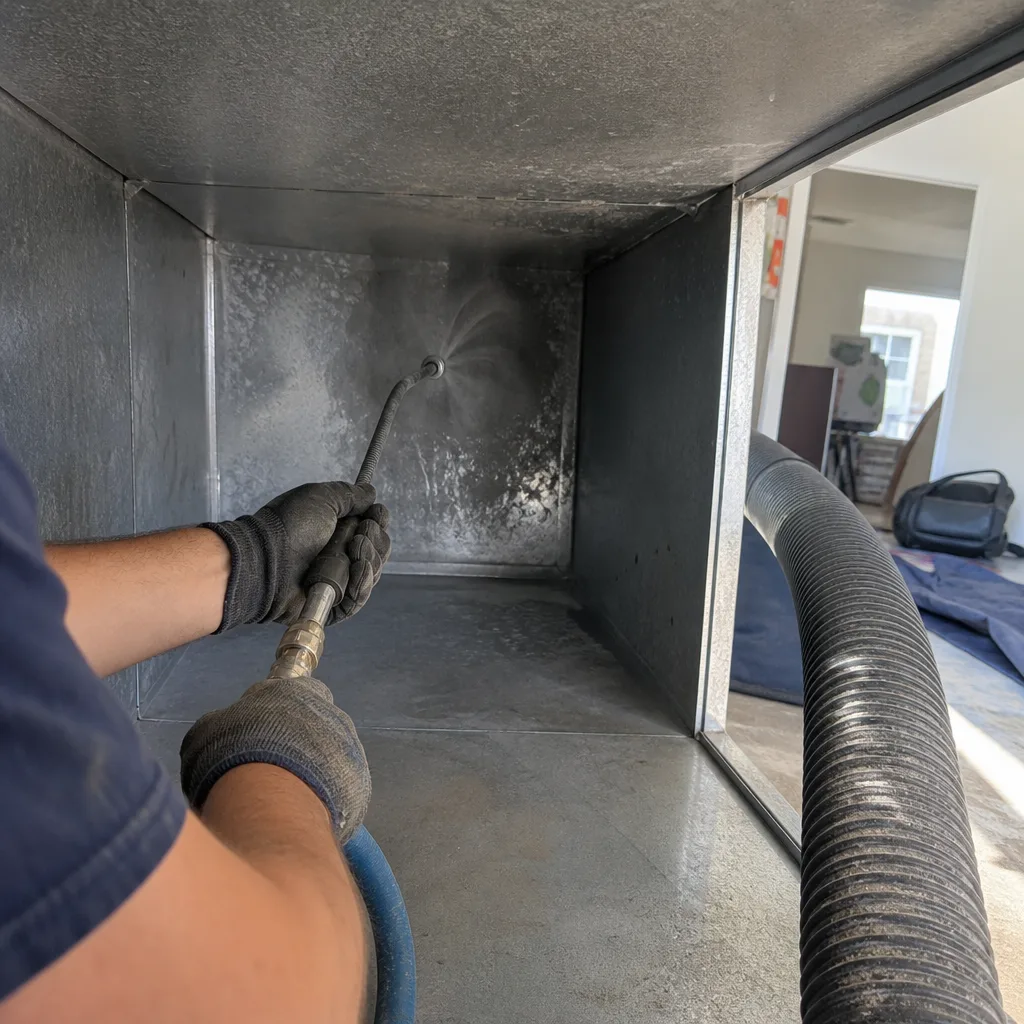
The practical boundary is this: if a technician’s hand enters the ductwork holding a vacuum hose or a rotary brush, that’s cleaning. If the hand enters holding a screwdriver, foil tape rated for ductwork, mastic, or a replacement duct section, that’s likely an alteration.
We’ve documented this boundary repeatedly in Leesburg homes. In a 2019 build near Creighton Farms, a homeowner hired a cut-rate cleaner who discovered a disconnected return duct run above the master bedroom. The technician reconnected it with foil tape and moved on. No permit. No inspection. When the homeowner later filed an insurance claim for water damage traced to that return pulling attic air, the adjuster denied coverage after discovering the unpermitted repair. The $340 cleaning became a $4,200 out-of-pocket remediation.
The Virginia Department of Housing and Community Development publishes no exhaustive list of which duct tasks fall on which side. Loudoun County Building and Development interprets the USBC through its local amendments, and inspectors in Leesburg apply a practical test: did the work change the system’s design, capacity, or safety characteristics? If yes, permit.
Key distinctions we see applied in the field:
- Cleaning: Negative-pressure extraction, rotary brushing, air-whipping, register and boot cleaning, camera inspection - no permit required.
- Gray area: Register replacement (same size, same location) - sometimes accepted as maintenance, sometimes flagged.
- Permit-triggering: Duct section replacement, plenum modification, damper installation, flex duct re-run, mastic sealing of leaks, conversion from duct board to metal - all require mechanical permit and licensed contractor.
Leesburg’s climate intensifies the confusion. Our humid summers and freeze-thaw winters stress flex duct connections in attics. A cleaning crew discovers a separated joint, “fixes” it without disclosure, and the homeowner assumes the work was part of the cleaning scope. It wasn’t. It was an unpermitted mechanical alteration.
USBC Section 603 and Loudoun County Mechanical Code
Section 603 of the USBC governs mechanical systems, including heating, ventilation, and air conditioning ductwork. The code requires permits for “the installation, alteration, repair, replacement, or addition of any mechanical system.” The critical word is “alteration” - interpreted by Loudoun County to include any change to the system’s original design or materials.
Loudoun County’s local amendments, codified in the Loudoun County Building Code, add specific requirements for mechanical permits in residential structures. The county requires:
- A completed mechanical permit application identifying the scope of work
- Plans or diagrams for duct modifications showing CFM ratings and register locations
- Contractor license verification (Virginia Class A, B, or C with RBC or HVC specialty)
- Payment of permit fees based on project valuation (typically $85-$220 for residential duct alterations)
- Inspection scheduling at rough-in and final completion
The permit process in Leesburg runs through the Loudoun County Department of Building and Development, with inspections performed by county mechanical inspectors. Turnaround for simple residential duct permits is typically 3-5 business days for issuance, with inspections available within 48 hours of request.
What the code specifically covers under Section 603.1:
- Duct construction and installation standards (SMACNA or equivalent)
- Minimum insulation R-values for ductwork in unconditioned spaces (R-6 for supply, R-8 for return in attics)
- Sealing requirements - mastic or approved tape, not standard cloth duct tape
- Support and hanging intervals for flex duct (maximum 4 feet between supports)
- Fire and smoke damper requirements where ducts penetrate rated assemblies
We’ve photographed violations of nearly every provision during our initial inspections in Leesburg homes. A 2017 renovation in the Village of Leesburg had flex duct draped across attic joists with no support, sagging at the low point and collecting condensation. The original installer never pulled a permit. The homeowner discovered this only when selling, when the buyer’s inspector flagged the condition and demanded a $2,800 credit for proper remediation.
The county’s enforcement posture has tightened since 2021, when Loudoun adopted the 2018 USBC with local amendments. Mechanical inspectors now routinely cross-reference permit history with visible alterations during resale inspections. A clean permit history has become a marketable asset in Leesburg’s competitive home market.
Common Post-Cleaning Repairs That Require Permits
Our crews document what they find. In roughly 30% of Leesburg homes we service, the camera reveals conditions that exceed cleaning scope and cross into repair territory. The homeowner’s first question is always: “Can you fix it while you’re here?”
Sometimes we can, legally and properly. Often we cannot without a permit. Here are the specific post-cleaning repairs we encounter, with their permit status under Loudoun County’s interpretation of USBC Section 603:
| Condition Discovered | Repair Action | Permit Required? | License Required |
|---|---|---|---|
| Collapsed flex duct run | Replace with new flex duct, same routing | Yes - mechanical permit | Class C minimum, HVC specialty |
| Duct board plenum with water damage | Patch or replace plenum section | Yes - mechanical permit | Class C minimum, HVC specialty |
| Disconnected duct joint | Reconnect with proper mechanical fastening | Gray area - if “like for like,” sometimes no; if reconfigured, yes | Class C recommended |
| Leaking seams in metal trunk | Seal with mastic or approved foil tape | Yes - interpreted as alteration | Class C minimum, HVC specialty |
| Missing or damaged register boot | Replace boot, same size | Typically no - maintenance | No license required for boot only |
| Undersized return duct | Enlarge or add return pathway | Yes - mechanical permit | Class B or C, HVC specialty |
| Damper stuck or missing | Replace or install balancing damper | Yes - mechanical permit | Class C minimum, HVC specialty |
The distinction between “like for like” replacement and alteration matters. In practice, Loudoun County inspectors tend to permit conservatively. A disconnected duct that is simply reconnected in its original configuration may escape flagging. But if the technician reroutes the duct, changes the diameter, or modifies the connection method, that’s an alteration.
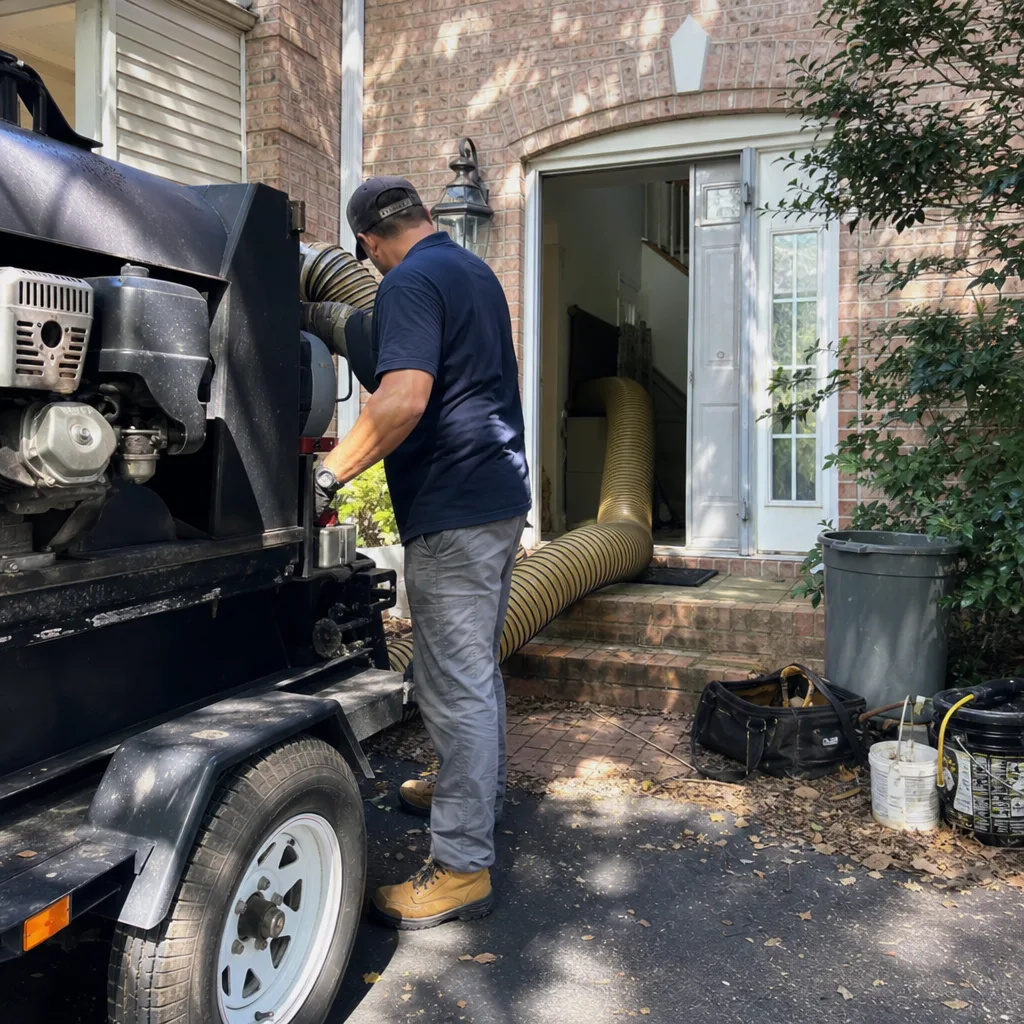
Our standard practice at Air Duct Cleaning in Leesburg is to photograph the condition, explain the permit requirement, and offer to coordinate with a properly licensed HVAC contractor if the homeowner wants the repair completed under permit. We do not perform permit-required repairs ourselves. Our Virginia license covers cleaning and non-structural maintenance. We stay in our lane, document what we found, and let the homeowner make an informed choice.
The equipment we use for cleaning - Rotobrush rotary systems, Nikro negative-pressure extractors, and Abatement Technologies HEPA filtration - is designed for debris removal, not duct modification. When we name these brands, it’s so homeowners can verify that our tools match our scope. A Rotobrush isn’t going to replace your plenum. That’s the point.
Insurance Risks of Unpermitted Ductwork
This is where the $79 coupon becomes expensive. Virginia homeowners’ insurance policies contain standard exclusions for losses arising from “faulty, inadequate, or illegal construction or repair.” Unpermitted ductwork alterations fit this exclusion squarely.
The scenario plays out predictably. A cleaning company performs unpermitted duct repairs. Months later, an HVAC electrical fault causes a fire. The fire marshal’s investigation notes the modified ductwork. The insurer’s adjuster pulls permit history, finds none, and invokes the construction exclusion. The homeowner absorbs the loss.
We’ve reviewed claim denials in Loudoun County where this exact chain occurred. In a 2022 case near Ashburn (adjacent to Leesburg’s service area), a homeowner’s HVAC caught fire in the attic. The fire department’s report noted “recent duct modifications” as a potential contributor to fire spread. The insurer denied the $67,000 claim, citing unpermitted alterations performed by an unlicensed contractor two years prior. The homeowner’s recourse against the long-defunct cleaning company was worthless.
Virginia’s insurance code does not mandate permit verification before policy issuance. The burden falls on the homeowner to maintain compliant mechanical systems. Most homeowners assume their HVAC technician - or the person who cleaned their ducts - handled permits. Often no one did.
Specific risks by repair type:
- Mastic-sealed plenum leaks: If mastic is applied to a plenum that later develops a fire or moisture issue, insurers may argue the sealing altered airflow patterns and contributed to the loss.
- Flex duct replacement: Improperly sized replacement flex duct can restrict airflow, causing blower motor overwork and eventual electrical fault. No permit means no inspection verified the sizing.
- Return plenum modifications: Changes to return pathways affect system static pressure. Unpermitted modifications that lead to coil freeze-up and water damage have been denied under construction exclusions.
Our recommendation is documented and conservative: if a repair affects airflow, capacity, or safety, it needs a permit and a licensed contractor. The 365-Day Done Right Promise we offer covers our cleaning work, not unpermitted repairs we didn’t perform. We document what we found so the homeowner’s decision is informed, not blind.
How to Request Your Home’s HVAC Permit History
Before hiring any ductwork contractor in Leesburg, you should know what permits already exist for your home’s mechanical systems. Loudoun County maintains permit records dating to the mid-1990s in digital form, with older records in physical files at the Department of Building and Development.
Here’s how to pull your home’s complete mechanical permit history:
- Locate your property’s PIN (Parcel Identification Number). This is on your Loudoun County real estate tax assessment or available through the county GIS mapping system. The PIN format is typically 123-45-6789 for properties in Leesburg’s incorporated area.
- Access the Loudoun County Permit Portal. Navigate to the county’s online permit search at loudoun.gov/permitsearch. Enter your PIN or property address. The system returns all permits issued, with status, contractor, and inspection results.
- Filter for mechanical permits. Look for permit types beginning with “MECH” or “HVAC.” Note the permit number, date, contractor name, and final inspection status. A permit without a “FINAL” status may indicate incomplete or abandoned work.
- Request physical records if needed. For permits predating digital records, submit a Freedom of Information Act request to the Department of Building and Development. Include your PIN, address, and specific request for “all mechanical and HVAC permits, inspections, and correction notices.” Response time is typically 10 business days.
- Cross-reference with your home’s disclosure documents. Sellers in Virginia must disclose known defects and unpermitted work. Compare their disclosures against the permit history. Gaps are questions worth asking.
What to look for in your permit history:
- Original HVAC installation permit - should match your system’s age
- Any mechanical permits for duct modifications, additions, or repairs
- Final inspection signatures - permits without finals are red flags
- Contractor license numbers - verify active status at dpor.virginia.gov
In Leesburg’s older neighborhoods - the historic district, neighborhoods like Exeter and Tavistock Farms - we’ve found homes with no mechanical permits at all, indicating original systems installed before permit requirements or unpermitted replacements. In newer developments like Lansdowne on the Potomac, permit history should be complete and traceable to the original builder.
We pull permit history as a standard step on every CleanRun Air Duct Cleaning Leesburg home consultation where duct repair needs are suspected. Haven Standard Clause 1 - written price before work starts - includes a permit status summary when relevant. If we find unpermitted prior work, we note it in writing so the homeowner has documentation for future sale or insurance purposes.
Duct Cleaners vs. HVAC Contractors Under Virginia Law
Virginia’s Department of Professional and Occupational Regulation (DPOR) draws a sharp line between trades, and homeowners who miss it hire the wrong license for the wrong job.
Duct cleaning companies operate under no specific Virginia license classification. They are general service businesses, subject to standard business registration but not to trade-specific licensing or examination. Any individual with a vacuum and a business license can legally advertise duct cleaning in Virginia.
HVAC contractors, by contrast, must hold a Virginia Class A, B, or C contractor license with the HVC (Heating, Ventilation, Air Conditioning) specialty designation. This requires:
- Passage of a trade examination (HVA or HVC)
- Verified experience hours (2 years for Class C, 4-6 years for B and A)
- Continuing education for license renewal
- Insurance and bonding requirements scaled to license class
The HVC specialty specifically authorizes “the installation, repair, or replacement of heating, ventilation, and air conditioning systems and ductwork.” The critical word is “ductwork” - structural and mechanical modification of the distribution system, not mere cleaning.
What this means in practice: if a duct cleaning company offers to “replace your damaged flex duct” or “rebuild your plenum,” they are performing HVAC contractor work without the required license. This is a Class 1 misdemeanor under Virginia Code § 54.1-111, though enforcement is complaint-driven and rare.
More consequentially for homeowners, unlicensed work voids manufacturer warranties and insurance coverage. A Honeywell air handler with unlicensed duct modifications loses its 10-year parts warranty. An Aprilaire whole-house humidifier with unpermitted duct tapping loses coverage for water damage.
We name brands like Honeywell and Aprilaire not for decoration but for accountability. These manufacturers publish warranty terms publicly. Homeowners can verify that warranty coverage requires “installation by a qualified, licensed HVAC contractor.” Our equipment roster - Nikro extractors, Rotobrush systems, Abatement Technologies HEPA units - is cleaning equipment. We don’t install Honeywell air handlers. We clean the ducts that connect to them.
The practical test we suggest to Leesburg homeowners: ask for the DPOR license number before any work beyond cleaning. A legitimate HVAC contractor provides it immediately. A duct cleaner performing contractor work without it has something to hide. CleanRun publishes our business license and insurance documentation on request; we refer structural repairs to licensed HVC contractors we trust, with no markup or referral fee.
What CleanRun Documents on Every Job
Documentation is our response to an industry built on trust-me assertions. Every job we perform in Leesburg generates three concrete deliverables, specified in writing before work begins under Haven Standard Clause 1.
Written Scope and Price Agreement. Before any panel comes off, the homeowner receives a single-page scope document listing: the number of duct runs to be cleaned, the equipment to be used (specific model numbers from our Rotobrush, Nikro, or Abatement Technologies fleet), the total price with no per-vent add-ons, and the 365-Day Done Right Promise terms. No signature, no work. No exceptions since 2013.
Documented Photo Record. Inside every duct run, before and after. The camera shows what we found - “3-inch debris build-up at first elbow,” “mold staining on duct board surface,” “disconnected flex joint, 8 inches separated” - not how we felt about it. Photos are timestamped, geotagged, and delivered as a PDF within 24 hours of job completion. This practice began with our first job in 2013 and has been applied to all 52,000+ homes served.
Condition Report with Permit Guidance. If our inspection reveals conditions requiring permit-level repair, the report includes: photograph of the condition, description of why it exceeds cleaning scope, recommendation for licensed HVAC contractor referral, and summary of applicable USBC section. We do not perform the repair. We document what we found and let the homeowner decide.
This documentation serves practical purposes beyond immediate service. For Leesburg homeowners selling in a market where median home prices exceed $700,000, a complete duct maintenance record with photo evidence differentiates their property. For insurance purposes, our dated, geotagged photos establish pre-existing conditions before any subsequent claim.
Haven Standard Clause 3 - Verified Crews - means every technician is background-checked, uniformed, and identified by name before arrival. The technician who performs the work signs the documentation. Accountability is personal, not corporate.
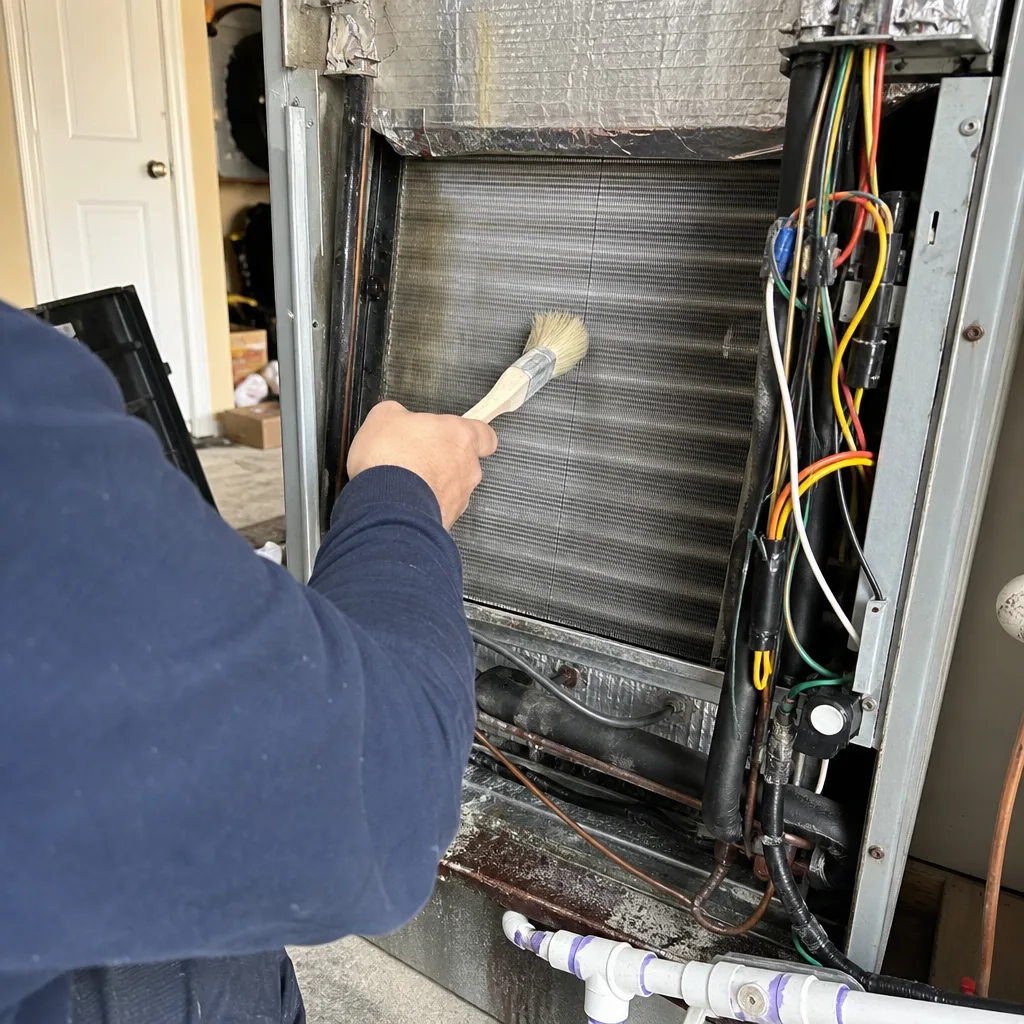
Our HVAC Cleaning in Leesburg service extends this documentation standard to full system cleaning, including coil and blower components. The same photo record, the same written price, the same permit-aware scope boundaries apply.
Common Mistakes to Avoid
- Hiring based on coupon price without verifying license scope. The $79 duct cleaning special rarely includes permit-required repairs, but technicians often perform them anyway to complete the job. Verify what license the holder carries before any work begins.
- Assuming the cleaning company handles permits. Duct cleaners have no permit obligation for cleaning scope and no authority to pull mechanical permits. If they offer to “take care of it,” they’re operating outside their legal capacity.
- Ignoring permit gaps during home purchase. Leesburg’s competitive market pressures buyers to waive inspections. A $15 permit history pull before closing can reveal $5,000 in unpermitted ductwork that becomes your problem at resale.
- Accepting verbal assurances about “like for like” repairs. The technician’s interpretation of “maintenance” may not match Loudoun County’s. Get permit status in writing, or accept the insurance risk explicitly.
- Confusing equipment brands with contractor qualifications. A company using professional-grade Nikro or Rotobrush equipment is still unlicensed for duct modification if they lack HVC specialty. Equipment quality and legal authority are separate questions.
- Failing to document pre-existing conditions. Before any duct work, photograph your system’s current state. If a subsequent contractor causes damage and disputes responsibility, your documentation establishes baseline condition.
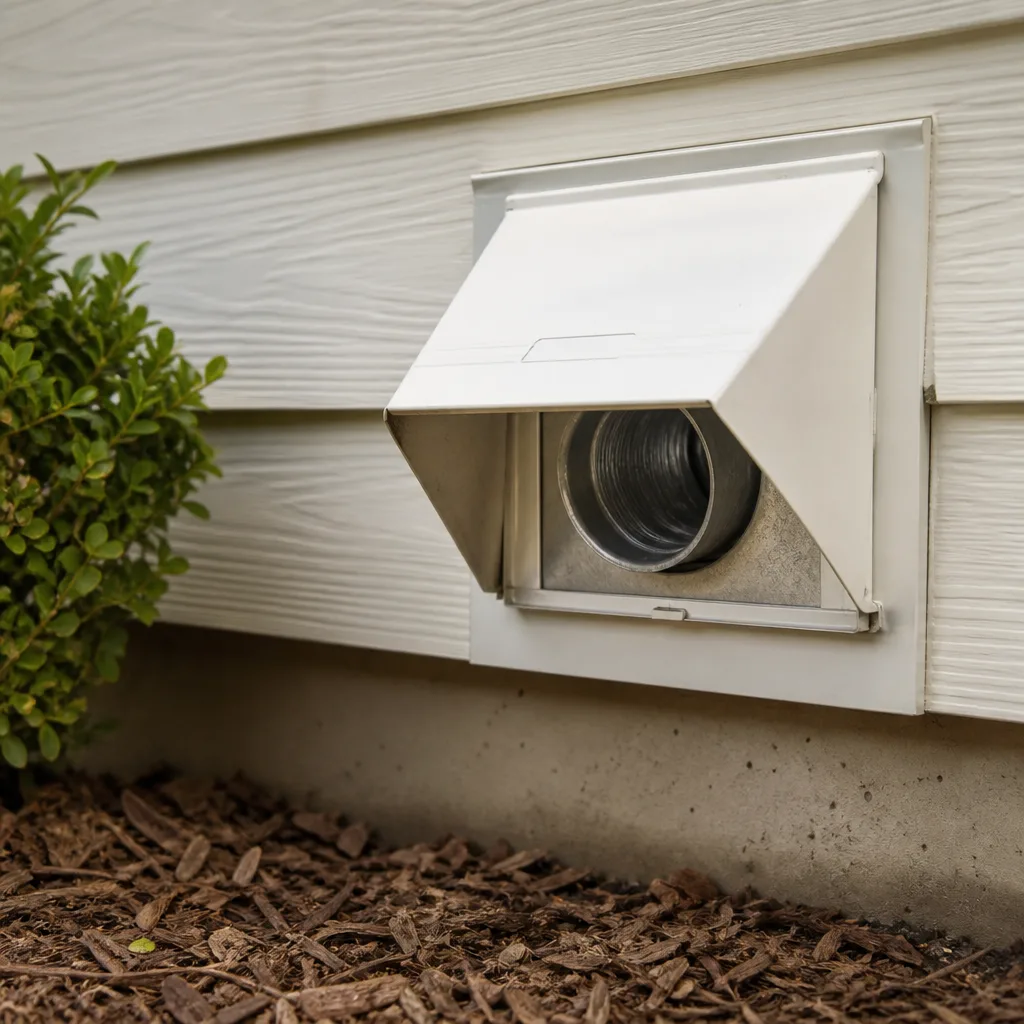
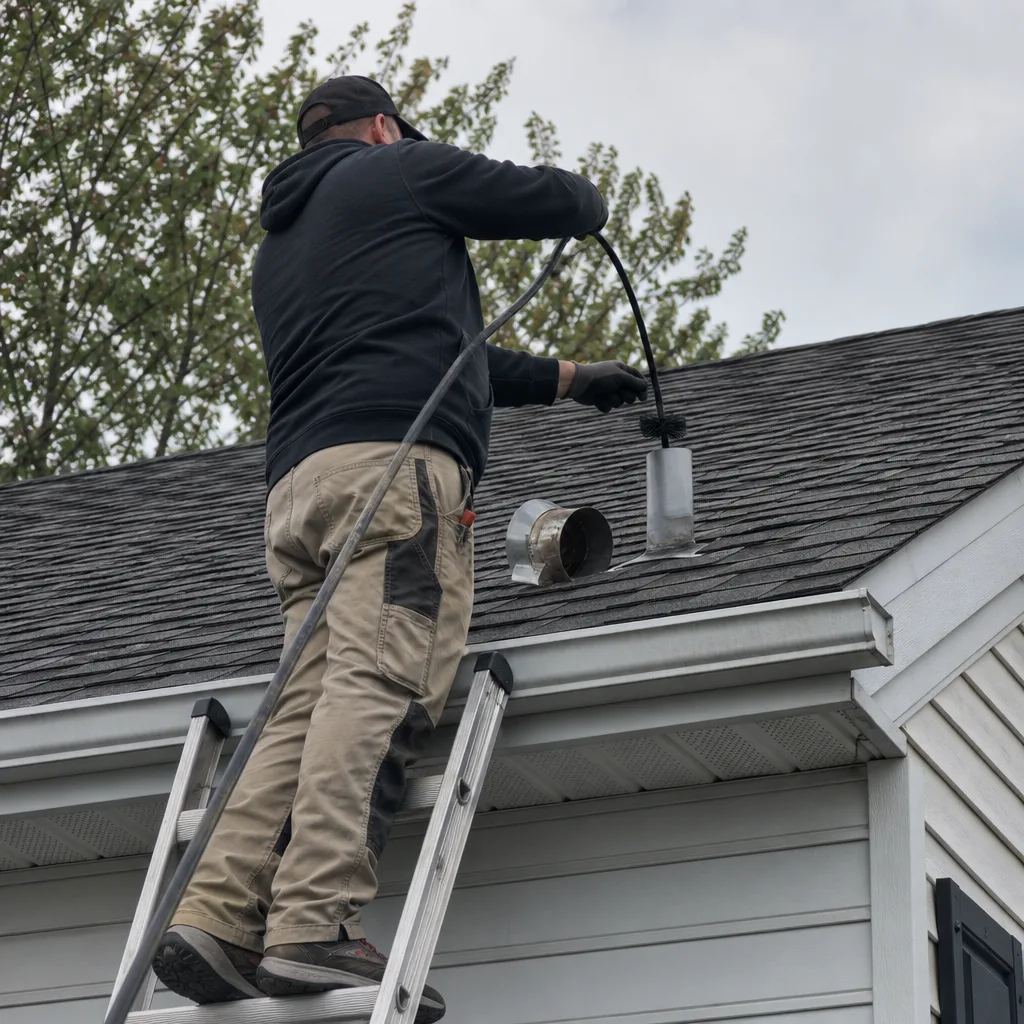
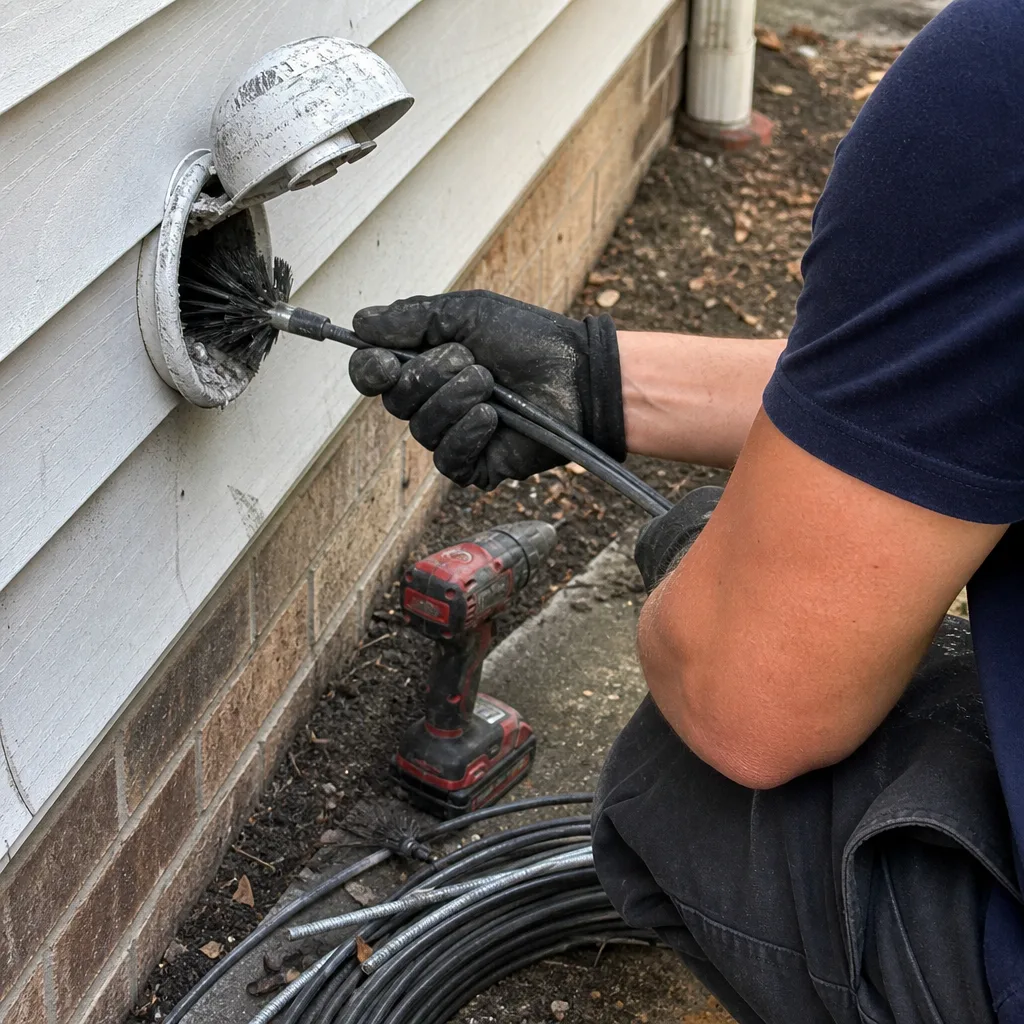
- Neglecting dryer vent permit requirements. Dryer vent routing through roofs or multi-story walls often requires permit under USBC Section 603. Our Dryer Vent Cleaning in Leesburg service includes permit status check for routing modifications, not just lint removal.
When to Call a Professional
Call a licensed HVAC contractor with HVC specialty when: your ductwork requires modification, replacement, or repair beyond debris removal; your permit history shows incomplete mechanical permits; you’re selling your home and need permit-compliant documentation; or your insurance carrier requests verification of licensed installation.
Call CleanRun Air Duct Cleaning Leesburg when: you need documented, photographed cleaning of existing ductwork with no modification; you want a written price before any work starts, every time; you’ve received a competitor’s estimate and want a free second opinion in writing; or you need an honest assessment of whether your conditions exceed cleaning scope. For more guides & resources, visit our blog.
CleanRun Air Duct Cleaning Leesburg offers free estimates in Leesburg - call (571) 487-7204. Every estimate includes permit history guidance when relevant, and every job concludes with the documented photo record we’ve delivered since 2013.
Frequently Asked Questions
No. Air duct cleaning - the removal of debris and contaminants from existing duct runs using negative-pressure extraction or rotary brushing - is classified as maintenance under USBC Section 108.2 and does not require a permit in Loudoun County. However, any repair, replacement, or modification of ductwork discovered during cleaning requires a mechanical permit under Section 108.1. Call (571) 487-7204 for a free estimate that includes scope boundaries and permit guidance.
Residential mechanical permits for duct alterations typically range from $85 to $220 depending on project valuation, with additional fees for plan review if the modification exceeds 500 CFM or involves new return pathways. The permit fee schedule is published by Loudoun County Department of Building and Development. CleanRun does not mark up permit costs; we refer permit-required work directly to licensed HVAC contractors.
No, not without a Virginia Class A, B, or C contractor license with HVC specialty. Duct cleaning companies operate without trade-specific licensing and are not authorized to perform mechanical alterations. A company offering flex duct replacement without this license is operating illegally and exposing the homeowner to insurance and resale risks. Verify any contractor’s license at dpor.virginia.gov before authorizing work.
Unpermitted ductwork is a standard disclosure item on Virginia residential property disclosure statements. Buyers’ inspectors routinely flag visible alterations without permit history. Remediation typically requires: permit application retroactively, licensed contractor correction to code standards, and county inspection with final approval. Costs in Leesburg’s market range from $1,200 for simple corrections to $5,000+ for extensive unpermitted modifications. The seller usually absorbs these costs through price reduction or repair credit.
Request your home’s permit history from Loudoun County using the steps outlined in this guide. Compare all mechanical permits against work you know was performed. If repairs were done without corresponding permits, document the discrepancy with photos and any invoices. For future protection, hire only contractors who provide written scope boundaries and who explicitly state when work exceeds their licensed capacity.
No. CleanRun performs cleaning and maintenance scope only. When our inspection reveals permit-required conditions, we document them photographically, explain the permit requirement in writing, and offer referral to properly licensed HVAC contractors in our network. We do not perform unpermitted repairs, mark up contractor services, or obscure the license boundary. Haven Standard Clause 1 requires written price and scope before work; this includes explicit statement of what we will not do.
Pull permit history before any home purchase, before major HVAC renovations, and if you suspect prior unpermitted work. For cleaning frequency, the National Air Duct Cleaners Association recommends inspection every 2-3 years and cleaning when visible debris exceeds normal accumulation. Leesburg’s pollen-heavy springs and humid summers accelerate buildup; we’ve found significant accumulation in homes cleaned less than 4 years prior. Call (571) 487-7204 for an inspection that includes photo documentation of interior conditions.
The Bottom Line
Virginia law separates duct cleaning from duct repair with clarity that the industry often obscures. Cleaning is maintenance, exempt from permit. Repair is alteration, requiring mechanical permit and licensed contractor. The homeowner bears the consequences of this boundary - insurance denial, sale complications, safety risks - when it’s crossed without disclosure. In Leesburg’s high-value market, permit history is a property asset worth verifying before anyone touches your ductwork. Document what you have. Verify who you hire. Get scope and price in writing. And when a technician’s hand enters your ductwork, know whether it holds a vacuum hose or a screwdriver.
Written by Tomas Reyes, Owner at CleanRun Air Duct Cleaning Leesburg, serving Leesburg since 2013.