
Last updated September 23, 2026
Whole-system duct and dryer vent check with before-and-after photos - you see exactly what came out of your vents
That "$99 whole-house special" is a bait ad - the real number appears once they are in your hallway, or the "clean" is a shop-vac at the register. We photograph the inside of your ducts before and after instead.
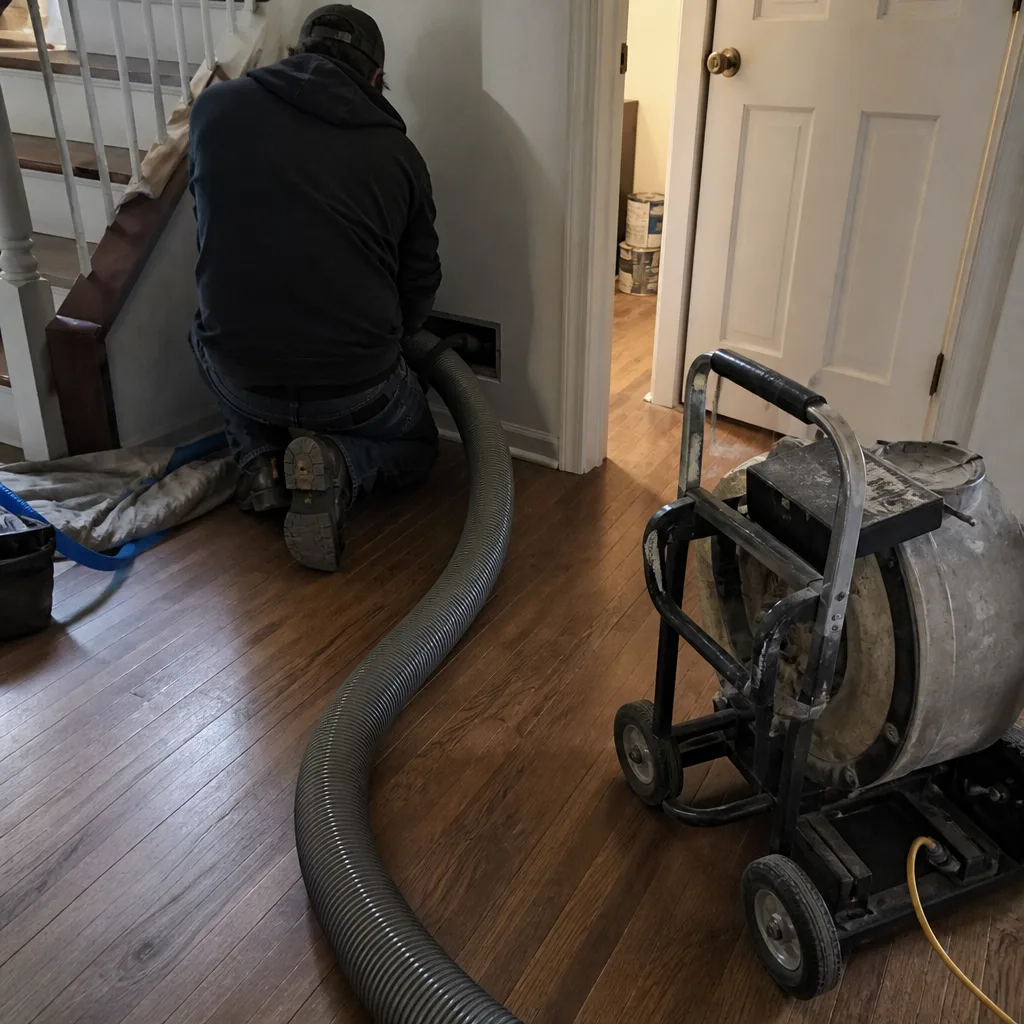 Before
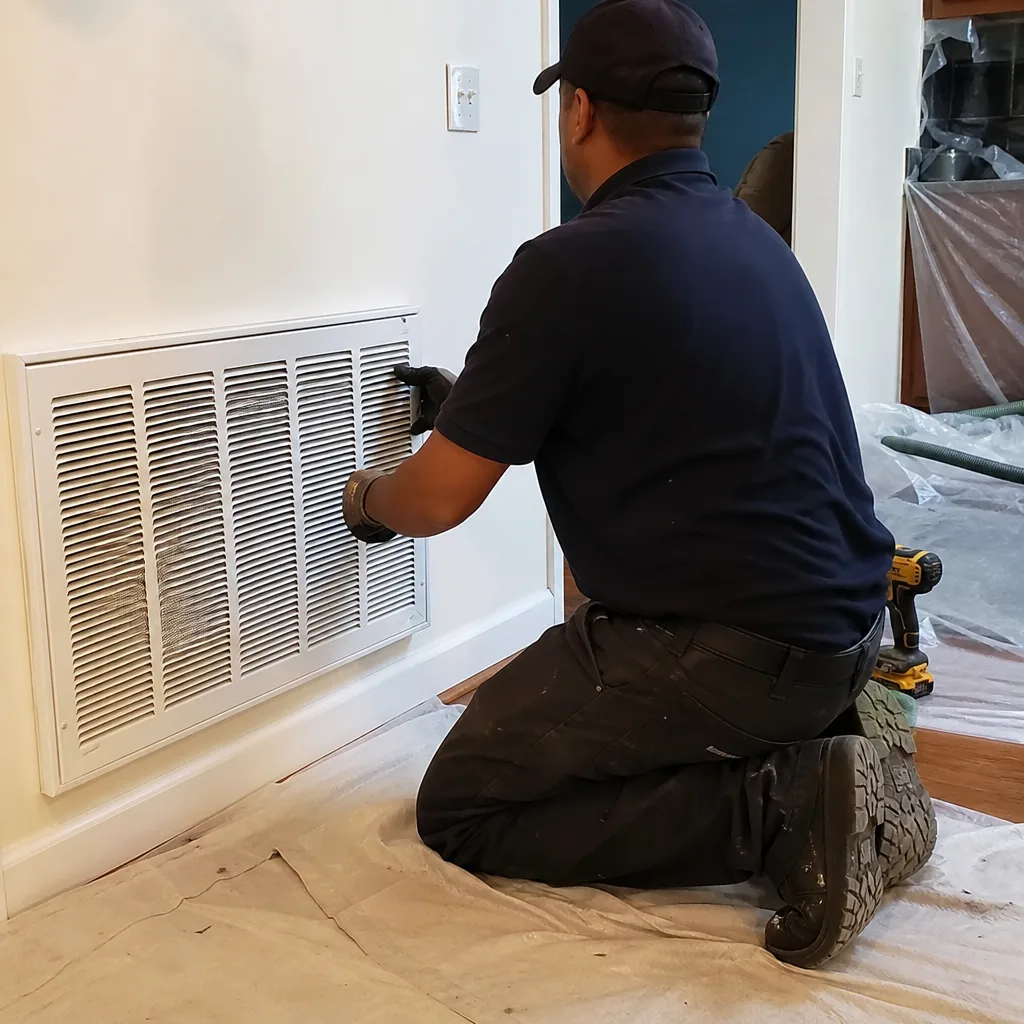 After
After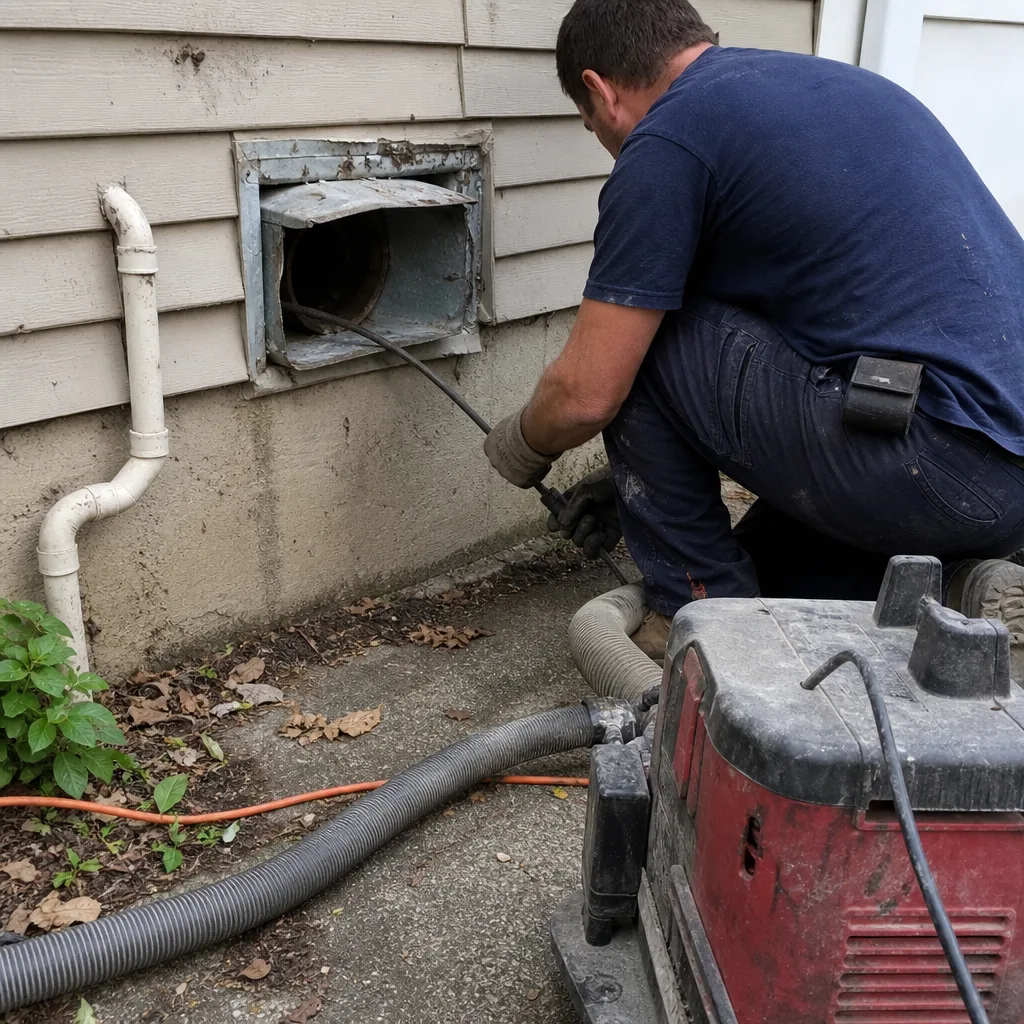 Before
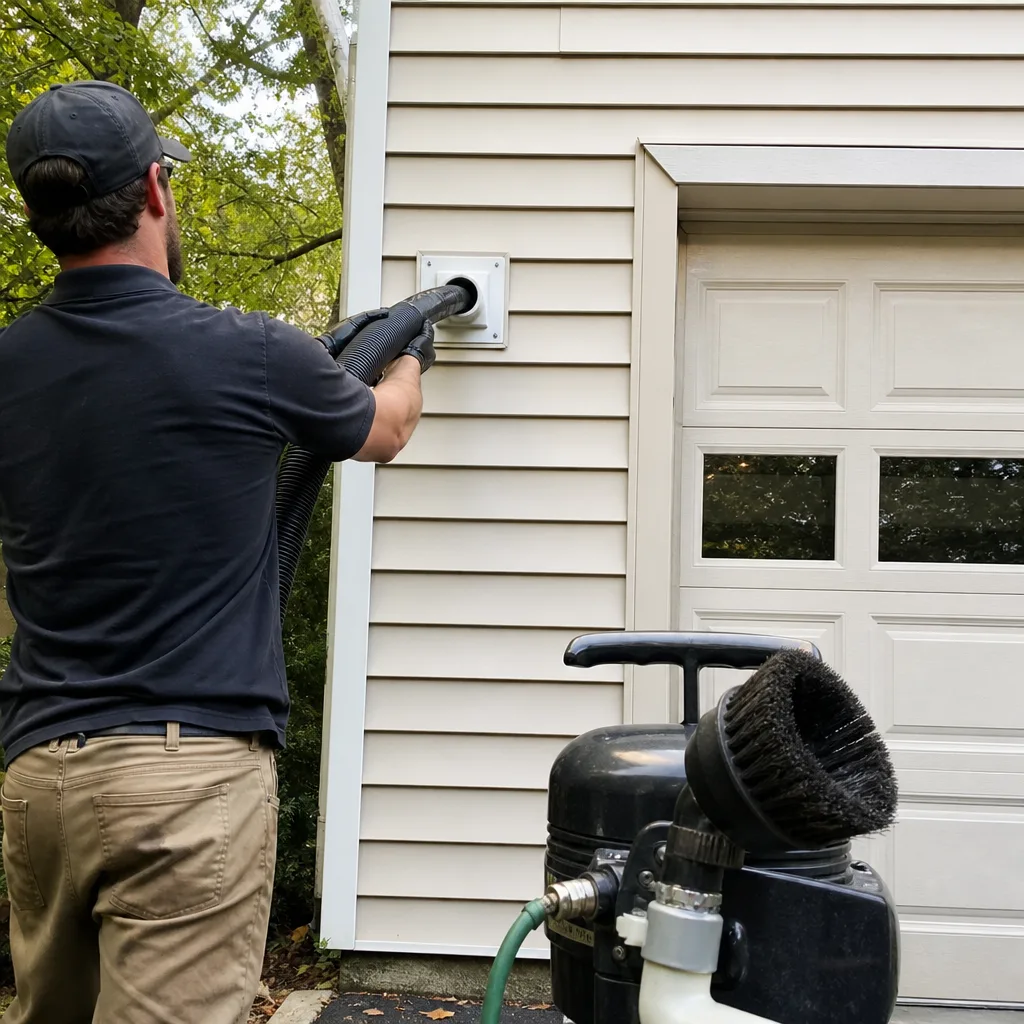 After
After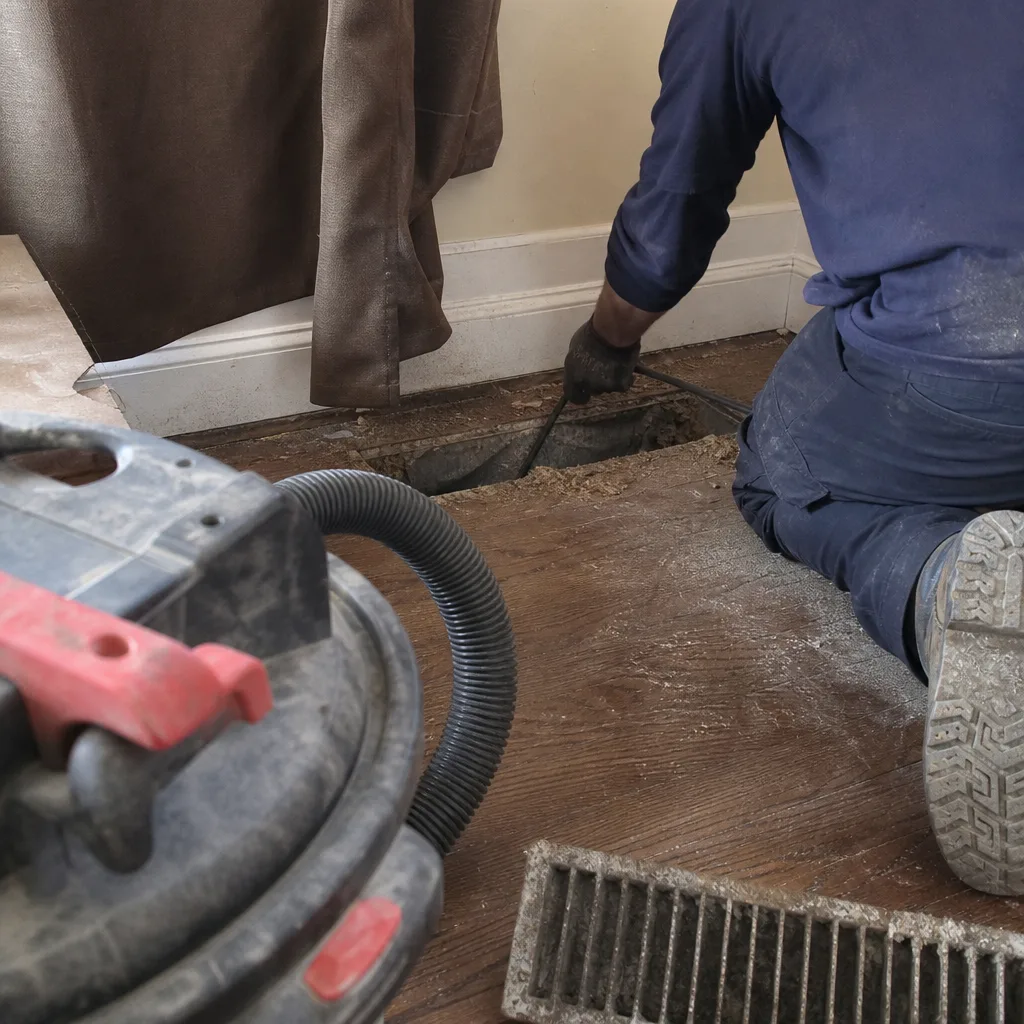 Before
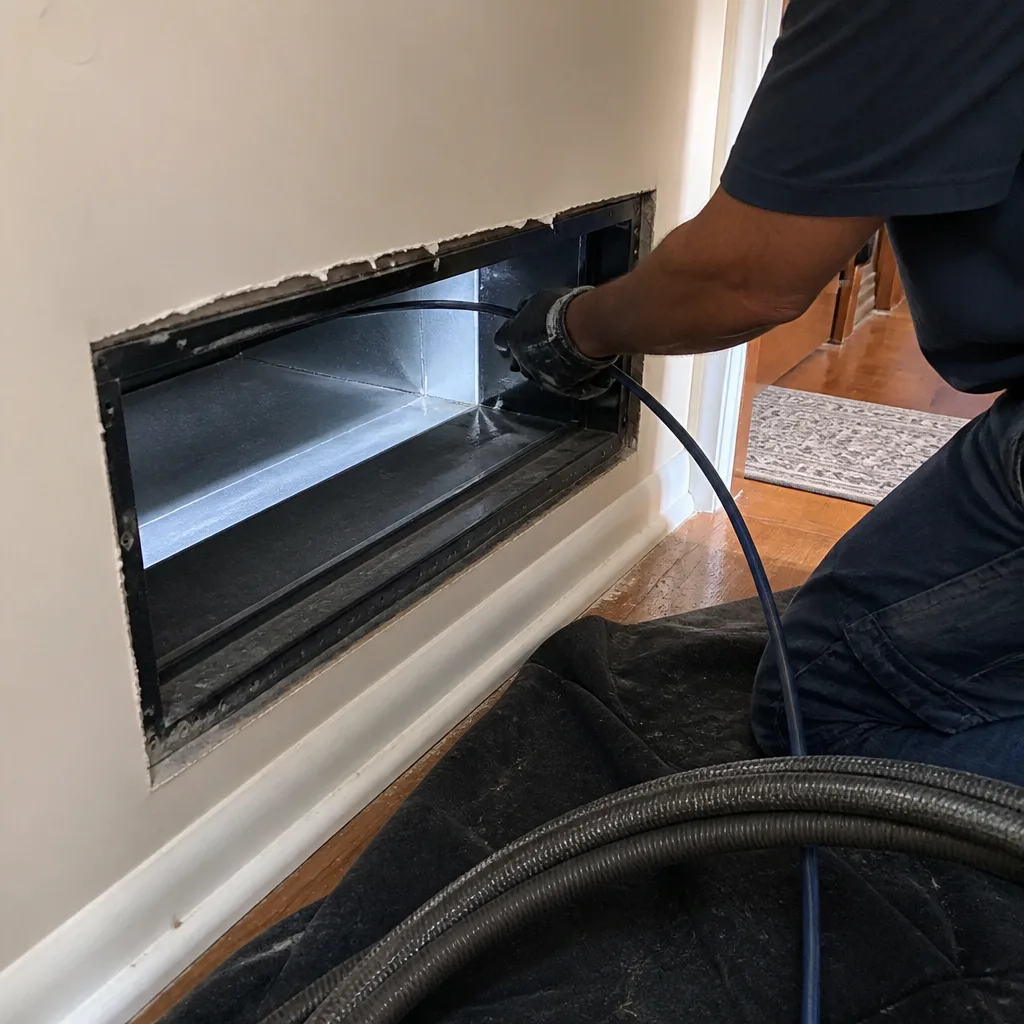 After
AfterAir Duct Cleaning Warning Signs: A Leesburg Homeowner’s Reference Guide
A musty smell coming from your registers in a Leesburg home in August is not a warning sign. It is a confirmed problem. The actual warning signs appear six to twelve months earlier and are visible inside the duct boots before any odor reaches the living space. In The Complete Guide to Air Duct Cleaning in Leesburg, we’ll show you what to look for with a phone flashlight, how to distinguish between a blocked duct run and a balancing problem, and why renovation debris shows up in the main trunk line long after the contractors have left. Every observation here comes from documented photo records we’ve collected in Leesburg homes since 2013.
Quick Answer
The earliest warning signs that your Leesburg home needs our Air Duct Cleaning services are visual: gray lint accumulation at the duct boot that wipes away as loose fibers, black or brown oily film coating the metal surface, or any stringy, web-like material that adheres to the sidewall. These appear months before musty odors or visible dust at registers. Uneven room temperatures, particularly in two-story homes near the Potomac or in the suburban-rural edge neighborhoods of eastern Loudoun County, often indicate partial blockages rather than HVAC balancing issues.
Table of Contents
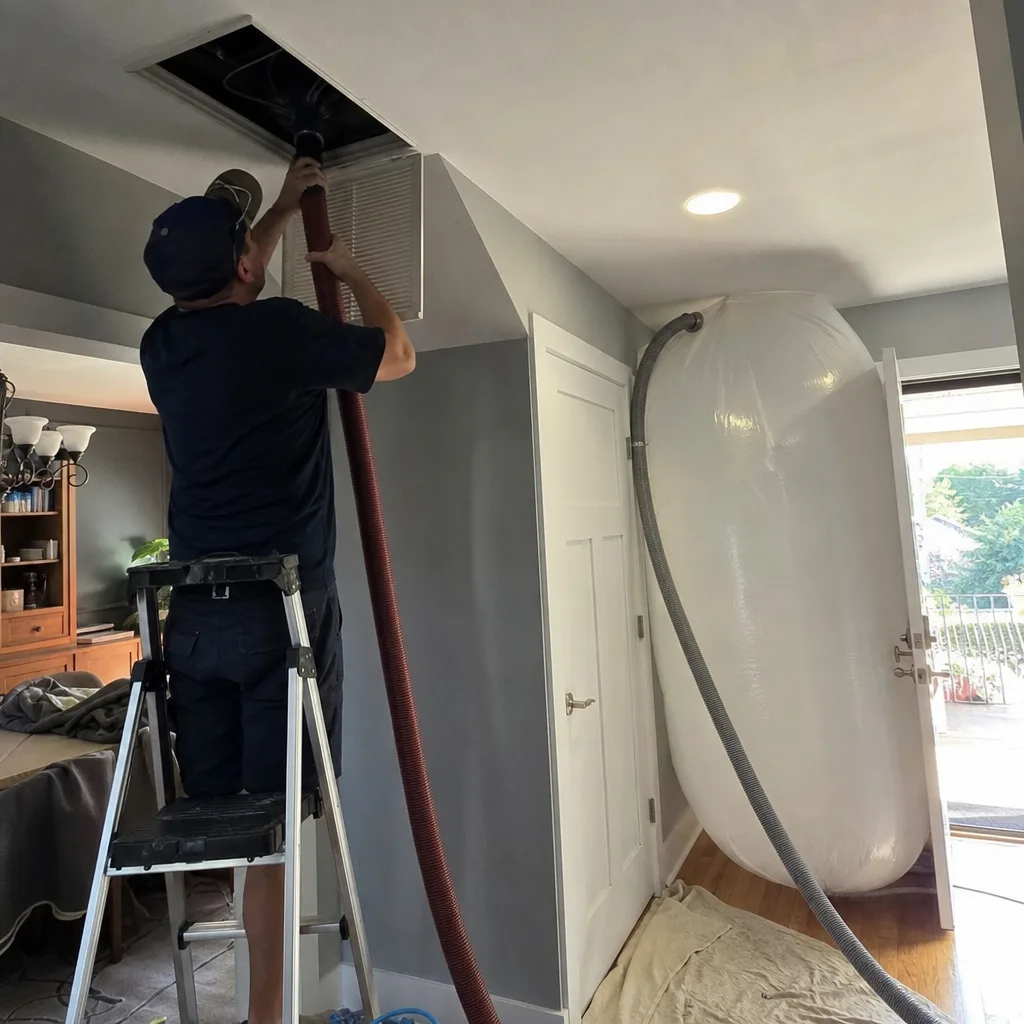
- What to Look for Inside a Supply Boot with a Phone Flashlight
- How Uneven Room Temperatures Reveal Duct Problems Before HVAC Issues
- Warning Signs After Renovation, HVAC Replacement, or Attic Reinsulation
- Rodent Activity Indicators in Loudoun County Ductwork
- How to Photograph and Document a Suspected Duct Problem
- The Difference Between Vent Cleaning and Actual Duct Cleaning
- When Leesburg Climate Accelerates Buildup
- Common Mistakes to Avoid
- When to Call a Professional
- Frequently Asked Questions
 Before
 After
AfterWhat to Look for Inside a Supply Boot with a Phone Flashlight
Remove the floor register or ceiling diffuser. Shine your phone flashlight straight down the supply boot, the metal box that connects your duct run to the room. What you see in the first six inches determines whether you’re looking at normal household dust or a condition that will degrade air quality and system efficiency.
There are three distinct accumulations we document in Leesburg homes, and they require different responses.
Dry lint accumulation appears as gray or off-white fibers that sit loosely on the metal surface. You can wipe it with a finger and it comes away as individual strands. This is common in homes with synthetic carpeting, active pets, or high foot traffic near the register. In Leesburg’s newer subdivisions like Lansdowne on the Potomac or Belmont Country Club, where homes were built between 2015 and 2022 with open floor plans and constant HVAC circulation, we see this pattern in roughly sixty percent of first inspections. Dry lint is not an emergency, but when it exceeds a quarter-inch depth at the boot entrance, it indicates the main duct run has similar loading upstream.
Oily particulate buildup presents as a black, brown, or amber film that smears when touched. It does not wipe away cleanly. This comes from cooking aerosols, candle smoke, or tobacco residue that has condensed on cool metal duct surfaces. In Leesburg’s older homes near the historic district, where kitchen exhaust fans may vent into attic space rather than outside, we find this coating throughout the first-floor supply runs. The film traps subsequent dust layers, accelerating accumulation. A phone flashlight reveals the discoloration even when the boot looks clean from the room.
Biofilm formation shows as stringy, web-like, or slimy material that adheres to sidewalls. It may be white, gray, green, or black. Unlike lint, it does not brush off. Unlike oily film, it has dimensional texture. Biofilm indicates that moisture has entered the duct system, often from a humidifier set too high, a condensate drain backing up, or ductwork in an unconditioned attic experiencing summer condensation. In Leesburg, where July humidity routinely exceeds seventy percent and many homes have attic-mounted air handlers, we document biofilm most frequently in August and September service calls. The camera shows it at the first elbow, where standing moisture collects.
Document what you see. Note the color, texture, and whether the material is loose, smeared, or adhered. This description lets any contractor know whether they’re quoting a standard negative-pressure extraction or a sanitizing job that addresses microbial growth. For help deciding, see our DIY vs Professional Air Duct Cleaning: The Leesburg Homeowner’s Decision Guide.
How Uneven Room Temperatures Reveal Duct Problems Before HVAC Issues
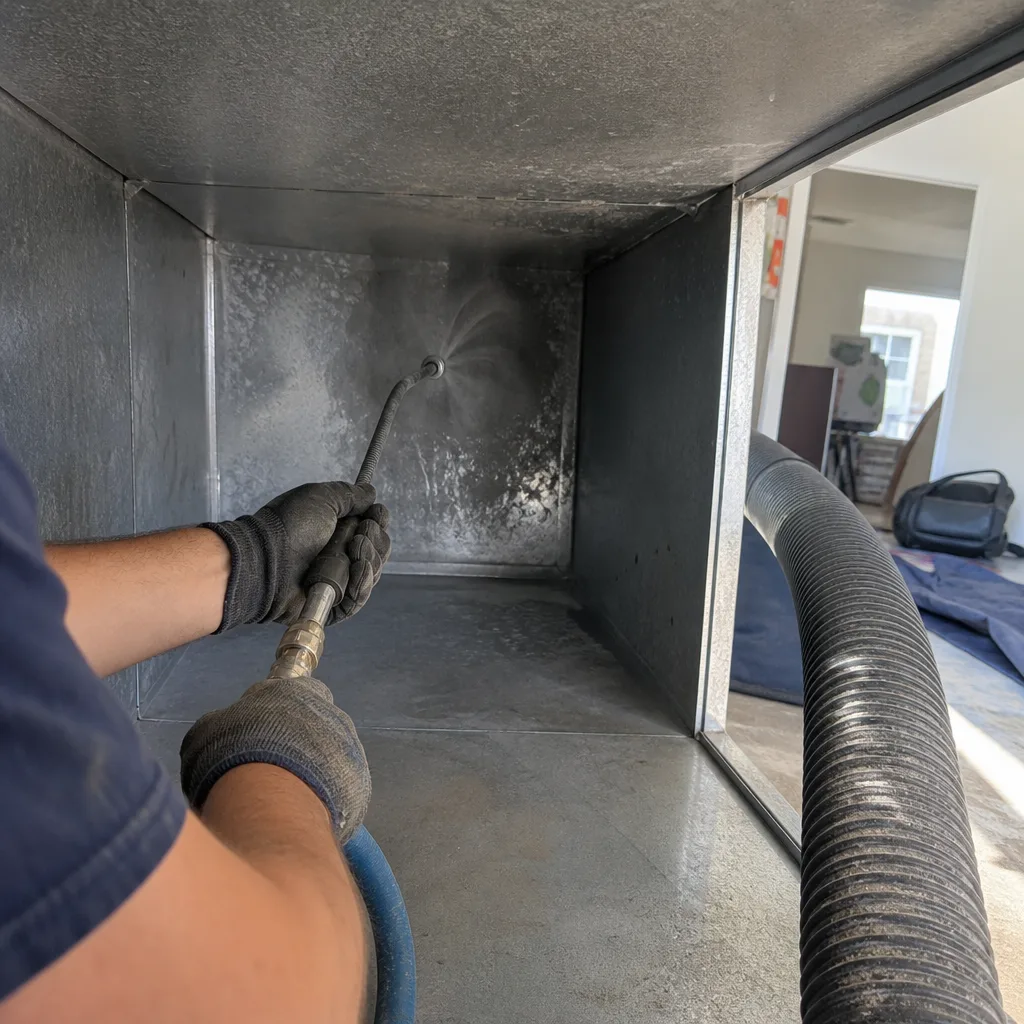
A bedroom that runs four degrees warmer than the hallway in summer, or a downstairs office that never reaches the thermostat setpoint in January, is often diagnosed as an HVAC balancing problem. In our experience across Leesburg, the actual cause is partial duct blockage more often than homeowners expect.
Here’s how to tell the difference before calling anyone.
- Check the register airflow with a tissue test. Hold a single tissue against the register grille with the system running. In a properly supplied room, the tissue should flatten and stay in place. If it flutters weakly or falls away, you have restricted airflow. Compare this register to one in a comfortable room on the same system. A significant difference indicates blockage, not balancing.
- Inspect the boot for the accumulations described above. A boot packed with lint or debris chokes airflow before it enters the room. Balancing dampers, by contrast, are located at the trunk line and affect multiple rooms simultaneously.
- Verify the register is fully open and unobstructed. Furniture placement, closed louvers, or a register covered by a rug are common in homes with children or recent rearrangements. Rule this out first.
- Check the return path. A room with adequate supply but inadequate return air pressurizes slightly, reducing effective circulation. In Leesburg’s two-story homes with basement systems, we see this frequently in upstairs bedrooms where the return grille is undersized or the door is kept closed.
- Consider the duct run length and geometry. A room at the end of a long, flex-duct run with multiple elbows will always have weaker airflow. But if that same room cooled properly last summer and does not now, the run has likely accumulated debris or developed a sag that traps material.
The diagnostic distinction matters because balancing adjustments cost little but solve nothing if the duct is blocked. In Leesburg’s market, where air duct cleaning in Leesburg runs between $380 and $720 for a whole-home system depending on square footage and duct configuration, you want to know whether you’re paying for cleaning or for a service call that discovers the real problem.
We documented a case in the River Creek community where a homeowner had two HVAC companies adjust dampers over three years. The camera showed a collapsed flex duct behind a finished basement ceiling, packed with construction debris from the original 2017 build. The temperature problem resolved once the debris was extracted and the duct was re-supported. No balancing adjustment would have addressed it.
Warning Signs After Renovation, HVAC Replacement, or Attic Reinsulation
Construction debris migrates into ductwork through pathways that are invisible until a camera enters the main trunk line. The warning signs appear on a predictable timeline, and they are rarely visible at the register.
Within 30 days of project completion: Dust loading increases at all registers, often described by homeowners as “more dusting than usual.” This is typically drywall compound, sawdust, or insulation particulate that entered the system when ducts were open during work. In Leesburg’s active renovation market, particularly in the Village of Leesburg and historic district conversions, we see this pattern when contractors failed to seal registers or when the HVAC system was run during construction.
Three to six months post-renovation: Uneven airflow develops in rooms nearest the work zone. This indicates that larger debris, pieces of insulation or drywall, have migrated to elbows or transitions and formed partial blockages. The debris does not distribute evenly; it collects where airflow changes direction.
Six to twelve months post-renovation: Musty or chemical odors emerge, particularly when the system first cycles on. This occurs when moisture-absorbing debris, such as cellulose insulation or drywall compound, has accumulated in a low point of the duct system and supports microbial growth. The odor is the final stage, not the first.
The migration pattern follows the physics of your duct layout. In Leesburg homes with basement-mounted air handlers, debris from first-floor work tends to collect at the trunk line drop to the basement. In attic-mounted systems, common in the one-story ranch homes of eastern Loudoun County, attic reinsulation work frequently introduces loose-fill fiberglass or cellulose through gaps around ceiling registers or through the return air pathway.
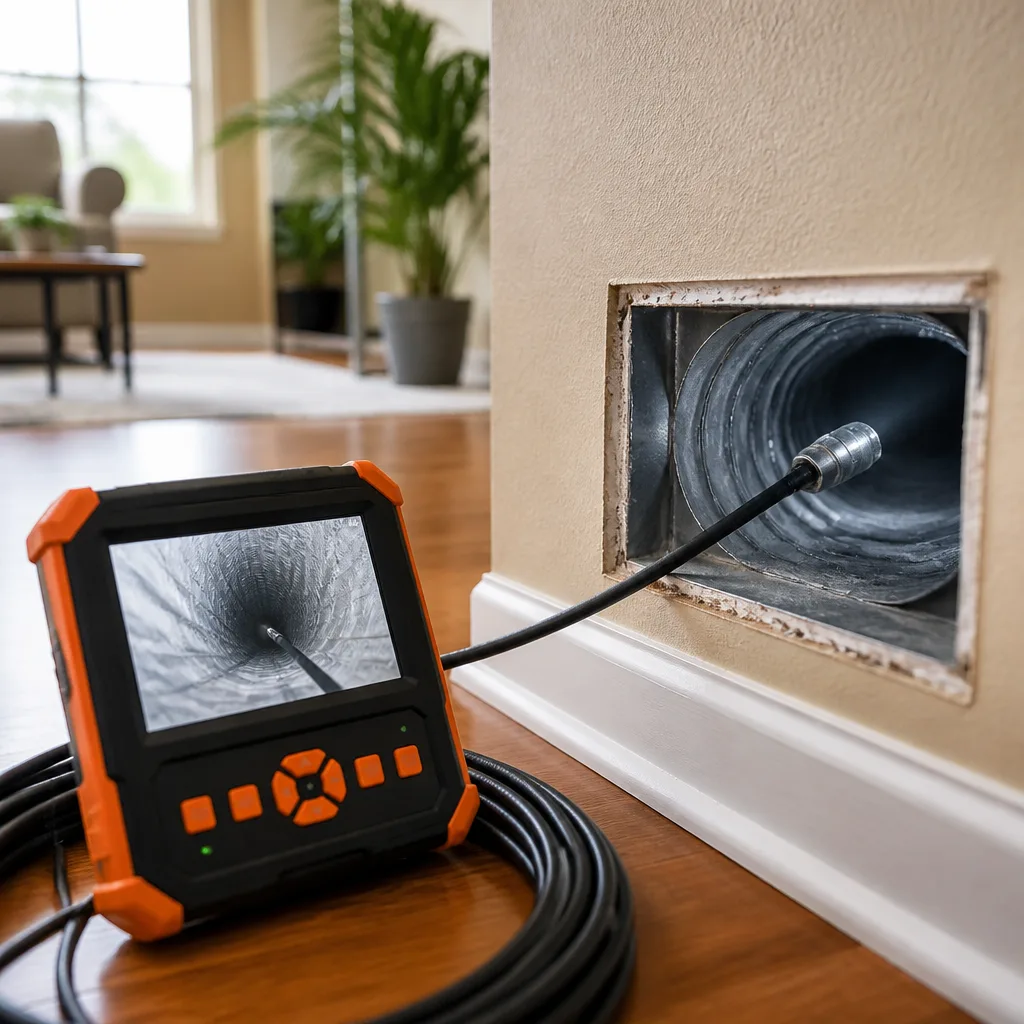
After any renovation, we recommend inspecting the main trunk line with a camera before odors develop. CleanRun Air Duct Cleaning Leesburg home service includes this inspection as part of our standard scope documentation. The photo record shows whether debris has entered the system and where it has settled, which determines whether localized cleaning or full-system extraction is appropriate.
Rodent Activity Indicators in Loudoun County Ductwork
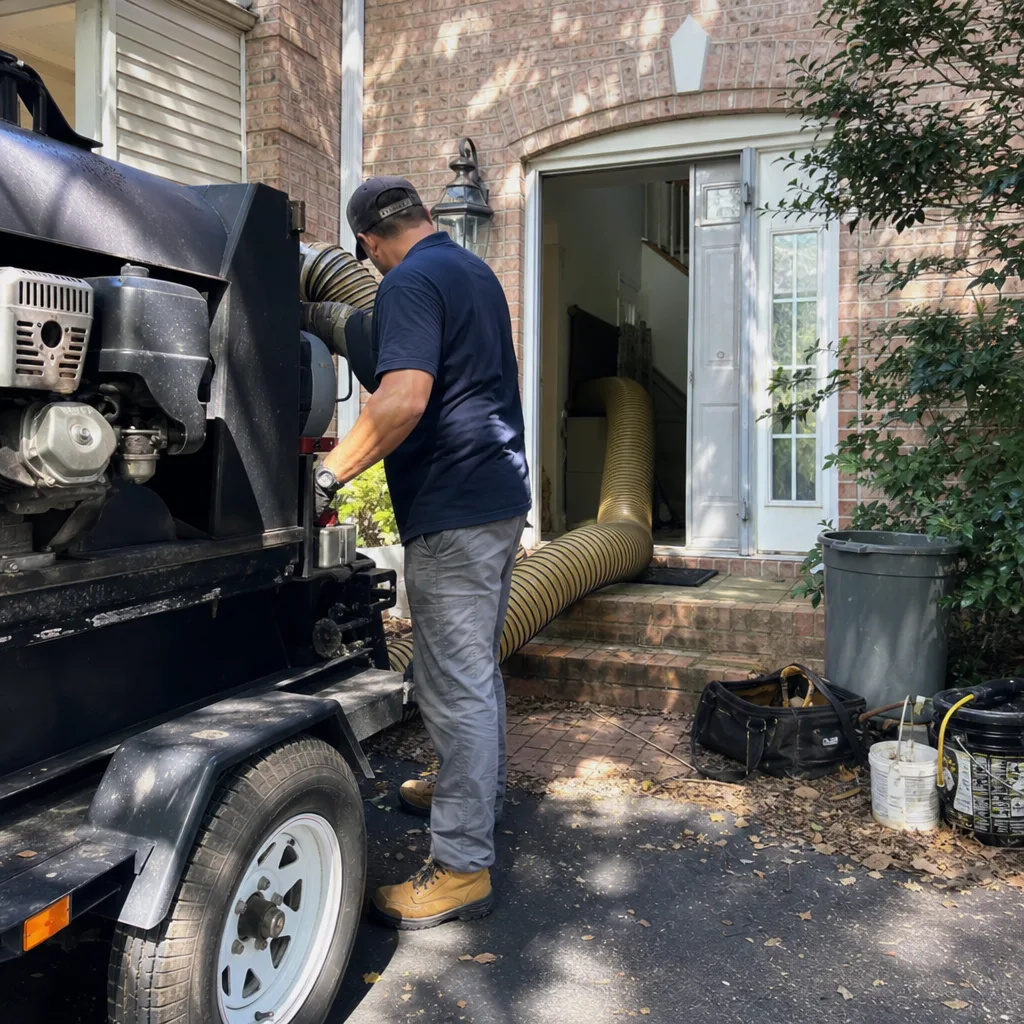
The suburban-rural edge of Loudoun County, including neighborhoods near the Morven Park equestrian grounds, the agricultural reserve boundaries, and the wooded lots of northern Leesburg, creates specific conditions for rodent entry into residential duct systems. The indicators differ from urban rodent patterns and require specific documentation.
Nesting material composition: Field mice and voles in this region collect shredded paper, insulation, and dried vegetation. A nest in a duct boot or trunk line appears as a dense, woven mass rather than the loose scatter of urban rat nesting. The material is often pale gray or tan, blending with duct insulation, and may go unnoticed until airflow is significantly restricted.
Entry point locations: In Leesburg’s market, the most common entry path is through gaps between the duct boot and the floor or ceiling framing, particularly in homes with fiberglass duct board rather than sheet metal. Exterior wall penetrations for utilities, poorly sealed crawl space vents, and garage-attic connections in homes with bonus rooms above are secondary pathways. Rodents do not chew through intact sheet metal; they exploit existing gaps.
Insulation damage pattern: Once inside, rodents compress and soil fiberglass duct liner, the insulation bonded to the interior of flex ducts or duct board. The damage appears as dark staining, compacted patches where the fiberglass has lost its loft, and in advanced cases, exposed adhesive or torn inner lining. This damage cannot be cleaned; the affected duct section requires replacement.
Documenting suspected rodent activity: Photograph any nesting material, staining, or compressed insulation. Note the register location and whether the material is fresh, soft, and pliable, or old, dry, and brittle. Fresh activity requires pest control before cleaning; old, abandoned nesting can be removed during standard duct cleaning but the entry point must be sealed to prevent recurrence.
We use Rotobrush and Nikro equipment for rodent debris extraction, followed by inspection with a camera to verify that all material has been removed and that no liner damage remains. In Leesburg homes with documented rodent history, we also photograph the sealed entry points as part of the job record under Haven Standard Clause 4: Documented Completion.
How to Photograph and Document a Suspected Duct Problem
An ambiguous photo wastes everyone’s time. A useful photo lets a contractor assess whether an in-person inspection is warranted and what equipment to bring. Here’s how to produce documentation that serves as a genuine diagnostic tool.
- Use your phone flashlight, not the room light. The camera flash reflects off metal surfaces and washes out detail. Position the flashlight parallel to the duct wall, not straight down the center, so shadows reveal texture and depth.
- Photograph the boot from two angles. First, straight down from the register opening to show overall loading. Second, angled toward the duct wall to show the material’s relationship to the metal surface, whether it’s sitting loose, adhered, or growing from it.
- Include a reference object for scale. A quarter, a pen, or your finger in the frame establishes whether accumulation is one-eighth inch or three-quarters inch. Depth determines whether you’re looking at a maintenance issue or an airflow restriction.
- Photograph the register itself. Dust patterns on the grille, particularly directional streaking that indicates airflow path, help diagnose whether the problem is supply-side debris or return-side filtration failure.
- Note the room, date, and any recent changes. “Master bedroom, east wall, August 14, HVAC running continuously for three days due to heat wave” provides context that a photo cannot. Temperature and humidity conditions affect whether biofilm is active or dormant.
- Photograph the filter and the air handler cabinet if accessible. A loaded filter or debris around the blower compartment indicates that the problem is systemic, not localized to one duct run.
We receive these photo sets regularly at CleanRun Air Duct Cleaning Leesburg; find more guides & resources on our site. When the documentation is clear, we can often confirm whether the condition warrants cleaning, repair, or monitoring, and we arrive with appropriate equipment rather than performing discovery on your dime. Haven Standard Clause 1 requires a written price before any work starts; clear documentation lets us deliver that price before the truck leaves our shop.
The Difference Between Vent Cleaning and Actual Duct Cleaning
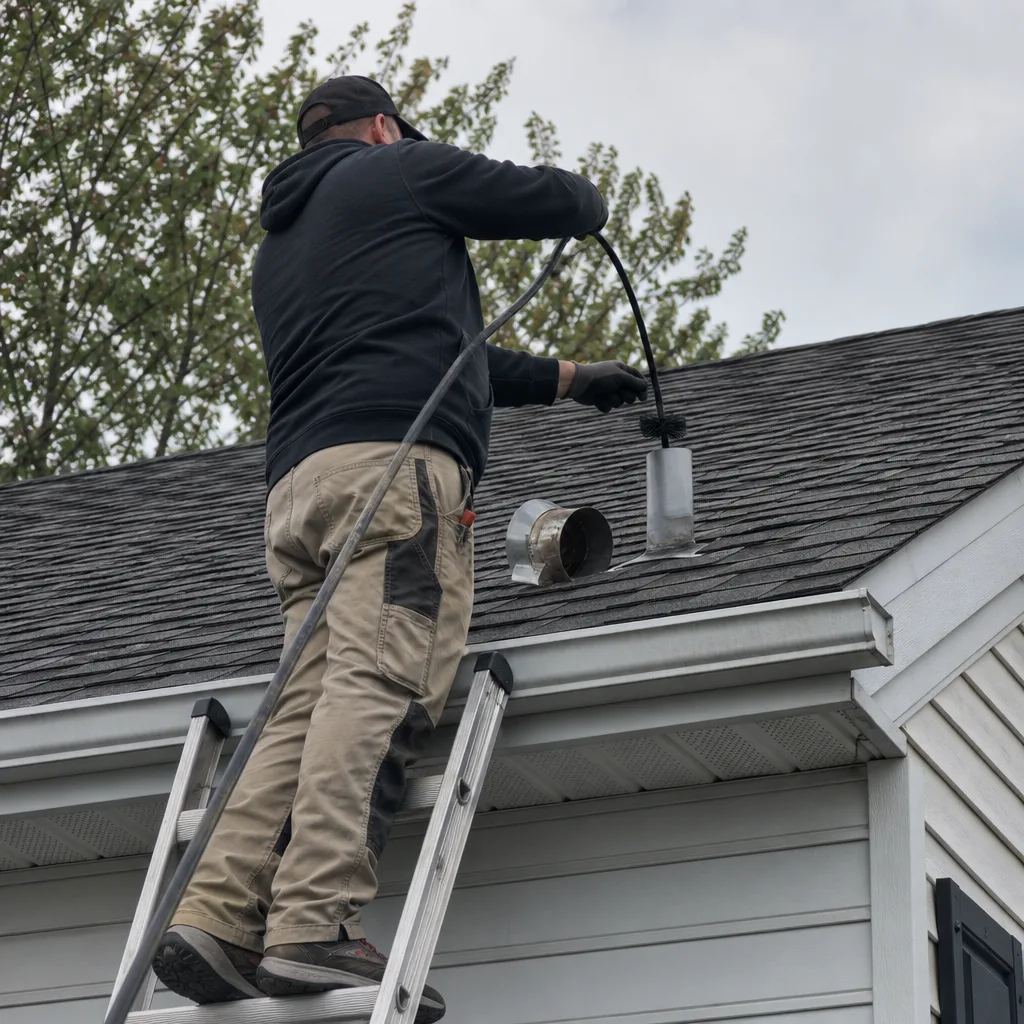
The $79 coupon industry in Northern Virginia has trained homeowners to equate register wiping with duct cleaning. They are not the same, and the warning signs that matter are rarely visible at the vent surface.
Vent cleaning removes the register, wipes the visible boot entrance, and replaces the register. It takes fifteen minutes and addresses none of the duct run, the trunk line, or the return pathway. The before-and-after photo, if one is offered, shows a clean register grille and a boot entrance that was accessible to a cloth.
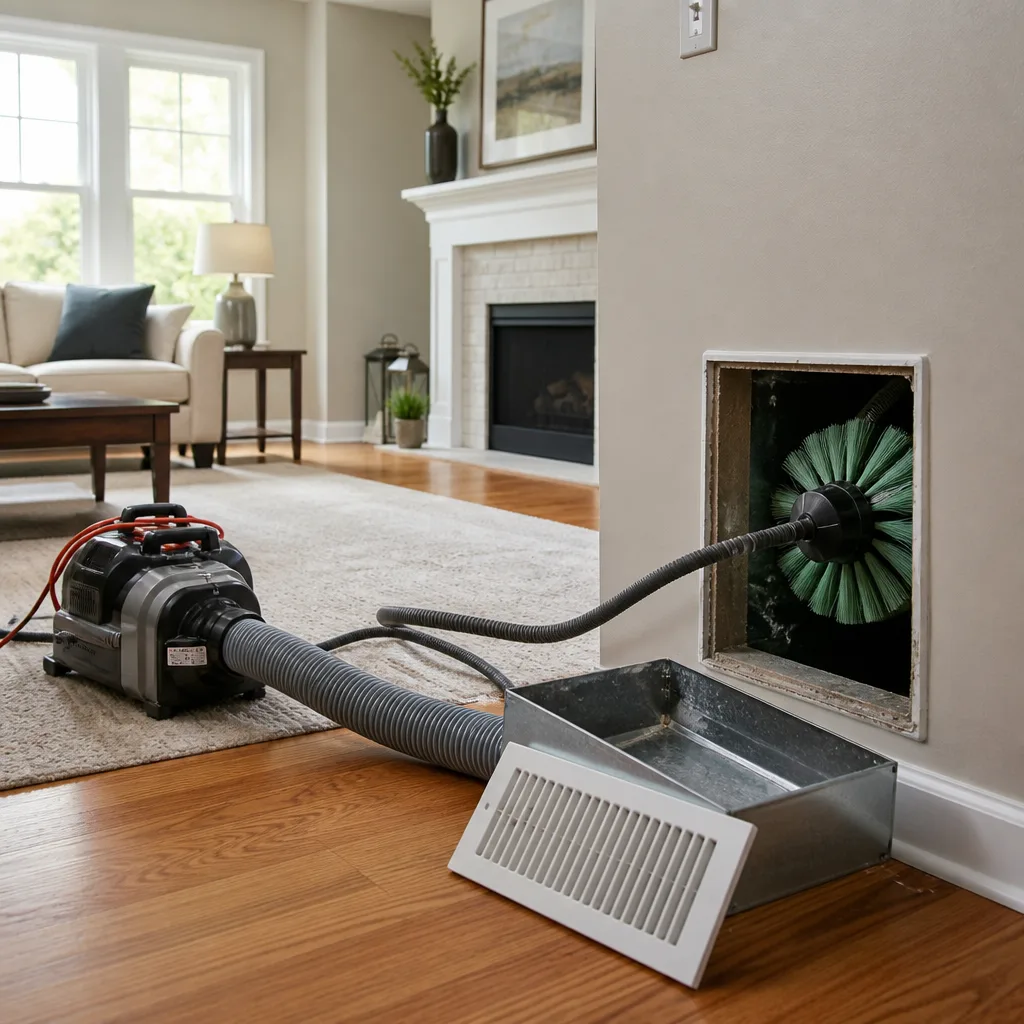
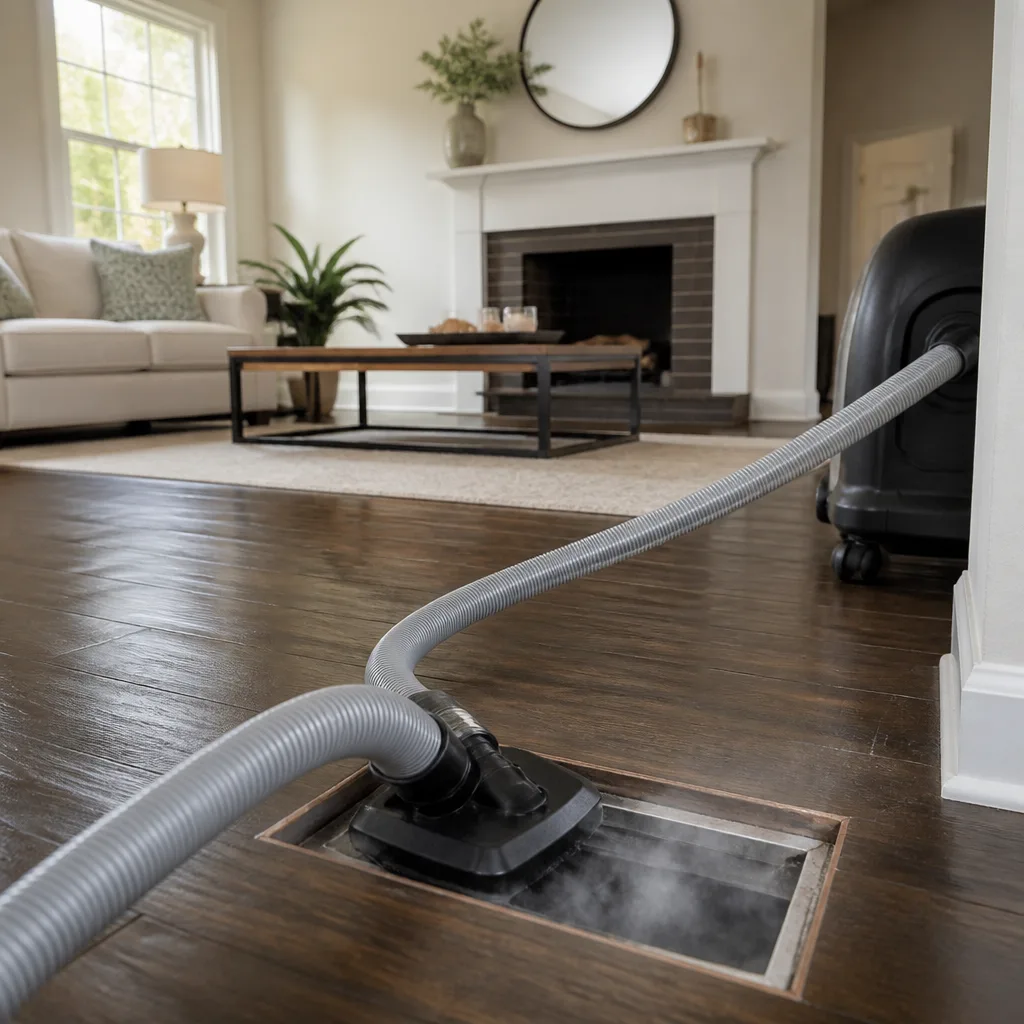
Actual duct cleaning, performed with negative-pressure extraction equipment from manufacturers like Abatement Technologies or Guardsman, addresses the complete air distribution system. The process involves:
- Sealing the supply and return plenums at the air handler to create a contained work zone
- Accessing the main trunk line through code-compliant service openings
- Agitating debris at the duct walls with mechanical brushes or compressed air tools while maintaining negative pressure to capture dislodged material before it enters the living space
- Photographing each duct run before and after, with the camera advanced to the full depth of the run, not just the boot entrance
- Documenting the volume and character of debris extracted
The warning signs that indicate a need for full duct cleaning, not vent wiping, are those described in this guide: accumulations at depth in the boot, uneven temperatures indicating trunk line blockage, post-renovation debris migration, and rodent activity. A clean register grille tells you nothing about conditions at the first elbow or in the main trunk.
In Leesburg, where home values in neighborhoods like Creighton Farms and Beacon Hill have risen substantially since 2020, we see increasing homeowner sophistication about this distinction. The question is no longer “how much to clean my vents” but “how do I verify that the full duct system was actually cleaned.” The answer is the documented photo record, delivered as a standard job component, not an add-on.
When Leesburg Climate Accelerates Buildup
Leesburg’s position in the Piedmont, with humid summers, variable shoulder seasons, and occasional severe weather events, creates specific conditions that accelerate duct contamination beyond what the same home would experience in a drier or more stable climate.
July through September humidity: When outdoor relative humidity exceeds seventy percent for extended periods, attic and crawl space ductwork in unconditioned spaces experiences surface condensation. This moisture activates dormant dust, supports biofilm growth, and in homes with organic debris loading, produces the musty odors that peak in late August. We schedule more sanitizing jobs in September than any other month, addressing conditions that developed unseen through the summer.
Spring pollen loading: Leesburg’s tree pollen season, typically March through May, overwhelms standard HVAC filtration. Homes with 1-inch pleated filters, the most common installation in tract builds, see pollen accumulation in return ductwork that resembles fine yellow-green dust at the filter and gray-green paste deeper in the system where moisture has activated it.
Winter inversion and stagnant air: Extended cold periods with the home sealed tight reduce air exchange and allow indoor-generated particulate, cooking residue, and pet dander to accumulate at rates that exceed the filtration system’s capacity. The warning sign is not a sudden event but a gradual increase in dust settling on horizontal surfaces, particularly on the second floor where warm air stratification carries particulate.
Post-storm moisture intrusion: Leesburg’s position in the severe weather corridor means occasional roof damage, siding penetration, or sump failure that introduces water into wall cavities and attic spaces. Even when the visible water is remediated, ductwork in affected zones may harbor moisture that does not dry before microbial growth begins. The warning sign appears two to four weeks later as a localized odor from specific registers.
Climate-specific acceleration means that “every three to five years” cleaning intervals, common in drier western states, may be inadequate for Leesburg conditions. We recommend annual inspection of the boot and filter, with full cleaning timed to the conditions that have developed rather than to a calendar schedule.
Common Mistakes to Avoid
- Waiting for a smell before inspecting. By the time odor reaches the living space, the condition has progressed to microbial activity or significant debris loading. The flashlight inspection at the boot catches problems six to twelve months earlier.
- Assuming new construction means clean ducts. We have documented construction debris, including drywall screws, insulation scraps, and beverage containers, in Leesburg homes built as recently as 2023. The build process does not include duct cleaning, and trade damage to ductwork during construction is common.
- Treating all register dust as a duct problem. Excessive dust at the register can indicate a failed return duct seal, pulling attic or crawl space air into the system. Cleaning the duct does not address the infiltration source. The diagnostic step is checking whether dust accumulates uniformly or preferentially at registers nearest the air handler.
- Accepting a quote without scope documentation. A written price is necessary but not sufficient. The scope should specify how many duct runs, whether the trunk line is included, whether before-and-after photos are delivered, and what equipment will be used. Haven Standard Clause 1 requires written price before work starts; we extend this to written scope before price is finalized.
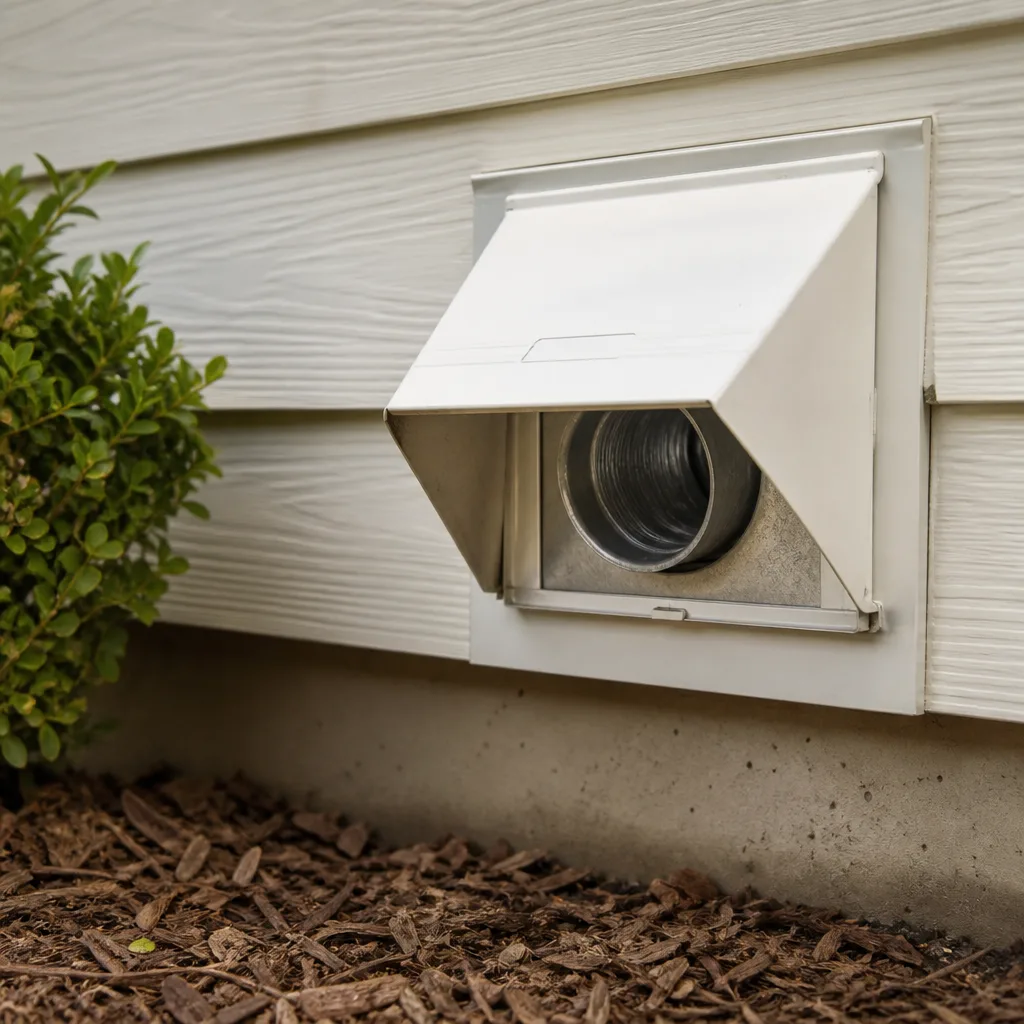
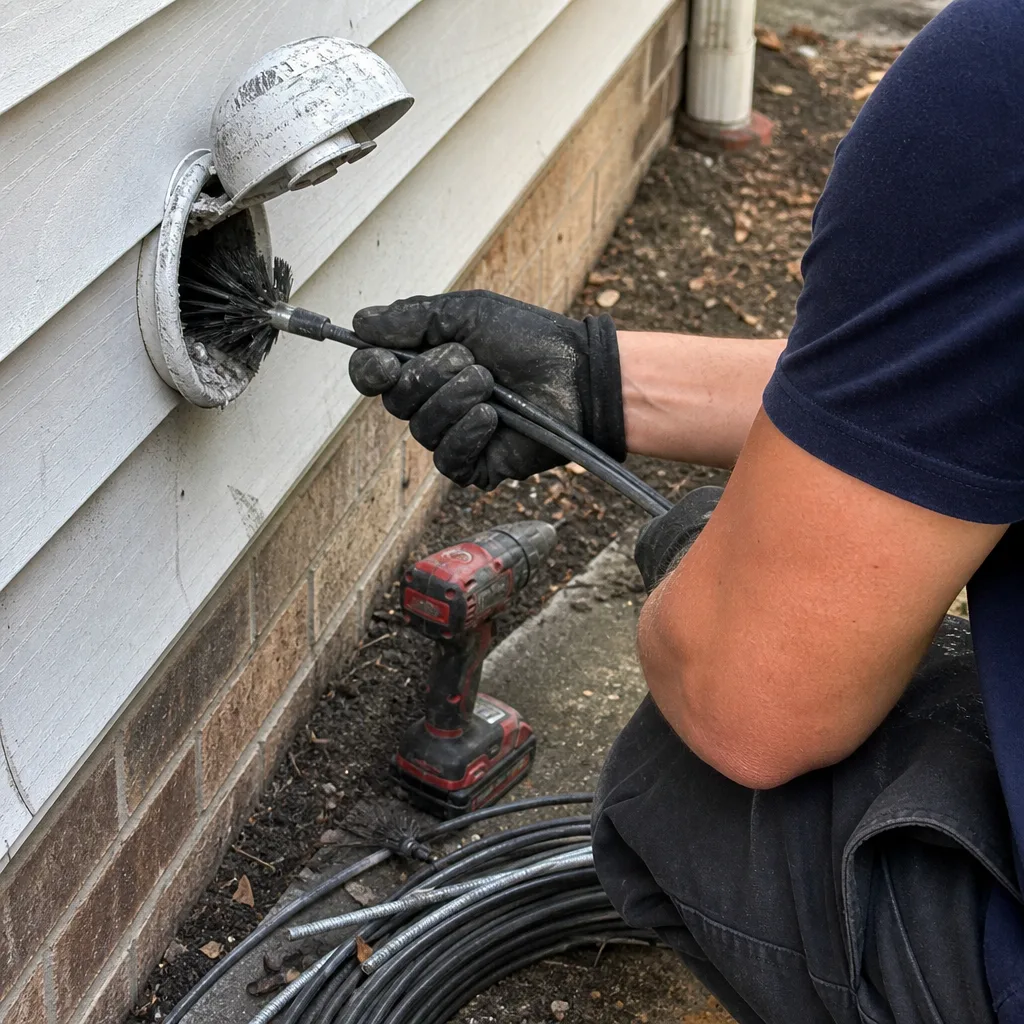
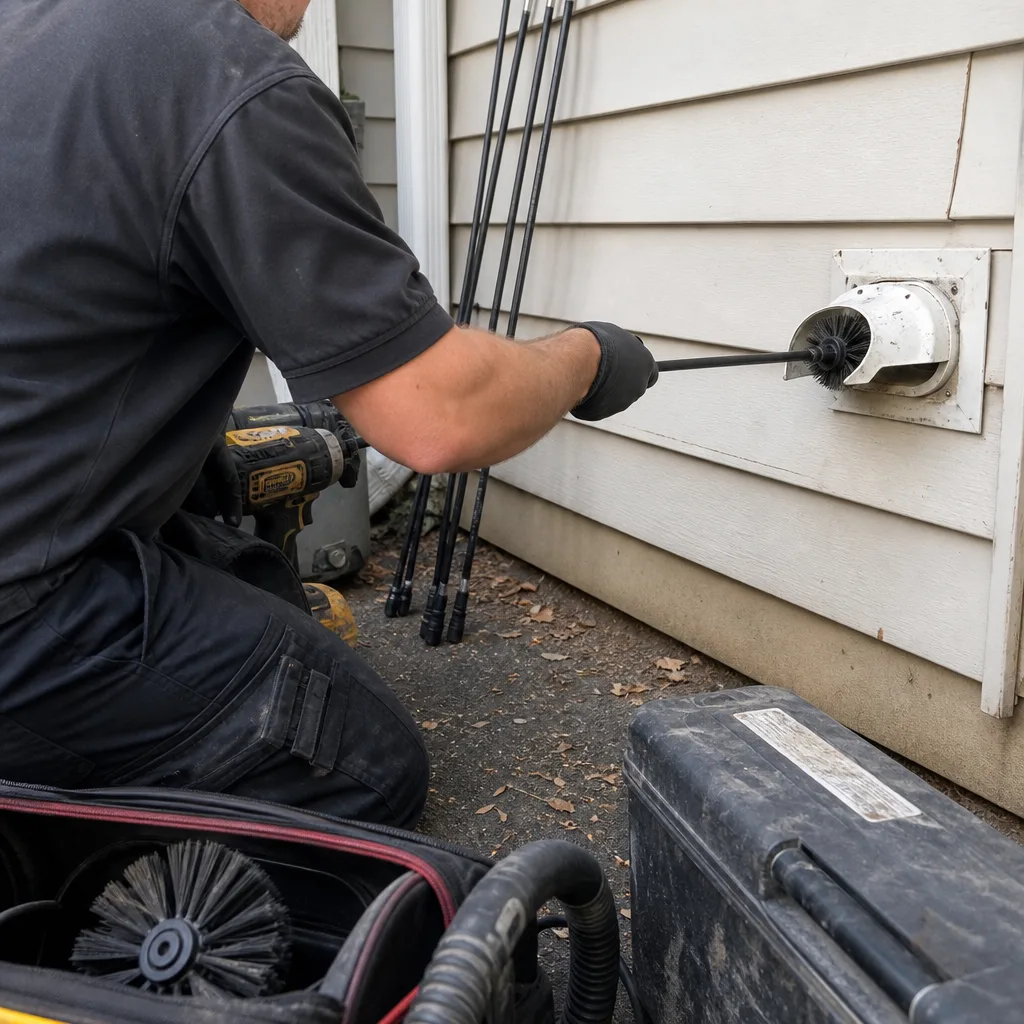
- Ignoring the dryer vent as part of the system. In Leesburg homes with laundry rooms on interior walls, long dryer vent runs through attic or crawl space create lint accumulation that restricts airflow, extends drying times, and presents fire risk. Dryer vent cleaning in Leesburg should be scheduled with or independently from duct cleaning based on the vent configuration, not ignored because it is out of sight.
- Photographing without scale or context. A close-up of “something dirty” requires an in-person visit to interpret. A photo with scale, location, and date lets a contractor assess urgency and prepare appropriately.
- Assuming one company’s “complete cleaning” matches another’s. The industry has no standardized terminology. “Complete” may mean twelve registers or it may mean twelve registers plus trunk line plus returns plus sanitizing. Verify the component list, not the adjective.
When to Call a Professional
Call for inspection when you document any of the following: biofilm or adhered material in the boot, temperature differences exceeding three degrees between rooms on the same system, visible debris at the first elbow visible with a flashlight, or any rodent sign regardless of whether the activity appears current. These conditions do not resolve spontaneously and, in the case of moisture-related growth, worsen with each HVAC cycle.
CleanRun Air Duct Cleaning Leesburg offers free estimates in Leesburg. We’ll review your documentation, confirm whether conditions warrant cleaning, repair, or monitoring, and deliver a written price before any work starts. Call (571) 487-7204. Every estimate includes a scope discussion with a technician who can explain what the photo record will include and how the 365-Day Done Right Promise applies to your specific system configuration.
Frequently Asked Questions
Whole-home air duct cleaning in Leesburg typically ranges from $380 to $720 for a standard residential system, depending on total duct footage, number of supply and return runs, accessibility, and whether the trunk line or plenum requires separate access. Add-on services such as sanitizing, dryer vent cleaning, or duct repair are quoted separately with written prices for each. Call (571) 487-7204 for an exact quote based on your home’s square footage and duct configuration; estimates are free and include a written scope.
Low quotes typically reflect vent wiping rather than full-system cleaning, or they use portable shop-vacuum equipment without negative-pressure containment. The $79 to $149 range common in coupon advertising covers register removal, surface wiping, and register replacement, with no trunk line access, no mechanical agitation, and no photo documentation. A legitimate whole-system cleaning requires contained negative-pressure equipment, mechanical agitation tools, code-compliant access openings, and documented verification; these have fixed costs that do not compress to coupon levels without scope reduction.
Require a documented photo record of every duct run, before and after, with the camera advanced to the full depth of the run. The photo should show the duct wall surface, not just the boot entrance. At CleanRun, this record is delivered as a standard job component, not an add-on, and has been since our first job in 2013. If a company cannot or will not provide this documentation, the work is not verifiable.
For Leesburg homes, we recommend annual flashlight inspection of the boot and filter, with full cleaning timed to documented conditions rather than a fixed calendar. Homes with pets, recent renovation, or occupants with respiratory sensitivity may need cleaning every two to three years. Homes with no aggravating factors and consistent filter maintenance may extend to four or five years. The correct interval is determined by what the camera shows, not by a schedule.
Homeowners can and should remove and clean register grilles, wipe accessible boot surfaces, and replace filters on schedule. We do not recommend attempting to access the main trunk line, plenum, or internal duct runs. These components require contained negative-pressure equipment to prevent debris release into the living space, and mechanical agitation tools that do not damage duct liner. Duct board and flex duct are easily torn by improper tools, creating leakage that degrades system efficiency. Document what you can see and hire a professional for what you cannot.
Moderately, in specific conditions. A partially blocked duct run that is restored to full diameter will deliver design airflow to the room it serves, which can reduce runtime and improve temperature consistency. However, duct cleaning does not repair leaks, replace failing equipment, or correct system sizing. The efficiency gain is real but bounded; it is most significant in homes where blockage has progressed to the point of measurable airflow restriction, which the tissue test described above will reveal.
A CleanRun appointment begins with a walkthrough to identify access points, verify system configuration, and review any documentation you have prepared. The technician then seals the system for contained extraction, creates code-compliant access openings as needed, and performs mechanical agitation with negative-pressure capture. Each duct run is photographed before and after. The appointment concludes with filter replacement if requested, system restart, and delivery of the photo record with the written invoice. Most Leesburg homes require four to six hours for a complete residential system. HVAC cleaning in Leesburg follows the same documentation standard, with additional attention to the coil and blower compartment.
The Bottom Line
The warning signs that matter in Leesburg homes are visual, early, and documented with a phone flashlight before they become odors or comfort complaints. Gray lint, oily film, and biofilm at the duct boot appear months before musty air reaches your living space. Uneven temperatures often indicate blockage, not balancing. Renovation debris migrates to trunk line elbows on a predictable timeline. Rodent activity in Loudoun County’s edge neighborhoods has specific indicators that require camera inspection to assess fully. Photograph what you find with scale and context, and use that documentation to obtain a written scope and price before any work begins. The industry has trained homeowners to react late; this guide is designed to help you observe early, document clearly, and hire with verification.
Written by Tomas Reyes, Owner at CleanRun Air Duct Cleaning Leesburg, serving Leesburg since 2013.