
Last updated September 23, 2026
Whole-system duct and dryer vent check with before-and-after photos - you see exactly what came out of your vents
That "$99 whole-house special" is a bait ad - the real number appears once they are in your hallway, or the "clean" is a shop-vac at the register. We photograph the inside of your ducts before and after instead.
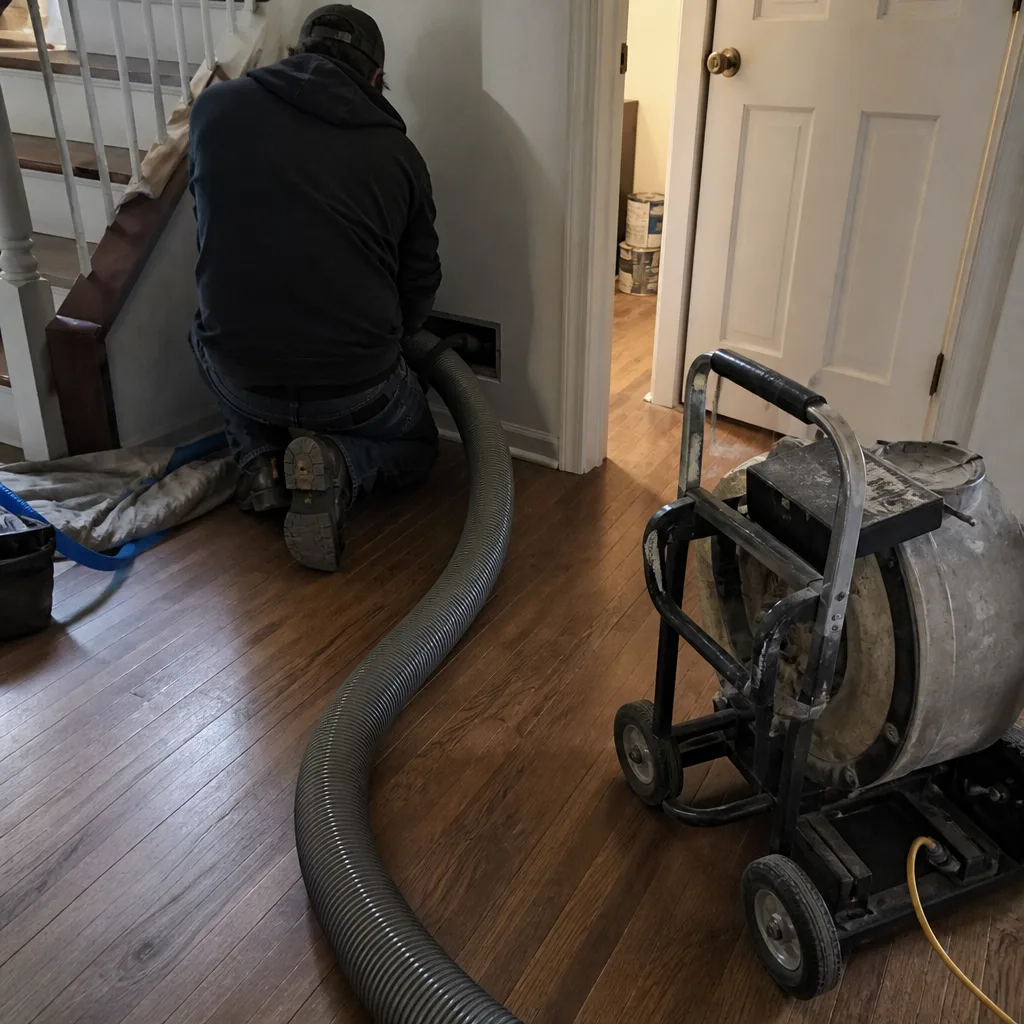 Before
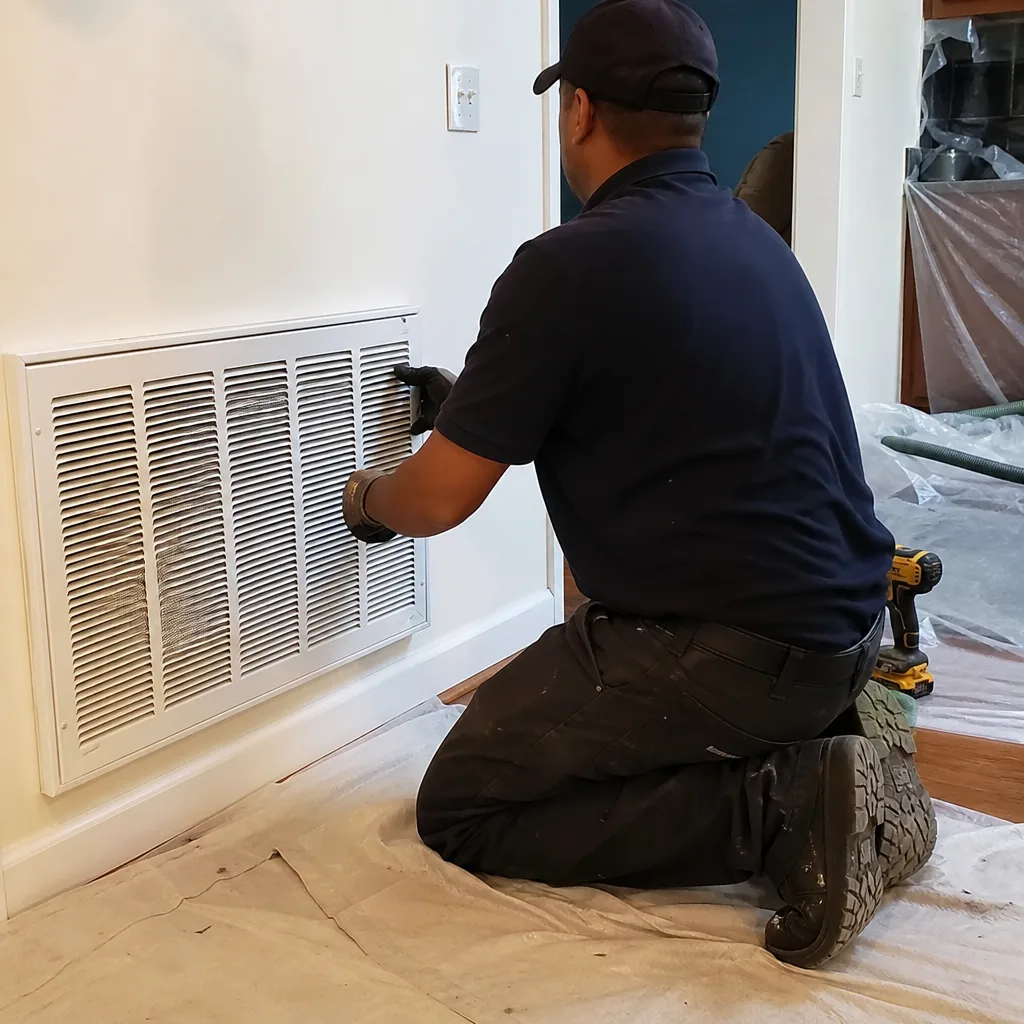 After
After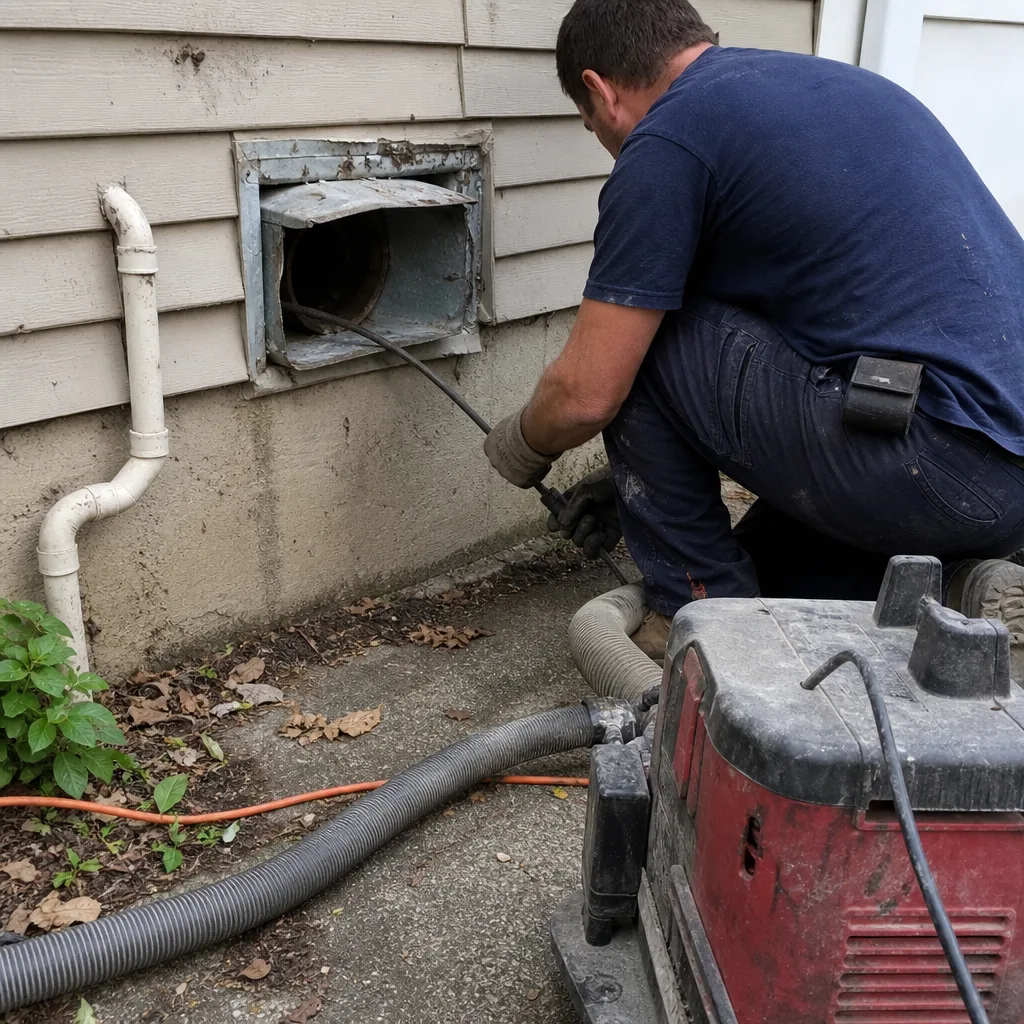 Before
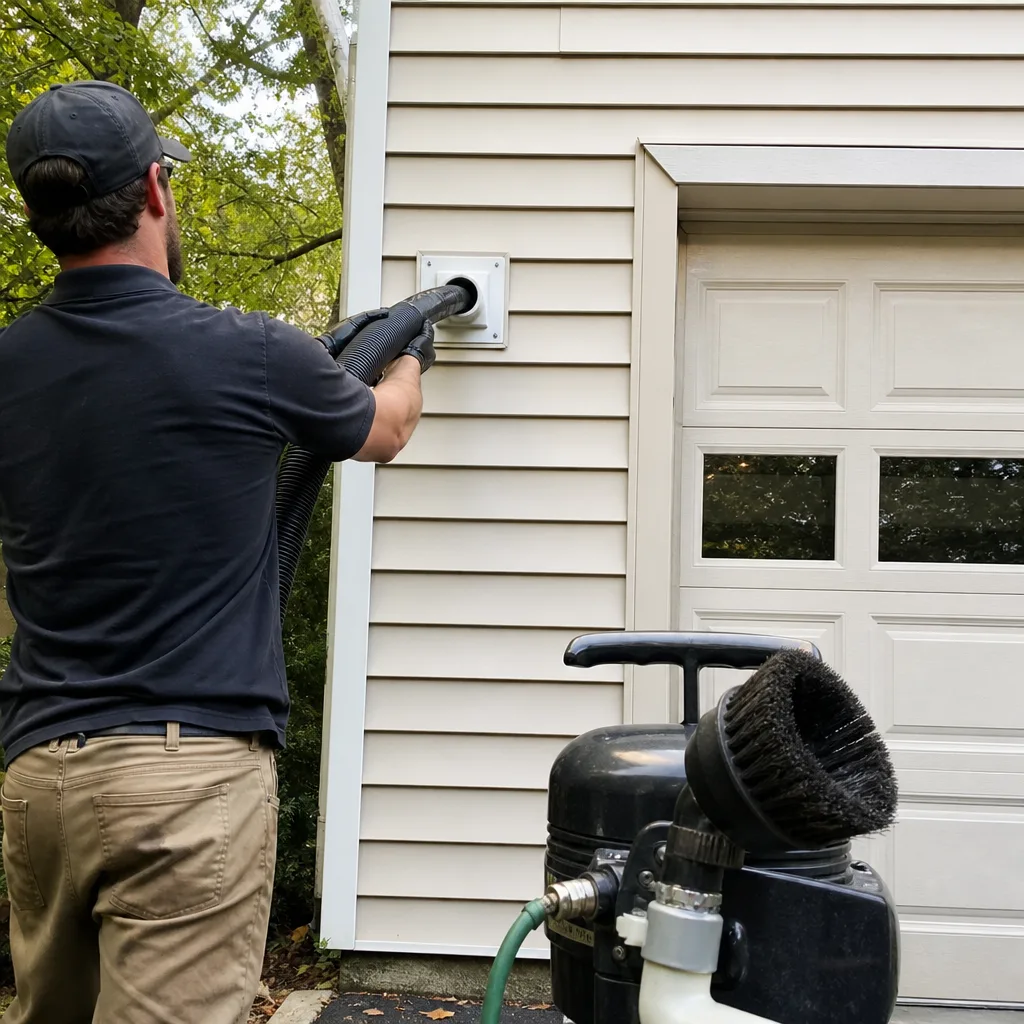 After
After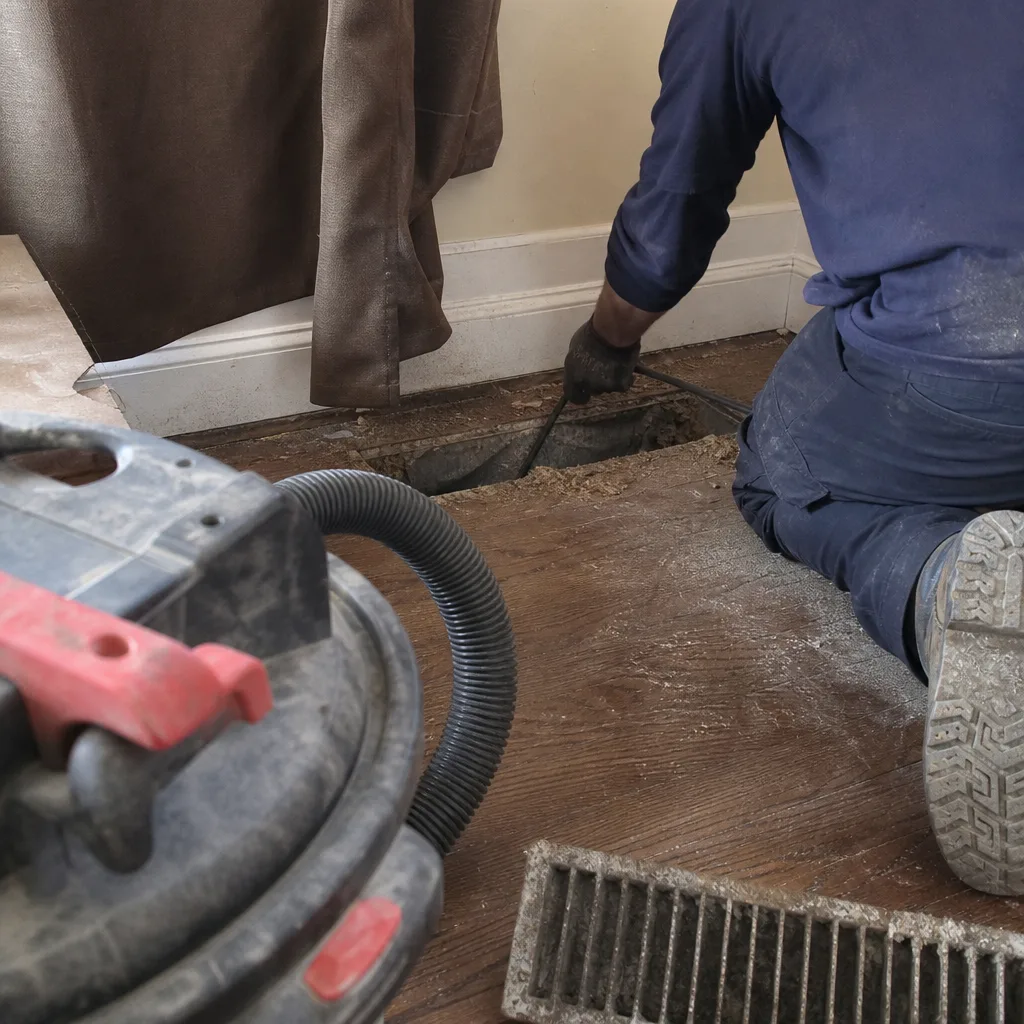 Before
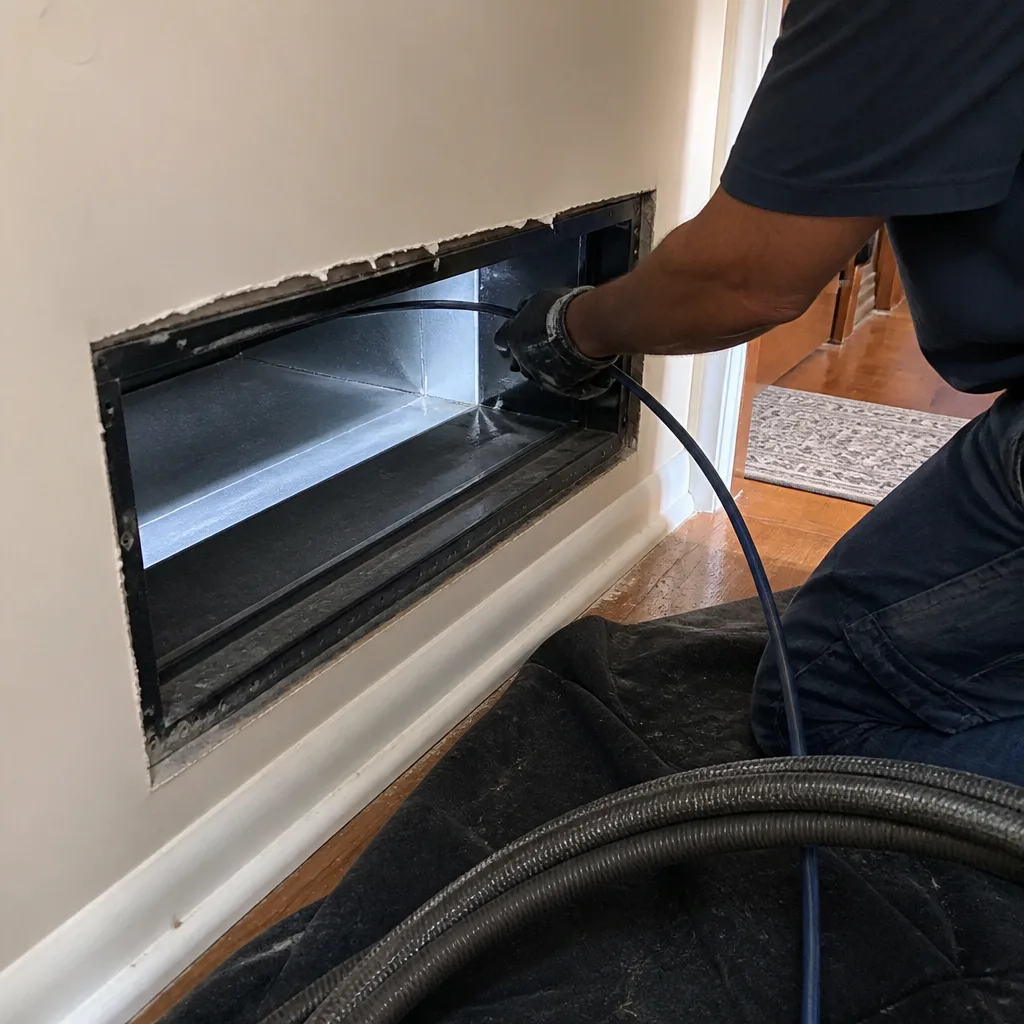 After
AfterThe Complete Guide to Air Duct Cleaning in Leesburg
The EPA does not recommend air duct cleaning on a routine schedule. That single sentence contradicts what most Leesburg homeowners hear from coupon mailers and seasonal door hangers. Yet the average home in Loudoun County gets pitched an “annual cleaning” every spring by operators who never inspect a single duct run before quoting a price. This guide-along with our DIY vs Professional Air Duct Cleaning: The Leesburg Homeowner’s Decision Guide-explains what the evidence actually says about when cleaning is necessary, what a legitimate job produces in documented results, and how to distinguish real work from vacuum noise. You’ll learn how to read a before/after photo, verify NADCA compliance before anyone touches your system, and understand why Leesburg’s clay-heavy soil and humidity patterns create specific risks that flat-rate national pricing ignores.
Quick Answer
Air duct cleaning in Leesburg typically costs $450-$850 for a complete residential system and should include a written scope, negative-pressure extraction of every duct run, and a documented photo record of each register and trunk line. A legitimate job takes 3-5 hours for an average 2,500-square-foot home and produces measurable debris removal, not just a cleaner smell. The EPA recommends cleaning only when there is visible mold growth, verified rodent or insect infestation, or debris buildup that restricts airflow, not on an annual schedule.
Table of Contents
- What the EPA Actually Says About Duct Cleaning
- The NADCA ACR Standard Explained
- Debris Types Found in Northern Virginia Ductwork
- How to Read a Before/After Duct Photo
- Leesburg’s Climate, Soil, and Mold Risk Window
- What a Legitimate Invoice Should Include
- Choosing a Technician in Leesburg
- Common Mistakes to Avoid
- When to Call a Professional
- Frequently Asked Questions
- The Bottom Line
 Before
 After
AfterWhat the EPA Actually Says About Duct Cleaning
The Environmental Protection Agency’s official position is that duct cleaning has never been shown to prevent health problems, and evidence does not conclusively demonstrate that particle levels inside homes increase because of dirty air ducts. This is not the same as saying duct cleaning is useless. It means the justification for cleaning must be specific and observable, not preemptive.
The EPA identifies three legitimate reasons to clean:
- Visible mold growth inside hard-surface ducts or on other components of your HVAC system. Note: “musty odor” is not sufficient evidence; the growth must be visible or confirmed by laboratory analysis.
- Verified infestation of rodents or insects. Droppings, nesting material, or actual specimens must be present, not suspected.
- Debris buildup that restricts airflow, confirmed by measurable pressure drop or visual obstruction.
Everything else, the EPA labels as not having been proven necessary. This directly contradicts the $79 “whole house special” that arrives in Leesburg mailboxes each March, which implies annual maintenance without evidence requirement.
The National Air Duct Cleaners Association (NADCA) adds nuance: even without the EPA’s three triggers, cleaning may be warranted after renovations, before occupancy of a new home, or when occupants have specific respiratory conditions that merit reduced particulate load. But NADCA also emphasizes that cleaning an already-clean system wastes money and can, in inexperienced hands, damage ductwork or release more debris than it removes.
In our experience across Leesburg and Loudoun County since 2013, the most common legitimate trigger is post-renovation cleaning. Homes built or renovated between 2015 and 2025, particularly in developments like Lansdowne, Woodlands, and Belmont Country Club, routinely contain drywall dust, insulation fragments, and construction debris that standard HVAC filters cannot capture. We’ve photographed 2-inch debris deposits at plenum elbows in homes that passed final inspection six months prior.
The NADCA ACR Standard Explained
NADCA’s Assessment, Cleaning, and Restoration of HVAC Systems standard, abbreviated ACR, is the only industry-recognized protocol for duct cleaning. It is not a suggestion. It is a 200-plus-page technical specification that defines what “clean” means in measurable terms, and any technician who cannot explain how they comply with specific ACR sections is not performing legitimate work.
Here is what ACR compliance requires, in sequence:
- System inspection before cleaning. The technician must visually inspect all accessible components, including supply and return ductwork, registers, grilles, diffusers, heat exchangers, cooling coils, drip pans, fan motor and housing, and the air-handling unit. This inspection must be documented, not verbal.
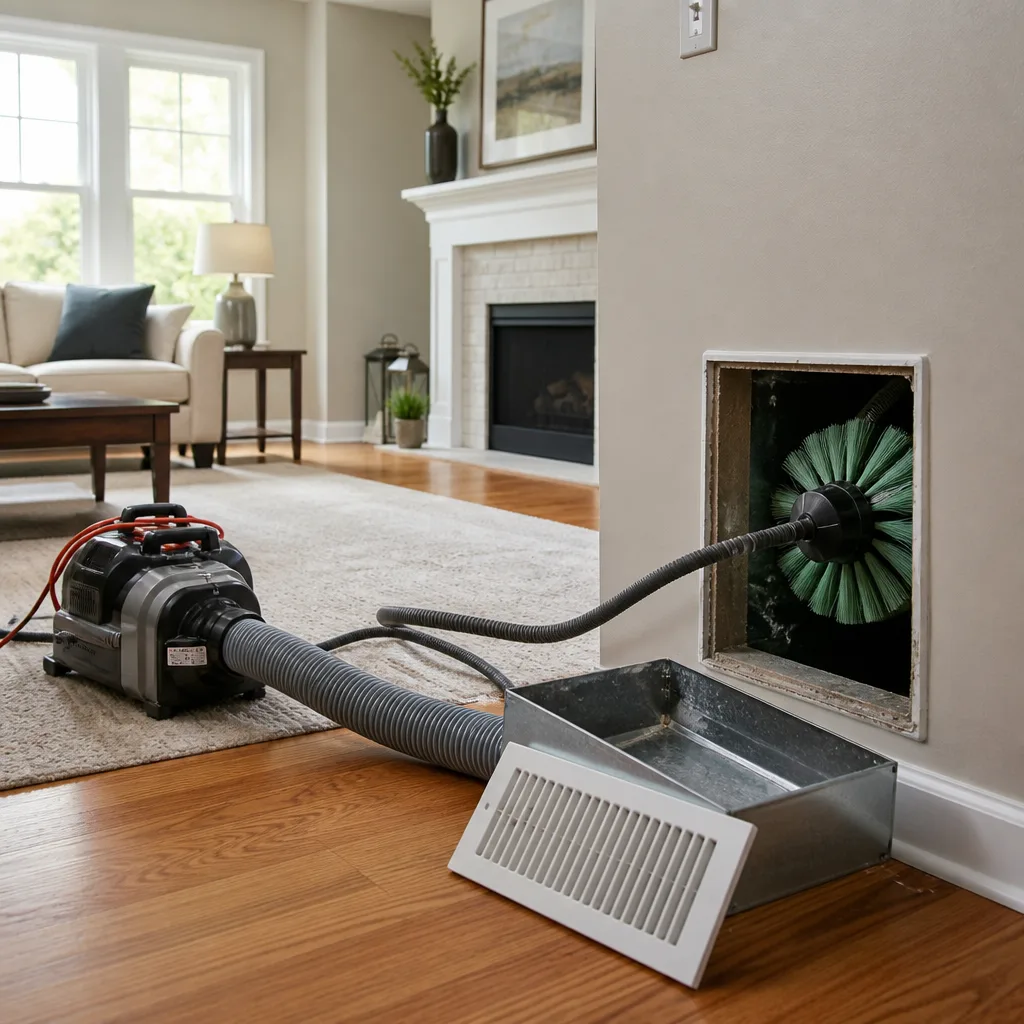
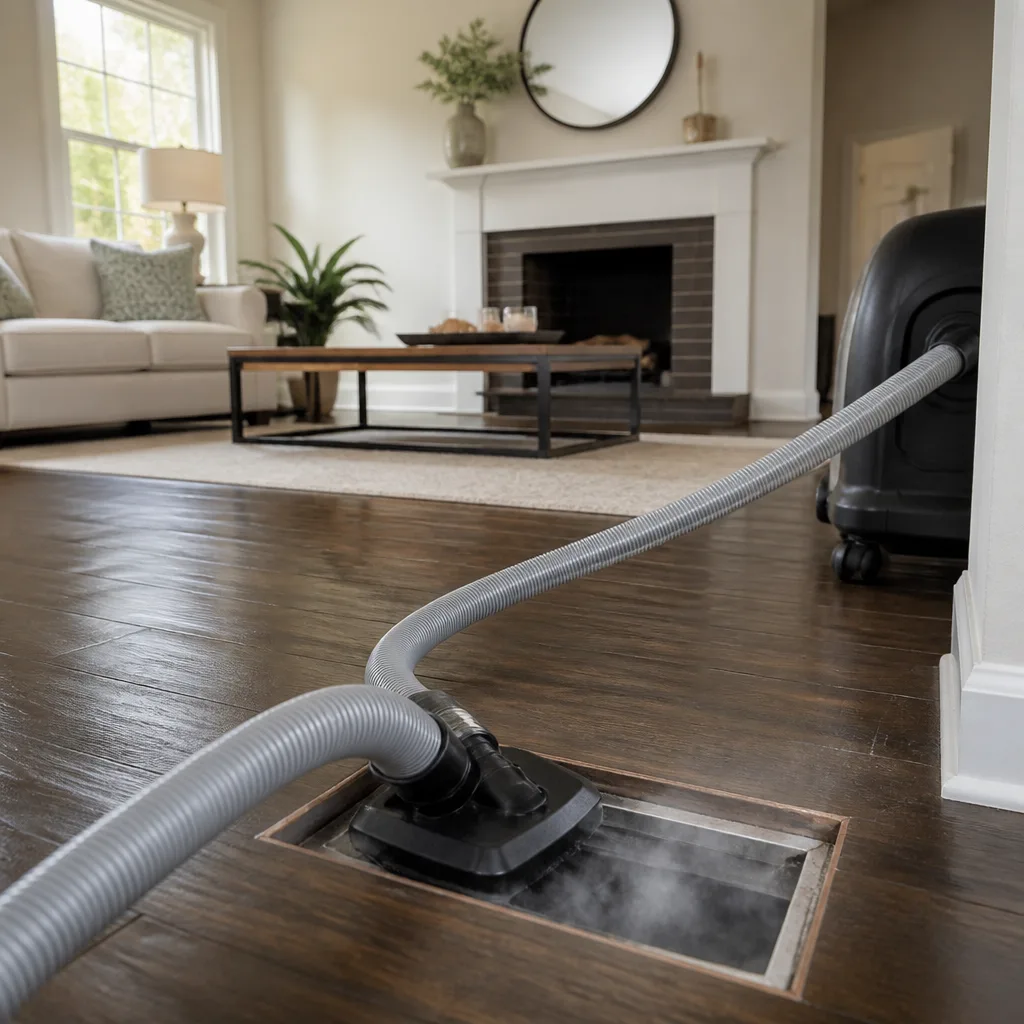
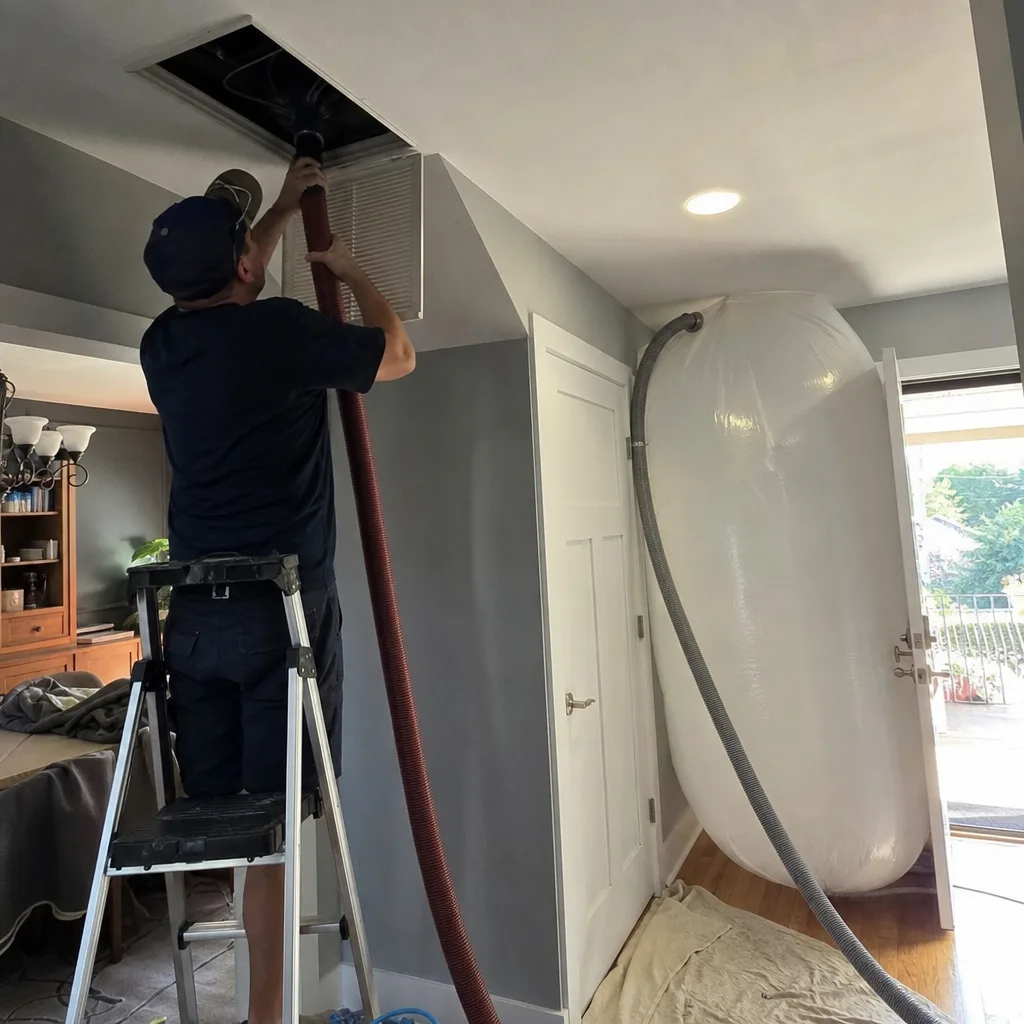
- Containment of the work area. Registers must be sealed during cleaning to prevent debris migration into occupied spaces. Negative-pressure extraction, which pulls air and loosened debris toward the vacuum source rather than pushing it into rooms, is required for all duct runs.
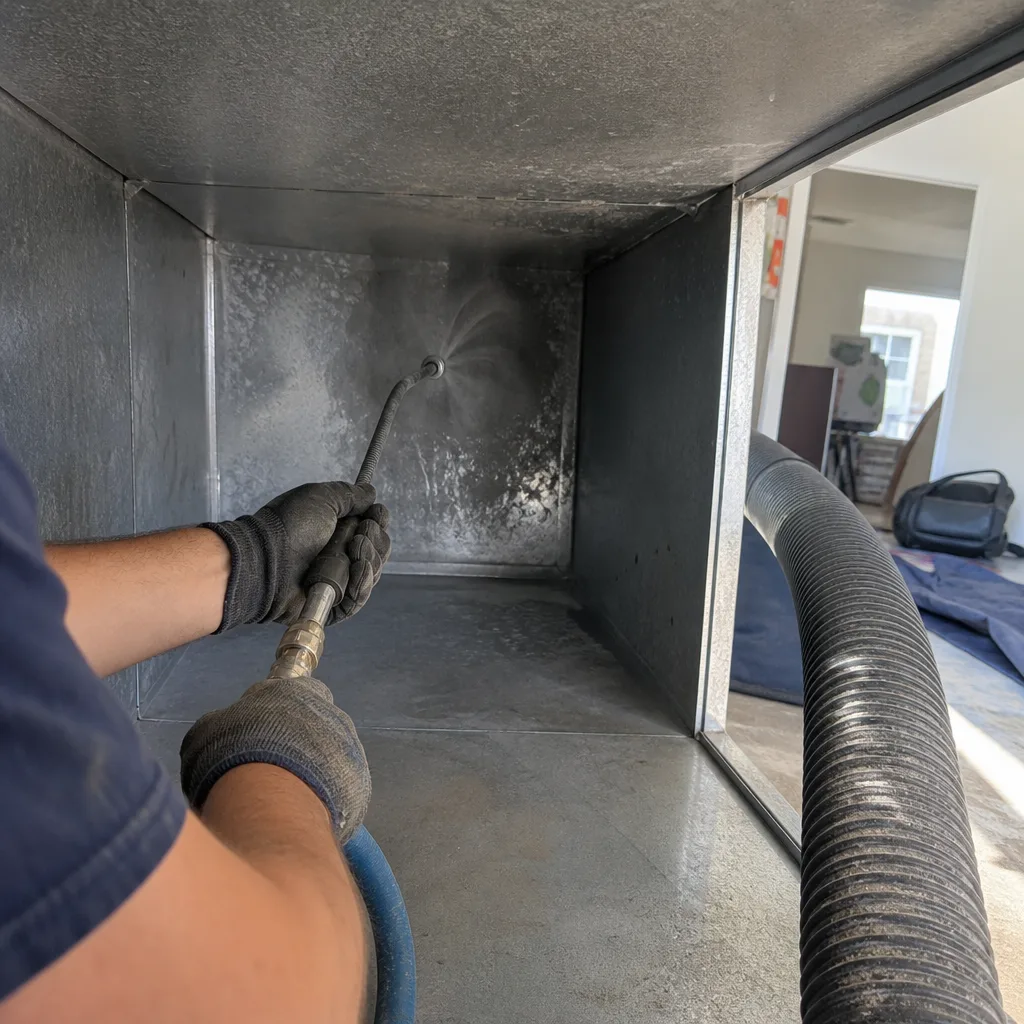
- Mechanical agitation. Debris must be dislodged before extraction using tools that contact duct surfaces: rotary brushes, air whips, or compressed air systems. Suction alone is insufficient per ACR Section 6.2.
- Post-cleaning verification. The system must be inspected again after cleaning to confirm debris removal. NADCA recommends, though does not mandate, photographic documentation of representative duct sections.
How do you verify compliance before signing anything? Ask three questions:
- “Which sections of ACR does your process follow?” A legitimate technician names sections: 5.1 for inspection, 6.2 for agitation methods, 7.3 for containment.
- “What negative-pressure equipment do you use, and what is the CFM rating?” Common legitimate answers: Nikro portable extractors (1,500-3,000 CFM), Abatement Technologies truck-mounted systems (up to 5,000 CFM).
- “Will I receive photos of my actual ducts, or stock images?” The answer must be your actual ducts, timestamped, with identifiable features (register locations, duct damage, specific debris types).
CleanRun’s Air Duct Cleaning in Leesburg follows ACR protocols on every job, with Haven Standard Clause 1 requiring a written scope and price before any panel is removed, and Haven Standard Clause 4 requiring the Documented Photo Record delivered as a standard job deliverable, not an upsell.
Debris Types Found in Northern Virginia Ductwork
Not all debris responds to the same extraction method. The $79 coupon special treats every duct as if it contains loose dust that a shop vacuum can handle. In Leesburg homes, we regularly encounter five distinct debris categories, each requiring specific equipment and technique.
Fiberglass insulation fragments. Ducts lined with fiberglass insulation, common in homes built 1985-2005, shed microscopic glass fibers as the binder degrades. These fragments are too light for standard vacuum suction and too abrasive for aggressive rotary brushing, which can tear the lining. We use controlled-contact rotary systems, like the Rotobrush Beast series, at reduced RPM with HEPA-filtered negative-pressure containment. The photo record shows the characteristic glittering residue on duct walls before removal.
Drywall dust from renovations. Post-2015 construction in Leesburg’s rapid-growth corridors, including the Village of Leesburg area and Edwards Ferry Road developments, left fine gypsum powder in duct systems. This material packs into a cement-like crust at elbows and transitions, particularly where flex duct bends sharply. Mechanical agitation with air whips, followed by high-CFM extraction, is required. Suction alone leaves the crust intact.
Pet dander accumulation. Loudoun County has among Virginia’s highest pet-ownership rates. Dander adheres to duct surfaces through electrostatic attraction and becomes embedded in fiberglass lining. Standard brushing releases it into the airstream without full removal. We pre-treat with EPA-registered sanitizing agents from Guardsman, then extract with HEPA-filtered equipment. The before photo shows yellow-brown staining; the after photo shows bare metal or intact lining.
Organic growth in drip pans and coils. Leesburg’s humidity, discussed in the next section, creates conditions for microbial growth on cooling coils and in condensate pans. This is not “duct cleaning” strictly speaking, but ACR includes these components in system cleaning scope. We use non-acidic foaming cleaners followed by thorough rinsing, with photo documentation of pan condition.
Rodent nesting material. Field mice enter crawl space and attic ductwork through gaps as small as 3/8 inch, particularly in rural-edge Leesburg properties near the W&OD Trail corridor. Nesting material combines shredded insulation, seeds, and fecal pellets. This requires full PPE, HEPA containment, and often duct repair to seal entry points after removal. We document the nest location, removal process, and repair with photos under Haven Standard Clause 4.
How to Read a Before/After Duct Photo
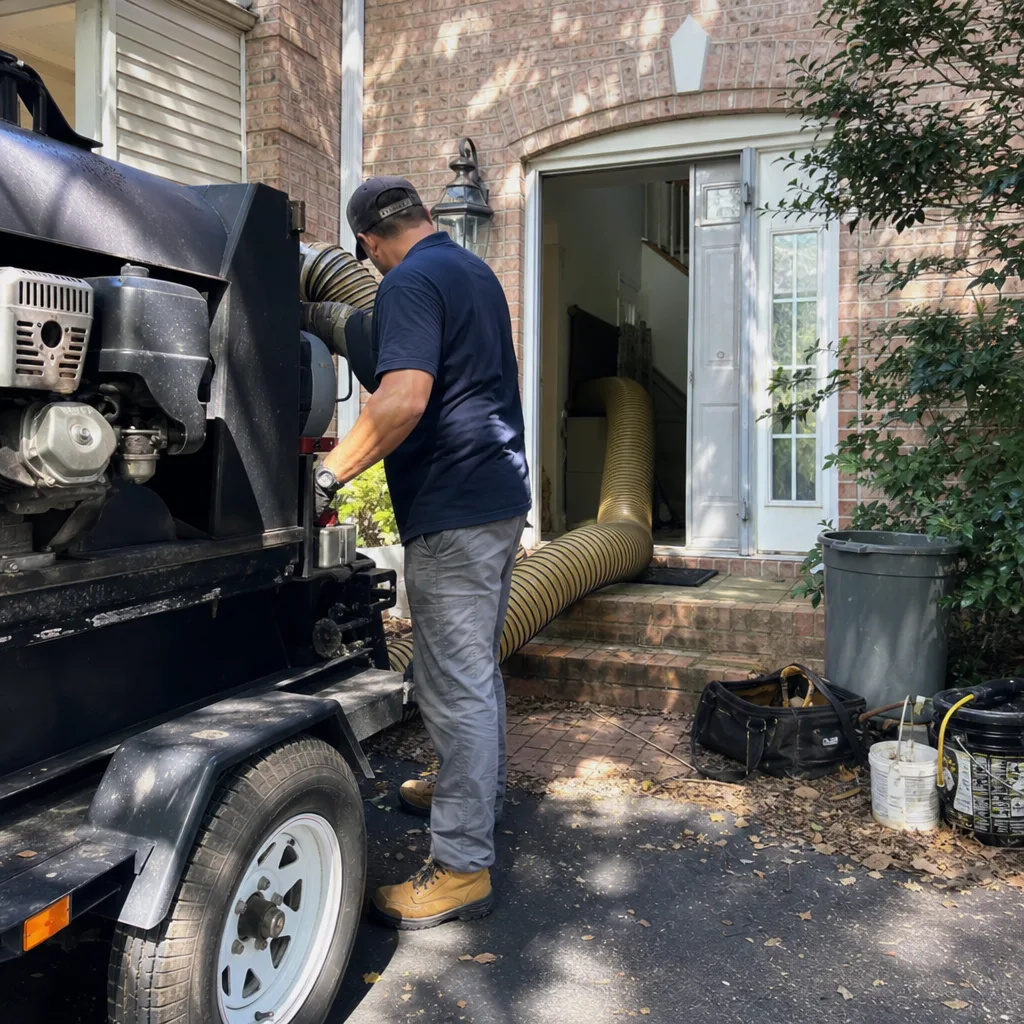
The photo record is where documented work separates from undocumented claims. Here’s what to examine when a company shows you, or should show you, the inside of your ducts.
Lighting consistency. The before and after photos must show the same location. Look for matching register patterns, duct seams, or identifiable damage. If lighting color temperature shifts dramatically between shots, the photos may be from different locations or different jobs entirely.
Debris type and distribution. A legitimate before photo shows debris distributed according to airflow physics: heavier accumulation on the bottom of horizontal runs, at elbows where velocity drops, and near registers where turbulence deposits material. Uniform “dirt” across all surfaces suggests artificial soiling or stock imagery.
Surface condition after cleaning. “Clean” does not mean “sterile.” Metal ductwork after proper cleaning shows bare galvanized steel with minor oxidation staining. Fiberglass-lined duct shows intact lining without loose fibers or embedded debris. What it does not show: wet surfaces (improper moisture introduction), damaged lining (aggressive over-cleaning), or remaining debris at seams.
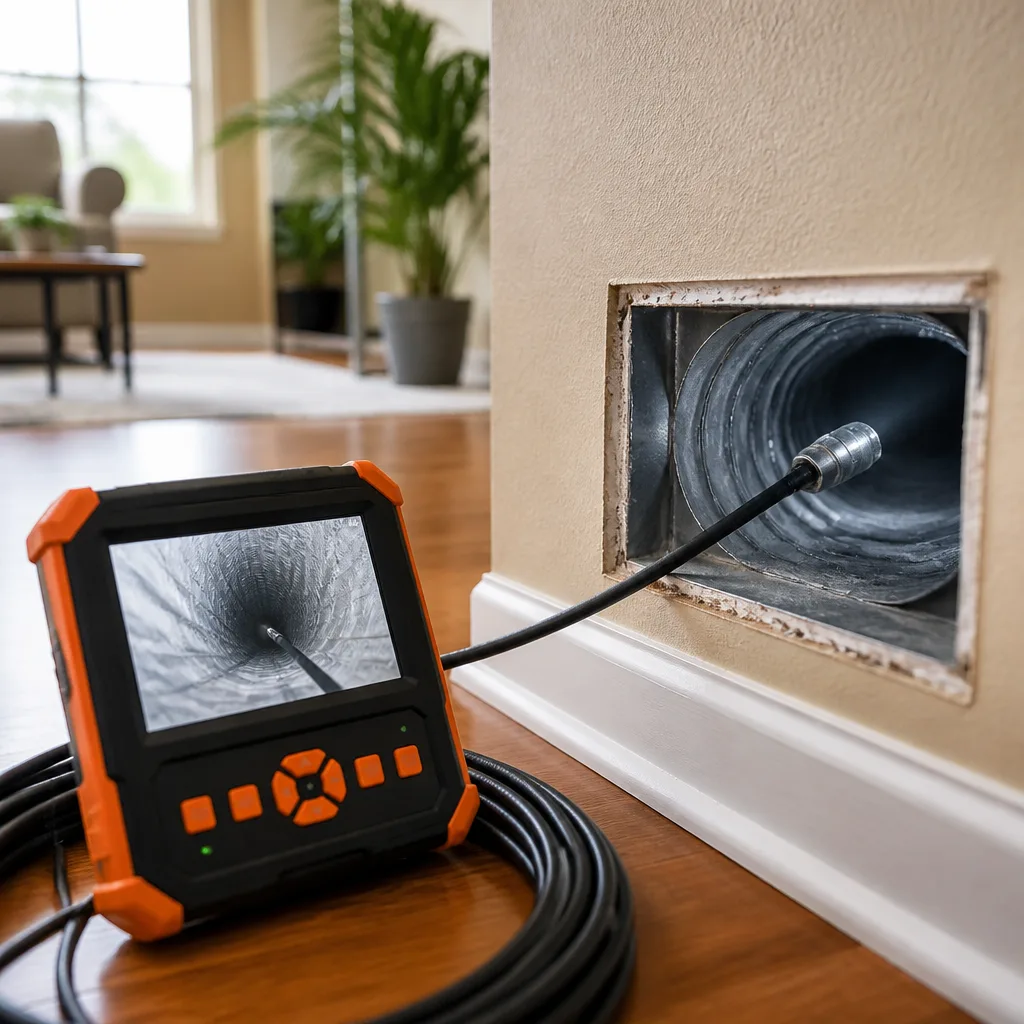
Camera perspective. Professional documentation uses borescope cameras inserted through register openings or access panels, showing the duct interior from the viewpoint of airflow. Photos taken from outside the duct, showing only register faces, prove nothing about interior condition.
At CleanRun, every Documented Photo Record includes timestamp metadata, GPS location verification, and technician identification per Haven Standard Clause 3: Verified Crews. Customers receive these as a standard deliverable, not an optional add-on, because undocumented work is indistinguishable from work that was not performed.
Leesburg’s Climate, Soil, and Mold Risk Window
Leesburg sits at the western edge of the Piedmont, where clay-heavy soils dominate and seasonal humidity patterns create specific HVAC system risks that flat-rate national pricing does not address.
The clay soil characteristic of Loudoun County retains moisture longer than sandy or loam soils. This affects homes with crawl space ductwork, common in split-level and ranch construction in neighborhoods like Country Club View and Leesburg Estates. Crawl spaces with dirt floors or inadequate vapor barriers produce sustained humidity that migrates into metal ductwork through seams and joints. The result is condensation on cool duct surfaces during shoulder seasons, when systems cycle less frequently and air stagnates.
The mold risk window in Leesburg runs roughly May through October, when outdoor relative humidity regularly exceeds 70 percent and cooling systems operate at partial load. Partial load means the coil runs colder than design temperature, extracting more moisture than the drain system may handle, with overflow reaching ductwork. We’ve documented active microbial growth in return plenums during September inspections, when homeowners report “a musty smell that started in August.”
This climate reality affects pricing legitimacy. A flat-rate $299 “whole house” special cannot include the moisture assessment, crawl space inspection, and potential duct sealing that Leesburg’s conditions may require. The written price from CleanRun specifies what is included for your home’s specific configuration, with line items for access difficulty, additional registers beyond standard count, and moisture-related treatments if indicated by inspection.
Homes in the One Loudoun corridor and newer construction near Sycolin Road typically have encapsulated crawl spaces or slab-on-grade construction, reducing this risk. Older homes near downtown Leesburg and along Catoctin Circle often have the original vented crawl spaces and benefit most from pre-cleaning moisture assessment.
What a Legitimate Invoice Should Include
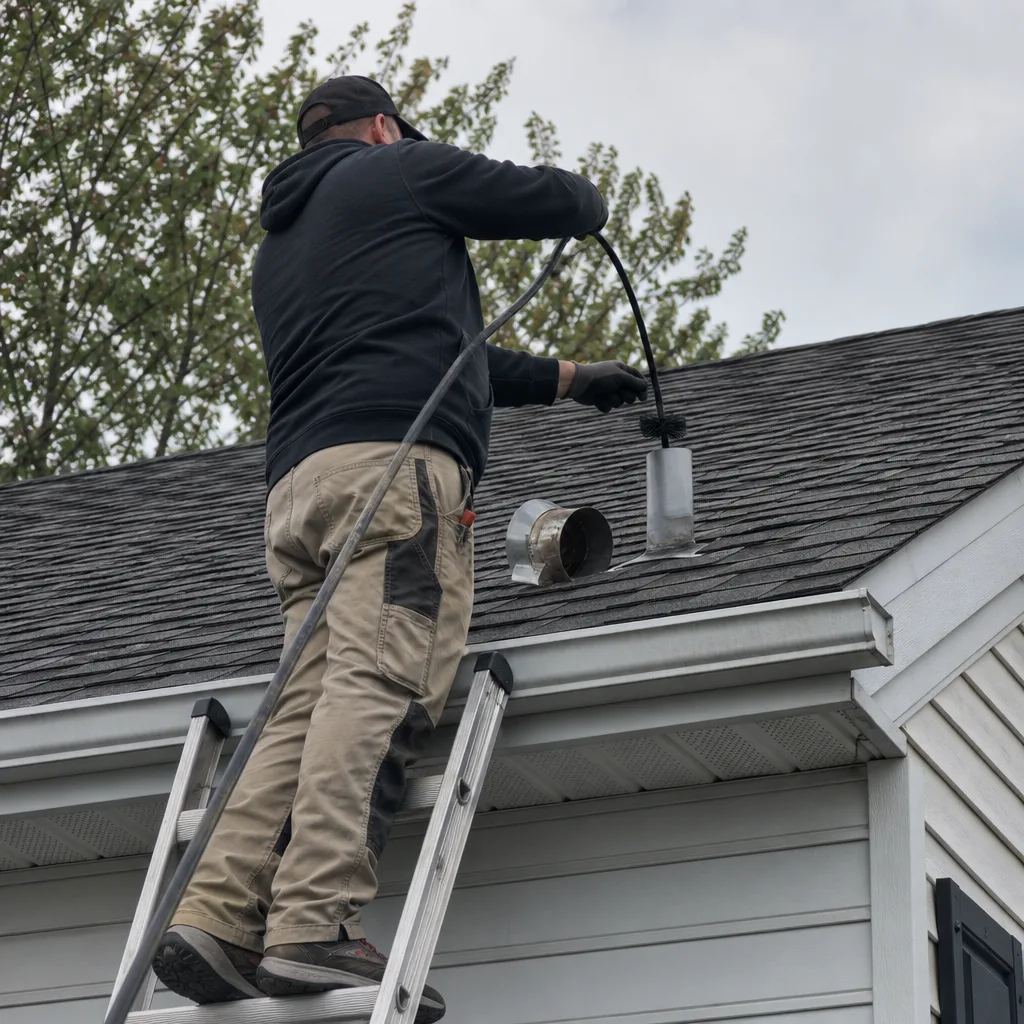
The bait-and-switch structure of the duct cleaning industry depends on obscuring what is actually being purchased. A legitimate invoice, per Haven Standard Clause 1, lists every component with its price before work begins. Here is what that looks like for Leesburg market rates in 2024-2025.
| Component | Description | Typical Range (Leesburg) |
|---|---|---|
| Base system cleaning | Supply and return ductwork, main trunk lines, up to 12 registers/grilles | $450-$650 |
| Additional registers (each) | Registers beyond base count, including extraction and photo documentation | $25-$45 |
| Air handling unit cleaning | Blower assembly, evaporator coil, condensate pan and drain | $150-$275 |
| Dryer vent cleaning | Separate service; see Dryer Vent Cleaning in Leesburg | $125-$225 |
| Duct repair/sealing | Accessible leaks, disconnected joints, damaged flex duct sections | $85-$200 per location |
| Sanitizing treatment | EPA-registered antimicrobial application to cleaned surfaces | $75-$150 |
| Photo record delivery | Timestamped before/after documentation of all duct runs | Included (CleanRun standard) |
What this total excludes: any “mold test” performed without visible growth, any “coating” applied to duct interiors (not recognized by NADCA as standard practice), and any “maintenance plan” that locks in recurring annual visits without evidence requirement.
The $79-$149 coupon special typically covers only a cursory register vacuuming and a scented spray. When the technician arrives, the upsell begins: the blower needs cleaning ($189), the coil is dirty ($249), mold is suspected ($400 test). The final invoice often exceeds $800 for work that still lacks documentation.
CleanRun’s written price, delivered before any panel is removed, includes the full scope. If inspection reveals conditions beyond the written scope, we photograph the finding, explain the additional work and its price, and require written authorization before proceeding. No surprise invoices. This is Haven Standard Clause 1, and it applies to every job since our first in 2013.
Choosing a Technician in Leesburg
The technician who enters your home determines whether you receive documented work or undocumented noise. Our How to Hire a Air Duct Cleaning Contractor in Leesburg: A Step-by-Step Guide covers this in depth; here are specific verification steps for the Leesburg market.
Verify NADCA membership, not just “certified.” NADCA maintains a public membership directory at nadca.com. Search for the company name. Membership requires adherence to ACR standards and carries liability insurance requirements. “NADCA-certified technician” credentials from non-member companies may represent individual training without company-level accountability.
Confirm equipment specifics. Ask what brands and models will be used on your job. Legitimate answers include: Rotobrush brush systems, Nikro or Abatement Technologies negative-pressure extractors, Honeywell or Aprilaire media filters if filter replacement is included. Vague answers (“professional-grade equipment”) suggest rental or consumer-grade tools.
Request proof of insurance and licensing. Virginia requires a Class C contractor license for HVAC duct cleaning that involves system modification. CleanRun publishes its license number on every proposal and on our CleanRun Air Duct Cleaning Leesburg home page. Technicians carry identification verifying background check completion under Haven Standard Clause 3.
Ask about the photo record protocol. How many photos? Of which locations? In what format delivered? “We’ll take some pictures” is insufficient. CleanRun’s standard: minimum two photos per duct run (before and after), plus detail shots of any damage, moisture, or unusual conditions, delivered as a digital album within 24 hours of job completion.
Check for local physical presence. National call-center operations dispatch technicians from warehouses in Maryland or Richmond with no local accountability. CleanRun maintains Loudoun County-based operations with technicians who know Leesburg’s specific construction eras, common duct configurations, and local permit requirements.
Common Mistakes to Avoid
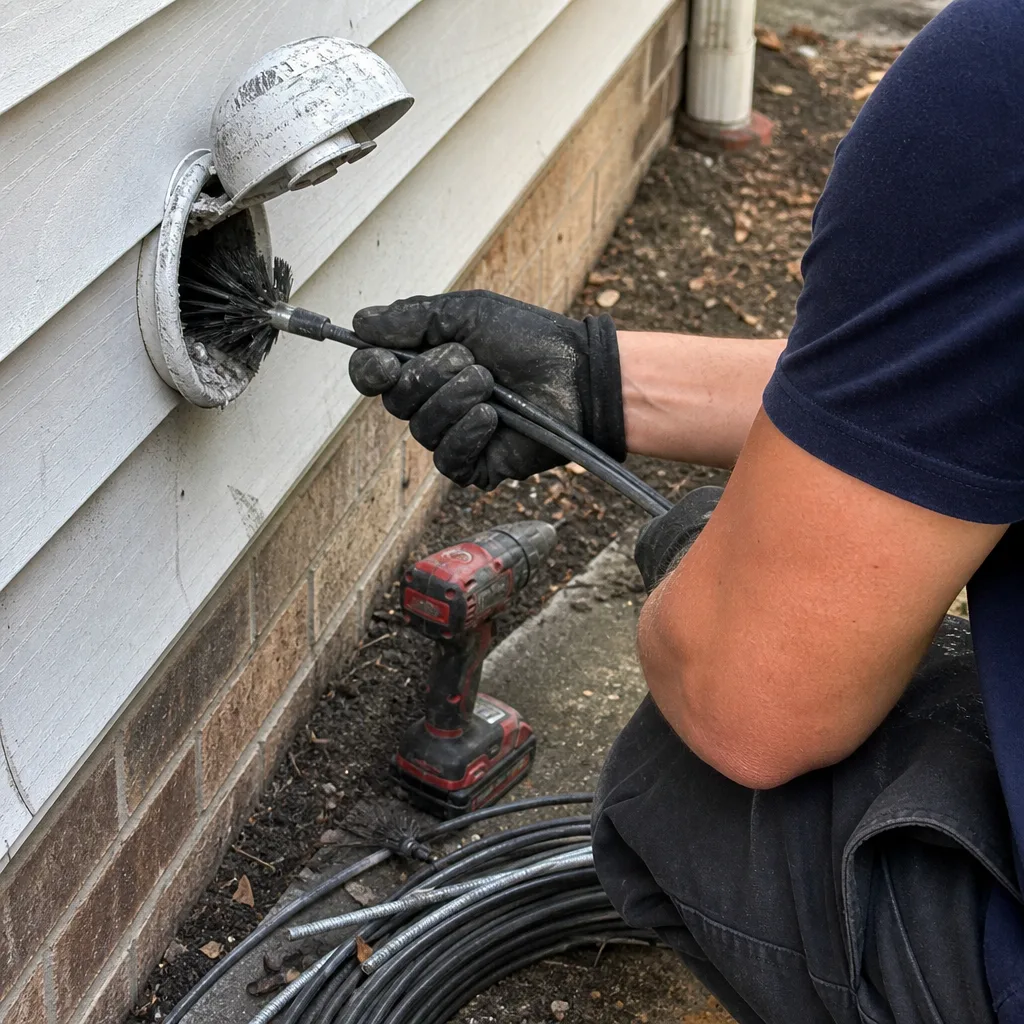
- Accepting a phone quote without inspection. No legitimate price can be set without seeing register count, system accessibility, and duct material. The $79 special relies on this mistake.
- Confusing duct cleaning with HVAC Cleaning in Leesburg. These are related but distinct services. Duct cleaning addresses the distribution network; HVAC cleaning includes the air handler, coils, and blower. Clarify which you are purchasing.
- Ignoring the post-renovation window. Drywall dust settles for 6-12 months after construction. Cleaning too early stirs settled debris; waiting too long allows it to compact. We recommend 3-6 months post-renovation for optimal results.
- Assuming new homes are clean. New construction in Leesburg’s Lansdowne and Willowsford-adjacent developments routinely contains construction debris that bypassed rough-in protection. We’ve found sawdust deposits, insulation scraps, and even fastener hardware in ducts of homes never occupied.
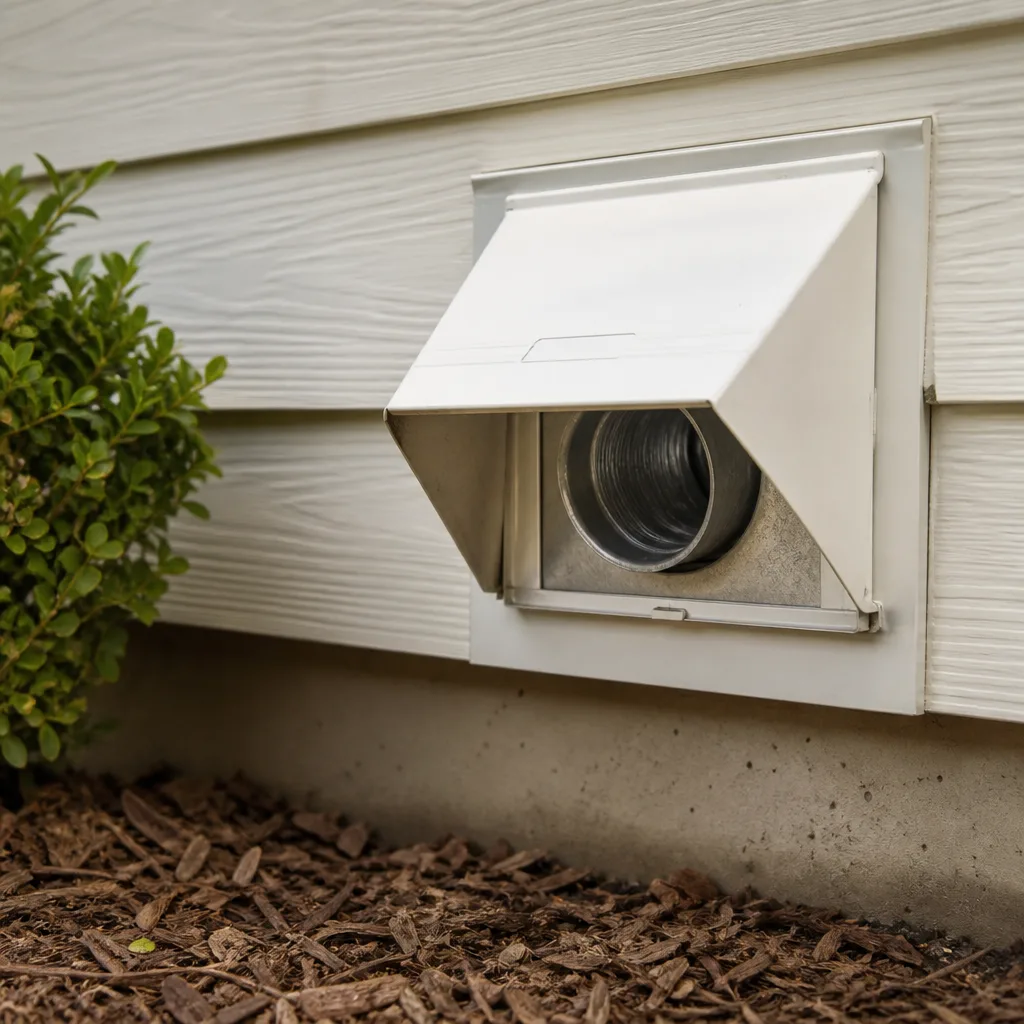
- Neglecting dryer vent cleaning. Clogged dryer vents create fire risk and back-pressure that degrades HVAC performance. This is a separate service from duct cleaning; see our Dryer Vent Cleaning in Leesburg page for specifics.
- Falling for “mold” scare tactics. Visible mold requires remediation by a licensed specialist, not a duct cleaner with a spray bottle. Unverified “mold tests” are a common upsell. Demand photographic evidence of visible growth before authorizing any mold-related service.
- Skipping the written guarantee. Verbal promises of satisfaction are unenforceable. CleanRun’s 365-Day Done Right Promise is a written guarantee on every job: if the work is not right, we make it right, with the specific remedy detailed in writing before departure.
When to Call a Professional
Call a professional when you can document one of the EPA’s three triggers: visible mold, verified infestation, or airflow restriction. Call when you’ve completed renovation work and can see dust accumulation at registers. Call when your energy bills have risen without thermostat change, suggesting duct leakage or blockage. Call when you purchase a home and the seller cannot produce maintenance records or photo documentation of prior cleaning.
Do not call because a coupon arrived in March. Do not call because “it’s been three years.” Do not call because a neighbor had it done. For evidence-based guidance, see more guides & resources. These are not evidence-based reasons, and companies that build business on them are not building business on your interests.
CleanRun Air Duct Cleaning Leesburg offers free estimates in Leesburg with written pricing delivered before any work begins. Every estimate includes a preliminary inspection of accessible registers and the air handling unit, with photo documentation if conditions warrant. Call (571) 487-7204 to schedule. We also provide a Free Second Opinion on any written estimate from another company, with our line-item price placed beside theirs for direct comparison.
Frequently Asked Questions
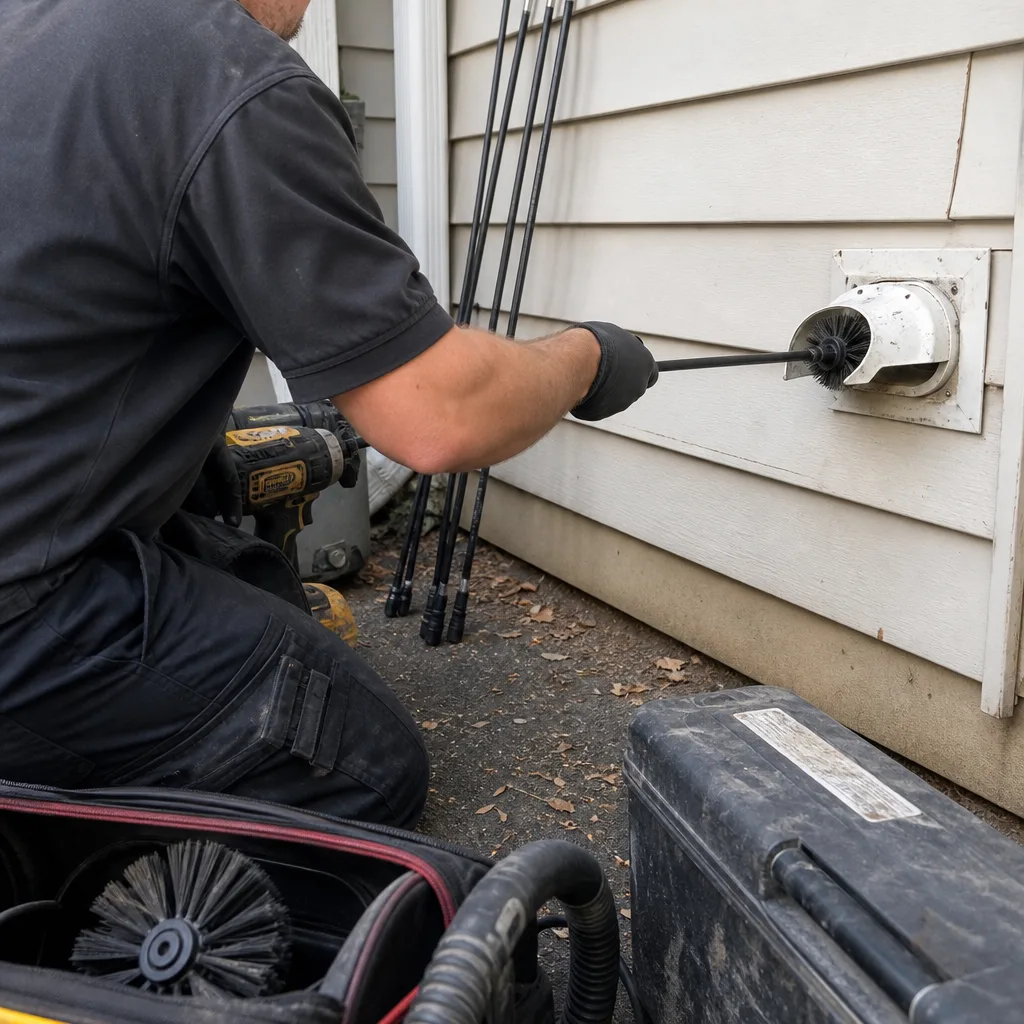
A complete residential air duct cleaning in Leesburg typically ranges from $450 to $850 for homes up to 3,500 square feet, with the final price depending on register count, system accessibility, and whether air handler components are included. Prices below $300 generally indicate limited scope work without negative-pressure extraction or documentation. Call (571) 487-7204 for a written estimate specific to your home, estimates are free.
Low quotes typically exclude mechanical agitation, negative-pressure extraction, photo documentation, and air handler cleaning, they rely on register vacuuming and scented spray that does not meet NADCA ACR standards. The business model depends on arriving at your home and selling necessary components as upsells. A written, line-item quote before work begins protects against this structure. Call (571) 487-7204 and we’ll put our written price next to any competitor’s.
Demand a documented photo record of every duct run, timestamped and showing identifiable features of your specific system. The photos should show debris distribution consistent with airflow physics, not uniform “dirt.” CleanRun delivers this as a standard deliverable on every job, not an option, because undocumented work cannot be verified. If your prior cleaner cannot produce photos of your actual ducts, you have no evidence the work occurred.
The EPA does not recommend routine scheduled cleaning. Clean when there is visible mold, verified infestation, or debris restricting airflow. Post-renovation cleaning is warranted after construction dust has settled, typically 3-6 months after completion. Otherwise, inspection every 3-5 years is reasonable for most Leesburg homes, with cleaning only if conditions warrant. Annual cleaning without evidence is unnecessary expense.
Leesburg’s clay-heavy soils and May-October humidity window create specific moisture risks in crawl space and basement ductwork, particularly in homes built before 2000 with vented crawl spaces. This does not make cleaning more frequent, but it makes inspection more important. Moisture-related microbial growth should be addressed promptly when found, and duct sealing may be recommended to prevent recurrence. Climate-specific assessment is why flat-rate national pricing often fails to address local conditions.
Air duct cleaning addresses the distribution network: supply and return ducts, registers, grilles, and trunk lines. HVAC cleaning includes the air handling unit: blower assembly, evaporator coil, condensate pan and drain, and sometimes the cabinet interior. ACR standards cover both as a complete system, but some providers quote duct cleaning alone and treat HVAC components as upsells. CleanRun’s written scope specifies exactly which components are included, with line-item pricing for each, so you know what you are purchasing before work begins.
The Bottom Line
Most Leesburg homeowners do not have dirty ducts. They have undocumented ducts, and the industry profits from this uncertainty. The path to legitimate service runs through specific questions: What does the EPA say? What does NADCA require? What will I see in photos of my actual system? What is the written price before work starts?
Documented work produces documented results: footage inspected, debris extracted, photos delivered. Undocumented work produces a receipt and a hope that something happened inside your walls. Since 2013, CleanRun has served over 52,000 homes with a written price before every job and a photo record after, because evidence is the only antidote to an industry built on opacity.
Call (571) 487-7204 for a free estimate in Leesburg. We’ll inspect your accessible components, explain what we find, and deliver a written price before any panel comes off. If you have a competitor’s written estimate, we’ll provide a Free Second Opinion with our line-item comparison at no cost. Every job is backed by the 365-Day Done Right Promise and the full H.A.V.E.N. Standard.
Written by Tomas Reyes, Owner at CleanRun Air Duct Cleaning Leesburg, serving Leesburg since 2013.