
Last updated September 23, 2026
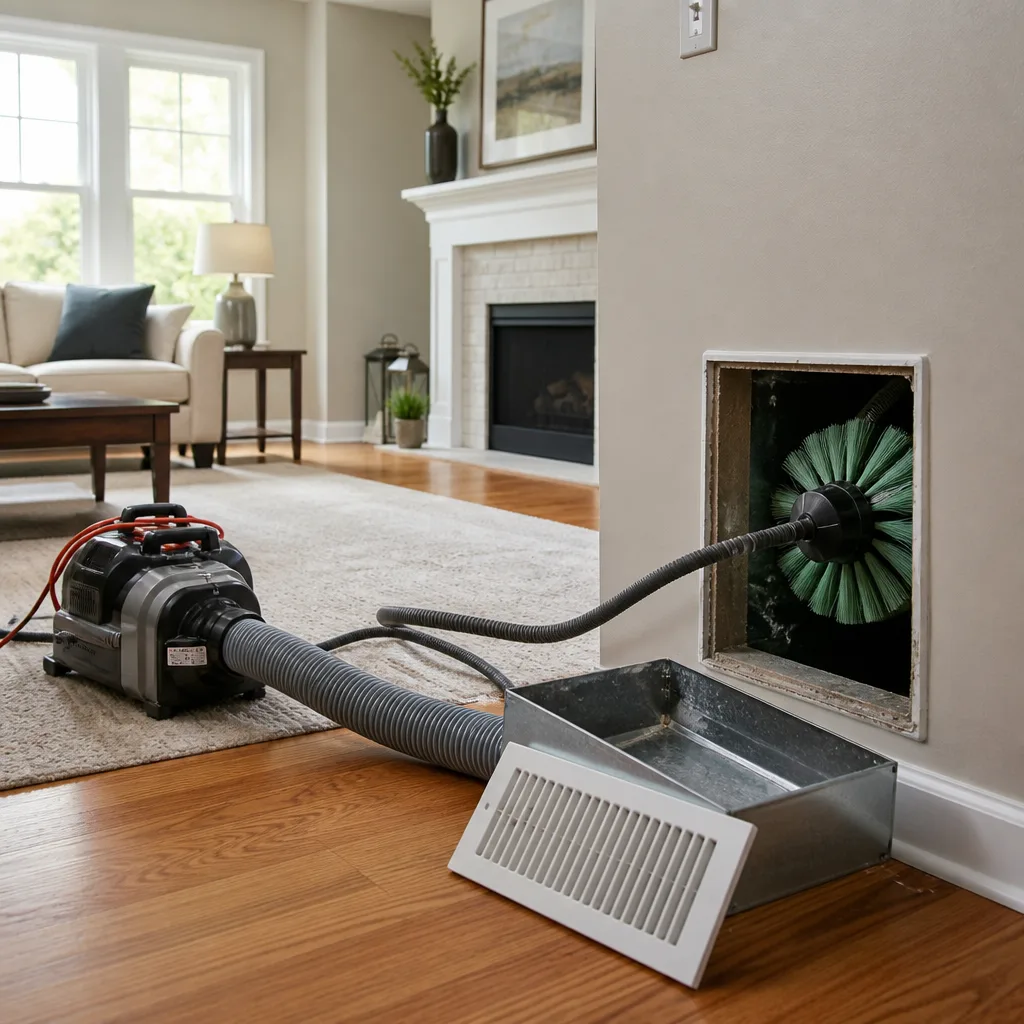
Whole-system duct and dryer vent check with before-and-after photos - you see exactly what came out of your vents
That "$99 whole-house special" is a bait ad - the real number appears once they are in your hallway, or the "clean" is a shop-vac at the register. We photograph the inside of your ducts before and after instead.
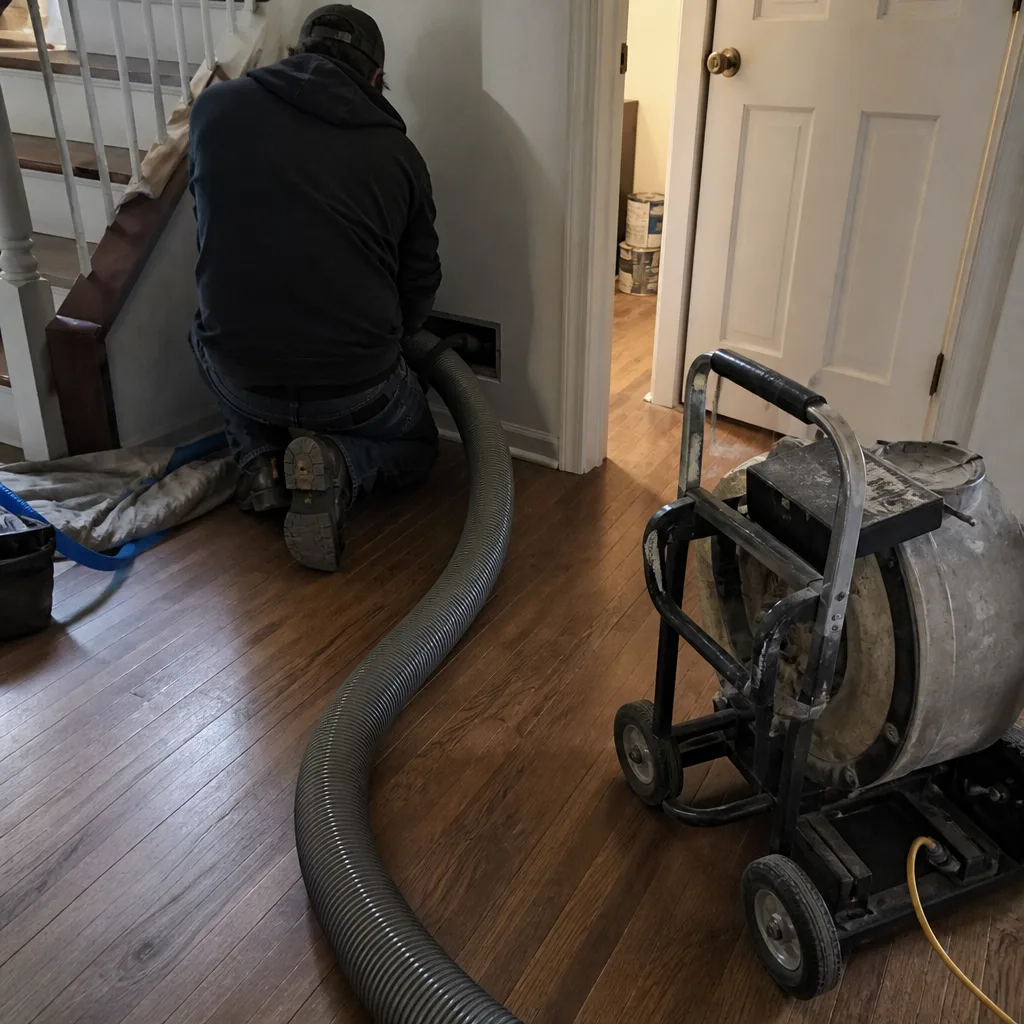 Before
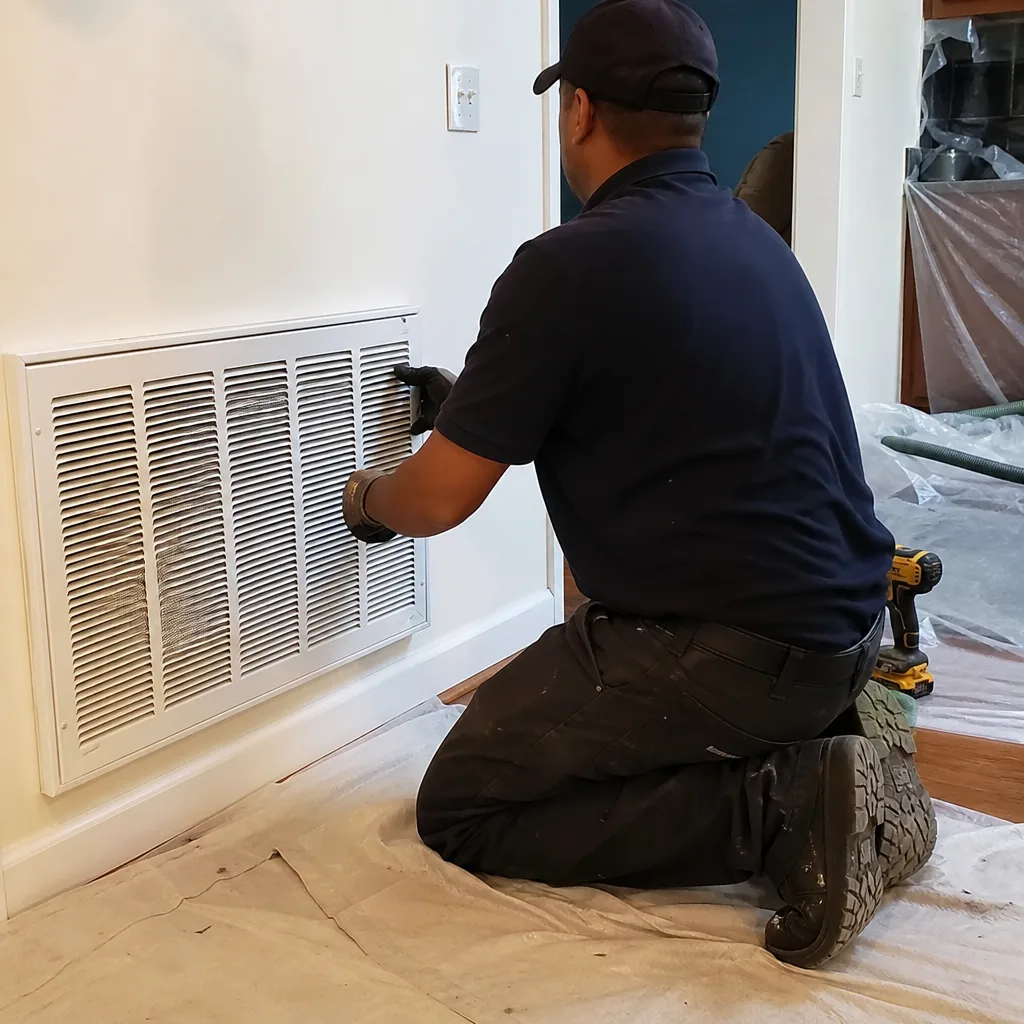 After
After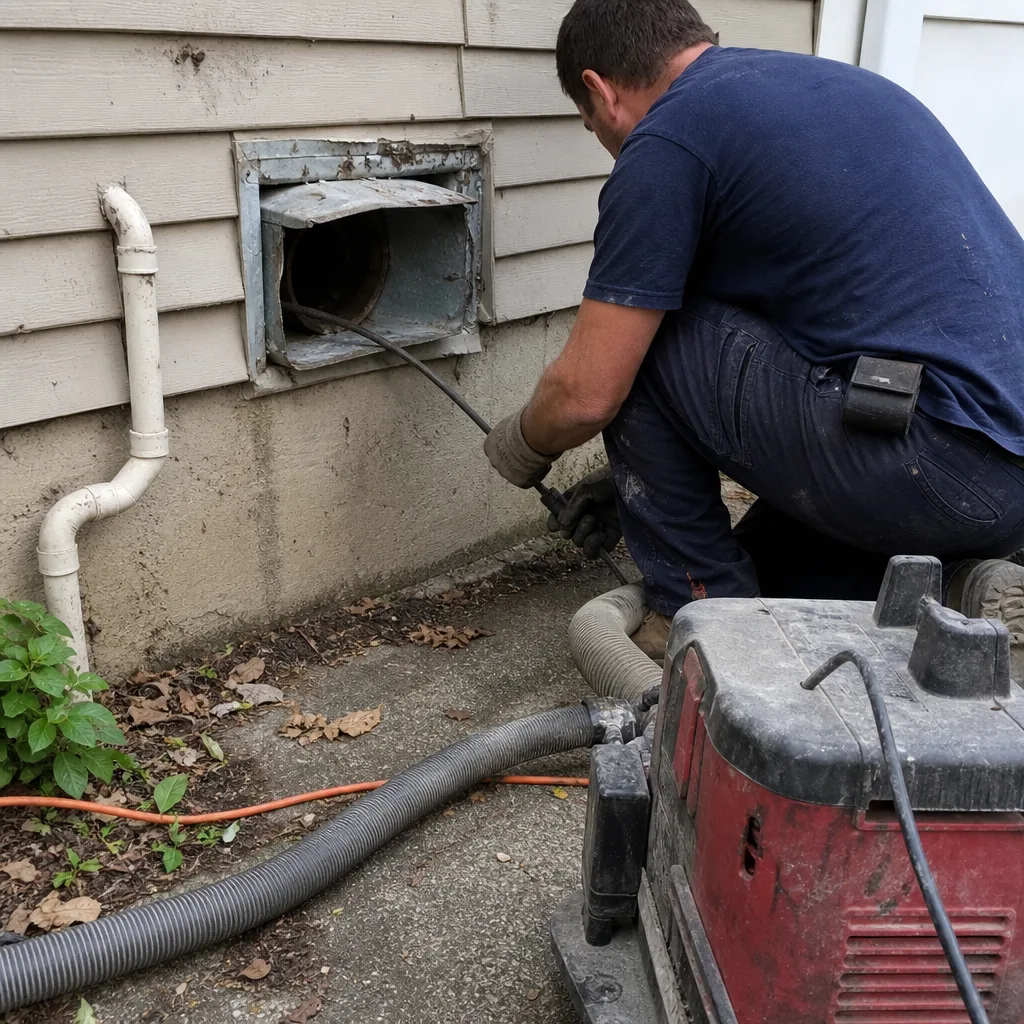 Before
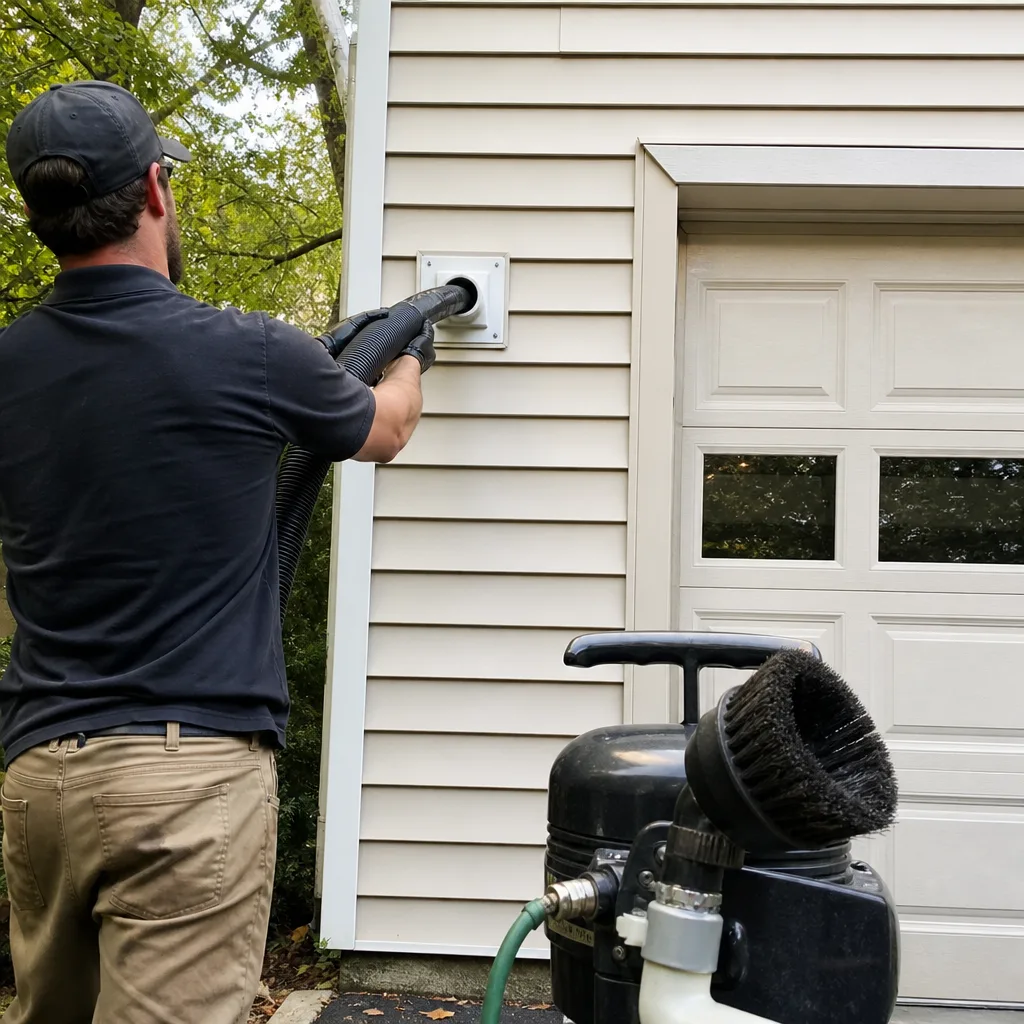 After
After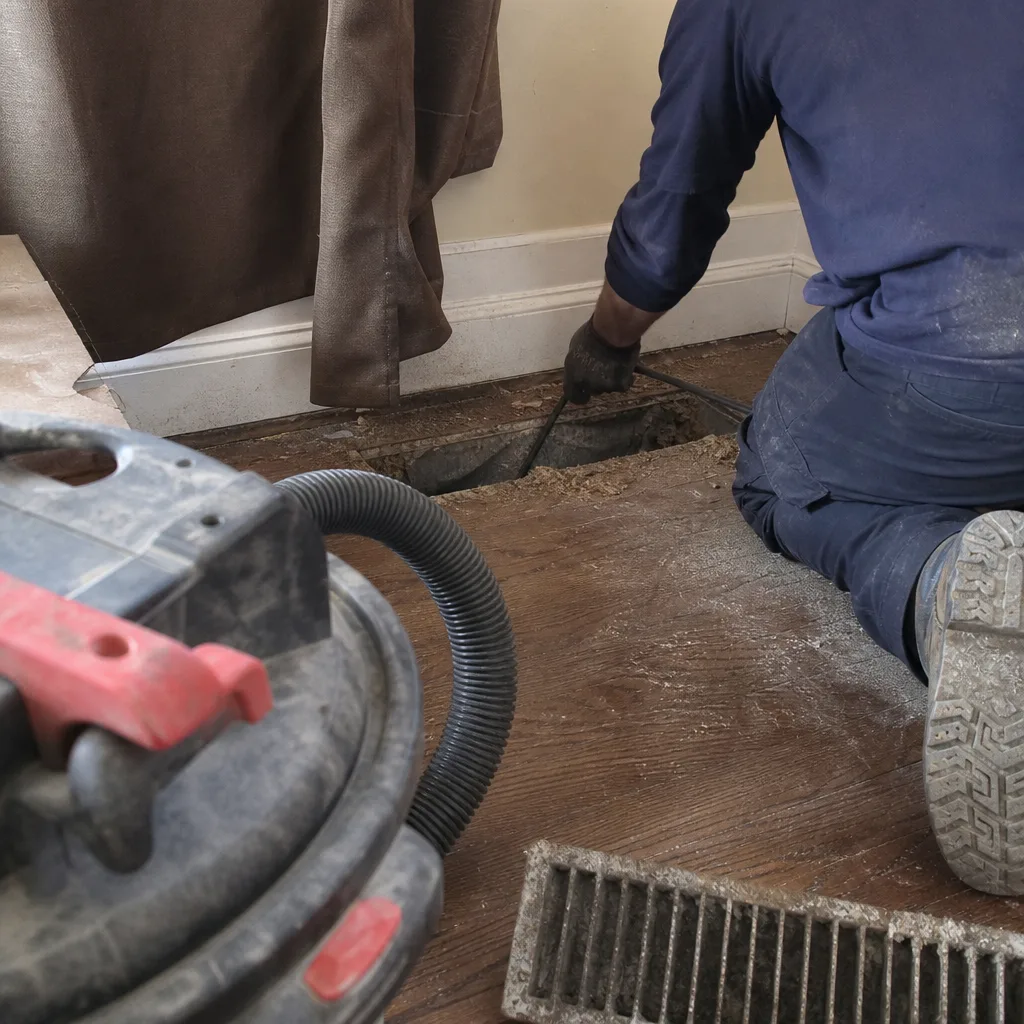 Before
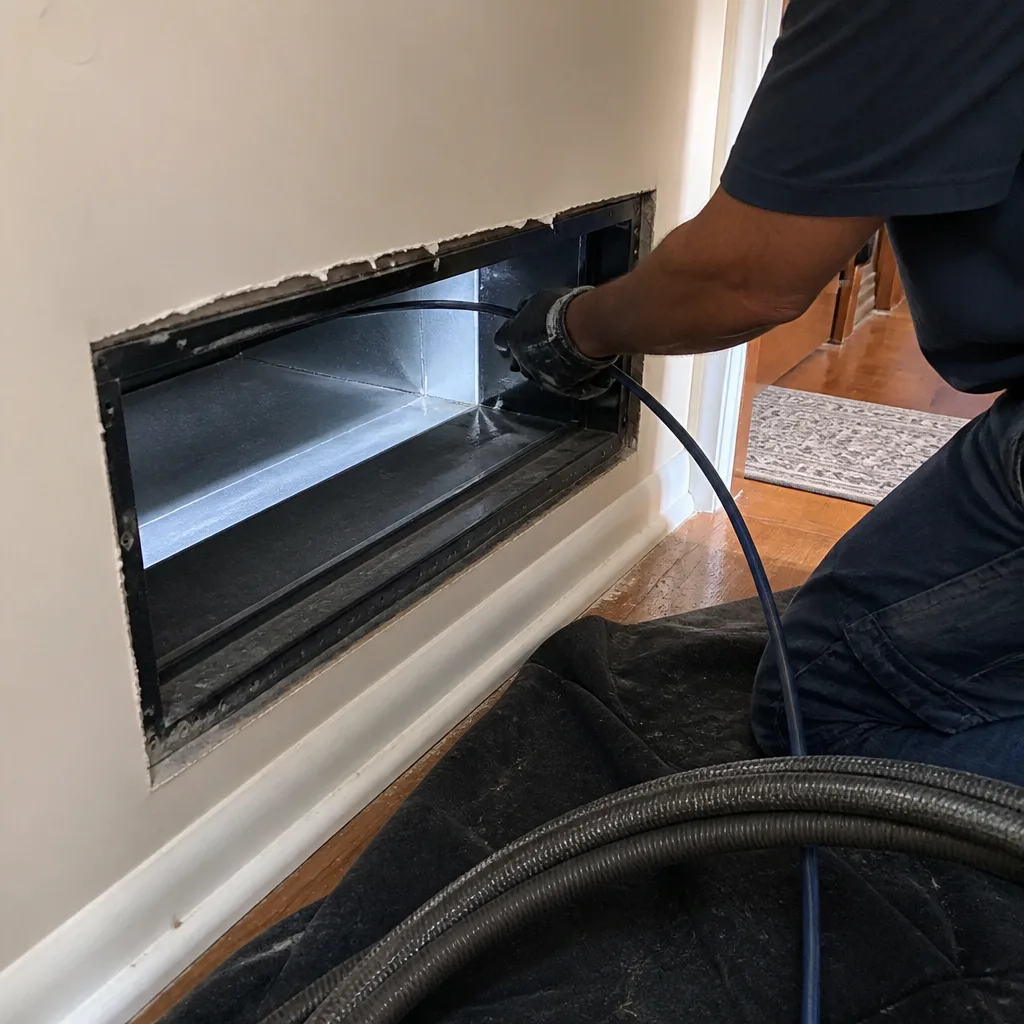 After
AfterAir Duct Cleaning Maintenance Checklist for Leesburg Homeowners
The single most overlooked maintenance item in Loudoun County homes isn’t the filter - it’s the return air boot, the sheet-metal transition between your wall cavity and the air handler, which collects debris at twice the rate of supply runs and is almost never photographed during a standard cleaning visit. In Leesburg, where new construction from 2015 to 2025 has produced thousands of homes with flexible ductwork in unconditioned attics, this blind spot matters more than most homeowners realize. This guide gives you the same visual and mechanical checkpoints a CleanRun technician runs before writing a scope of work, starting at the air handler and working outward through every room.
Quick Answer
A thorough air duct maintenance checklist for Leesburg homeowners includes monthly filter inspection, quarterly grille and boot cleaning, biannual return-air boot photography, and annual documentation of every duct run with a smartphone camera. Tasks break cleanly into DIY-safe work (filter swaps, visible surface cleaning) and work requiring negative-pressure extraction equipment to avoid redistributing contaminants throughout the home.
Table of Contents
- The Room-by-Room Inspection Sequence: Starting at the Air Handler
- Visual Indicators: Dust, Biofilm, Rodents, and Insulation Degradation
- Filter MERV Ratings for Leesburg’s Pollen Season vs. Winter Heating
- How to Document Duct Condition Annually with a Smartphone
- DIY-Safe Tasks vs. Work Requiring Negative-Pressure Equipment
- Leesburg-Specific Concerns: New Construction, Hard Water, and Attic Ductwork
- A Written Maintenance Schedule You Can Post
 Before
 After
AfterThe Room-by-Room Inspection Sequence: Starting at the Air Handler
Most homeowners start their duct inspection at the ceiling register because it’s visible. That’s backwards. Contamination moves from the air handler outward, and the return side pulls more debris than the supply side pushes. Here’s the sequence we use on every Air Duct Cleaning in Leesburg job before writing a scope.
Step 1: The Air Handler Cabinet
Turn off power at the breaker, remove the blower compartment door, and photograph the blower wheel and evaporator coil with your phone. In Leesburg homes built 2015 to 2020, we’ve found blower wheels caked with construction dust that settled during the first two years of occupancy and was never disturbed again. Look for:
- Uniform gray dust coating (normal accumulation)
- Clumped, fibrous material (deteriorated flex-duct liner)
- Dark, irregular streaking (possible biofilm or moisture intrusion)
- Shiny, greasy film (oil from bearing wear - call a technician)
Do not clean the blower wheel yourself. The balance is precise, and improper cleaning causes vibration that damages the motor mounts.
Step 2: The Plenum and Trunk Lines
The plenum is the large sheet-metal box directly above or below the air handler where all duct runs converge. In Leesburg’s older homes near downtown, plenums are often galvanized steel with mastic-sealed joints. In newer construction in Lansdowne, Woodlea, or Beacon Hill, they’re frequently lined with fiberglass duct board that can degrade. Shine a flashlight into the plenum access (usually a removable panel) and look for:
- Detached liner hanging like loose wallpaper
- Black spotting at corners (condensation + dust = mold-friendly conditions)
- Gaps at seams where mastic has cracked
Step 3: Return Air Boots and Wall Cavities
This is the critical step most inspections skip. The return air boot is the sheet-metal fitting that connects your wall cavity (the “chase”) to the return trunk. In Leesburg homes, these boots are often installed with minimal sealing, meaning the boot pulls air from inside the wall - not just through the grille. Remove the return grille (usually two spring clips or screws), extend your phone into the opening with the flash on, and photograph the boot interior.
What we’ve documented in Leesburg since 2013: return boots in homes with finished basements show 2-3 times the debris accumulation of supply boots, because basement wall cavities often collect drywall dust, insulation fragments, and debris from framing gaps that were never sealed during construction.
Step 4: Supply Runs Room by Room
Work outward from the air handler, not room to room by convenience. Follow the duct map: trunk line to branch takeoff to flex run to boot to register. At each supply register, remove the grille, photograph the boot, and note:
- Distance from register to first elbow (short runs = less accumulation)
- Condition of flex-duct connection to boot (tape degraded? clamp loose?)
- Visible debris depth at the boot floor
In two-story Leesburg homes with attic ductwork, second-floor supply runs often show more accumulation because attic temperature swings drive convection that keeps particles airborne longer.
Visual Indicators: Dust, Biofilm, Rodents, and Insulation Degradation
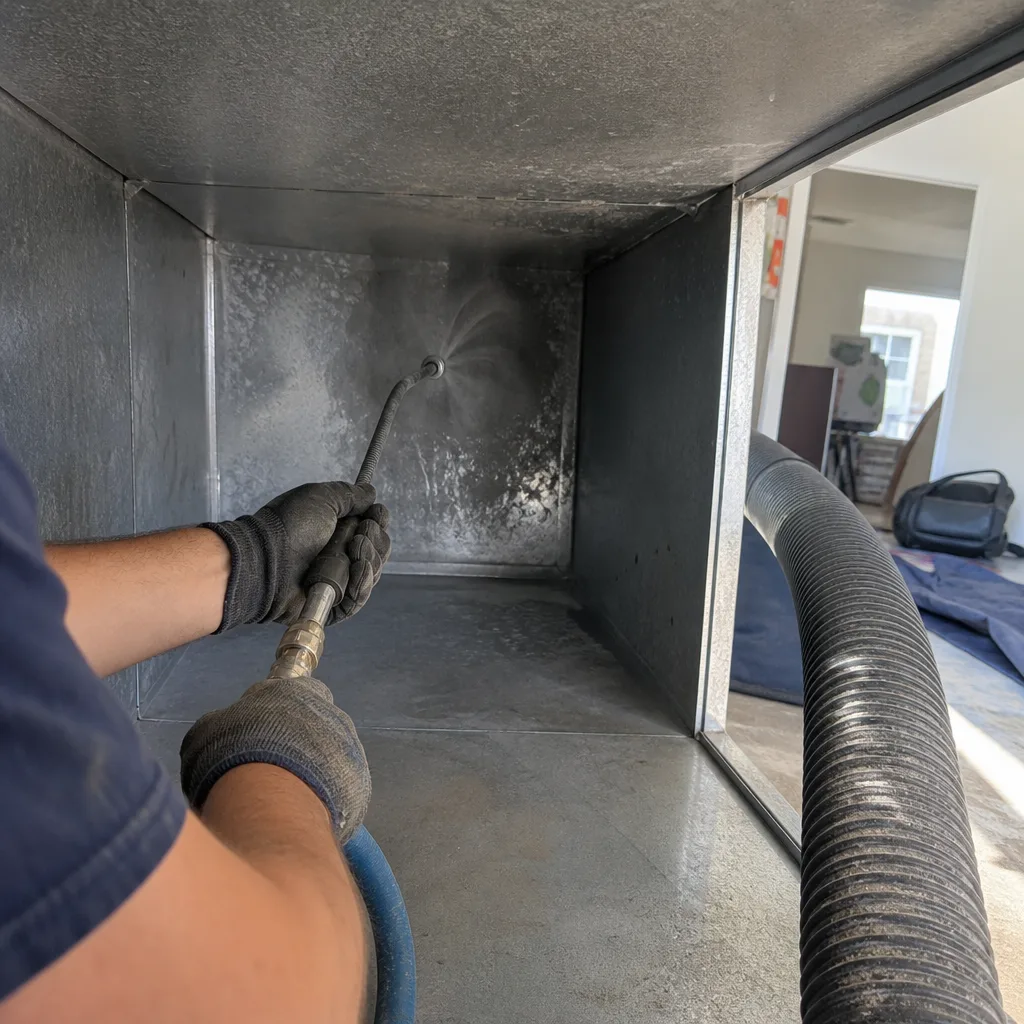
Not everything dark in a duct is mold. Not everything light is harmless dust. These are the specific visual patterns we document in the photo record delivered after every CleanRun Air Duct Cleaning Leesburg home service.
Normal Dust Accumulation
Appearance: uniform gray or tan coating, loose and powdery when touched with a probe. Distribution: heavier at boot floors and first elbows, lighter at mid-run. Smell: neutral or faintly dusty. This requires cleaning when the coating reaches approximately 1/8 inch, or when visible debris restricts airflow at the register.
Biofilm
Appearance: irregular black, green, or brown patches with a slimy or velvety texture, not powdery. Distribution: typically at cold spots where duct surface temperature drops below dew point - common in Leesburg’s humid July and August when attic ducts sweat. Smell: musty or earthy. Critical distinction: biofilm adheres to the duct surface and does not wipe away with a dry cloth. This condition requires professional remediation with antimicrobial treatment, not just vacuuming.
Rodent Activity
Appearance: scattered, irregular debris including seed hulls, insulation fragments compressed into nests, and dark pellets (3-6mm, rod-shaped). Distribution: concentrated at boot floors or at gaps in flex-duct runs. Smell: sharp, ammonia-like. In Leesburg’s developing areas near the Greenway, where construction disturbs field habitats, we’ve found rodent entry through attic vents and subsequent duct infiltration in homes less than three years old. This requires duct repair and sealing, not cleaning alone.
Insulation Degradation
Appearance: fibrous material loose in the airstream, not adhered to duct walls. Distribution: throughout flex-duct runs, often visible at registers as small gray tufts. Source: fiberglass liner inside flex duct delaminating due to age, moisture, or UV exposure in attic installations. This is a material failure, not a cleanliness issue, and requires duct replacement.
Construction Debris (Persistent)
Appearance: wood chips, drywall chunks, or plastic fragments, often larger than 1/4 inch. Distribution: concentrated at boots and first elbows. In Leesburg’s 2015-2025 construction boom, we’ve photographed persistent construction debris in homes five years post-occupancy because initial “cleaning” was a shop vacuum at the register, not extraction at the source. This requires negative-pressure cleaning with agitation tools to dislodge material wedged at elbows.
Filter MERV Ratings for Leesburg’s Pollen Season vs. Winter Heating
Filter selection is the most consequential DIY decision a homeowner makes, and the wrong choice costs money without improving air quality. Here’s what we specify for Leesburg’s climate.
March through May: Pollen Season
Leesburg’s tree pollen peaks in April, with grass pollen extending into June. For homes with allergy-sensitive occupants, we recommend MERV 11 during this period. Cost: approximately $12-18 per filter for standard 1-inch pleated, replaced monthly. For 4-inch media filters (common in newer Leesburg systems), MERV 11 runs $28-40 and lasts the full season.
Trade-off: MERV 11 creates measurable static pressure increase. In systems with marginal blower capacity (common in builder-grade installations in neighborhoods like Crescent Place or Exeter), this can reduce airflow 5-10%. Check your filter monthly; if the blower seems louder or rooms feel stuffy, drop to MERV 8.
June through August: Cooling Season
MERV 8 pleated for standard 1-inch, MERV 10 for 4-inch media. The primary contaminant is dust and general particulate, not pollen. Replace 1-inch filters every 60 days; 4-inch media every 90 days. Cost: $8-14 for 1-inch, $22-32 for 4-inch.
September through November: Transition
MERV 8 standard. This is Leesburg’s driest period; static pressure concerns diminish, but pollen is minimal.
December through February: Heating Season
MERV 8 minimum, MERV 10 if occupants have respiratory sensitivity. Winter heating in Leesburg runs more continuously than cooling, so filters load faster. Replace 1-inch filters every 45-60 days. Cost: $8-14 for 1-inch, $22-32 for 4-inch.
Never Use: Washable electrostatic filters (cleaning is rarely thorough, and reinstallation with moisture damages blowers), fiberglass “throwaway” panels (MERV 2-4, ineffective for anything larger than visible dust), or HEPA filters in standard residential systems (MERV 17+ requires modified blower and ductwork).
Annual filter cost for a Leesburg home with standard 1-inch pleated: $96-216 depending on MERV selection and replacement frequency. For 4-inch media: $88-160 annually with fewer changes and better performance.
How to Document Duct Condition Annually with a Smartphone
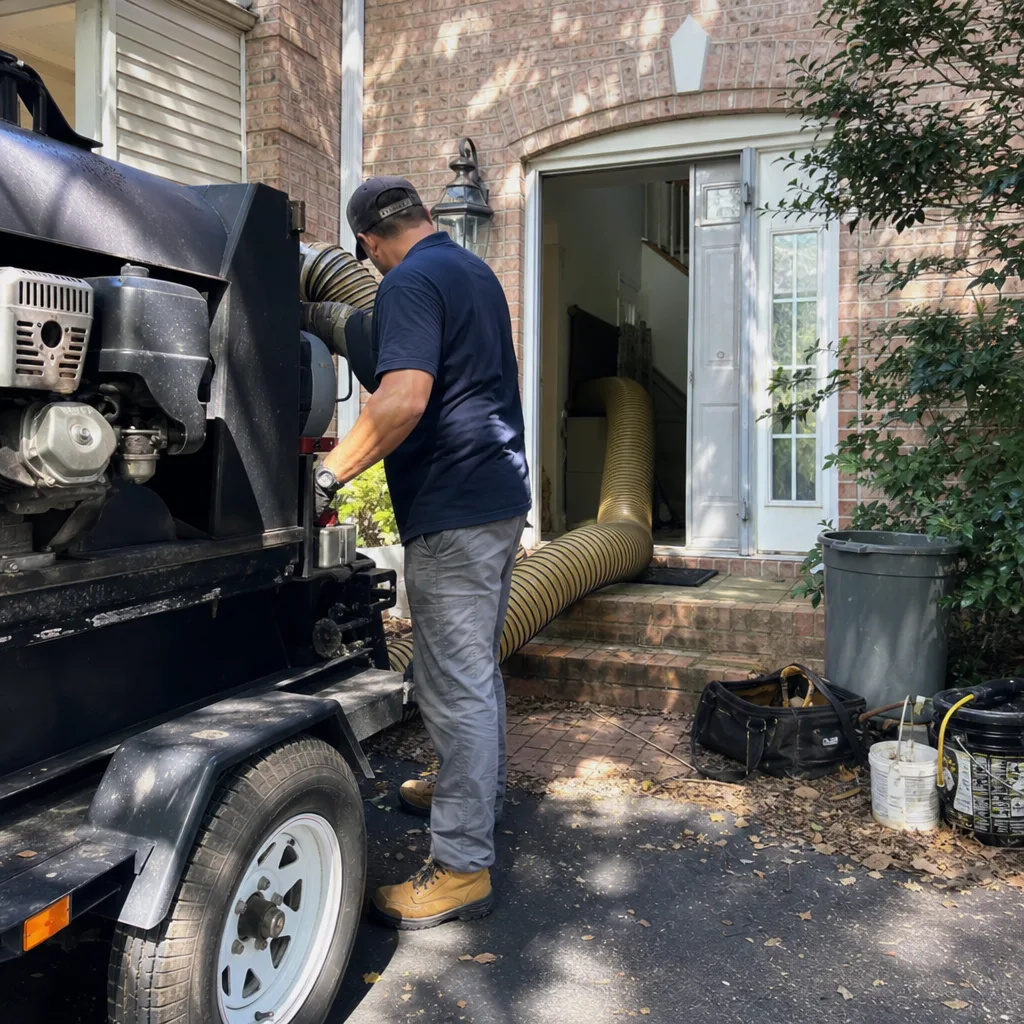
The photo record we deliver after every job isn’t proprietary technology. It’s a discipline any homeowner can apply. Annual documentation creates a baseline so you know whether a contractor’s “before” photo shows genuine accumulation or a register that was never cleaned.
Equipment
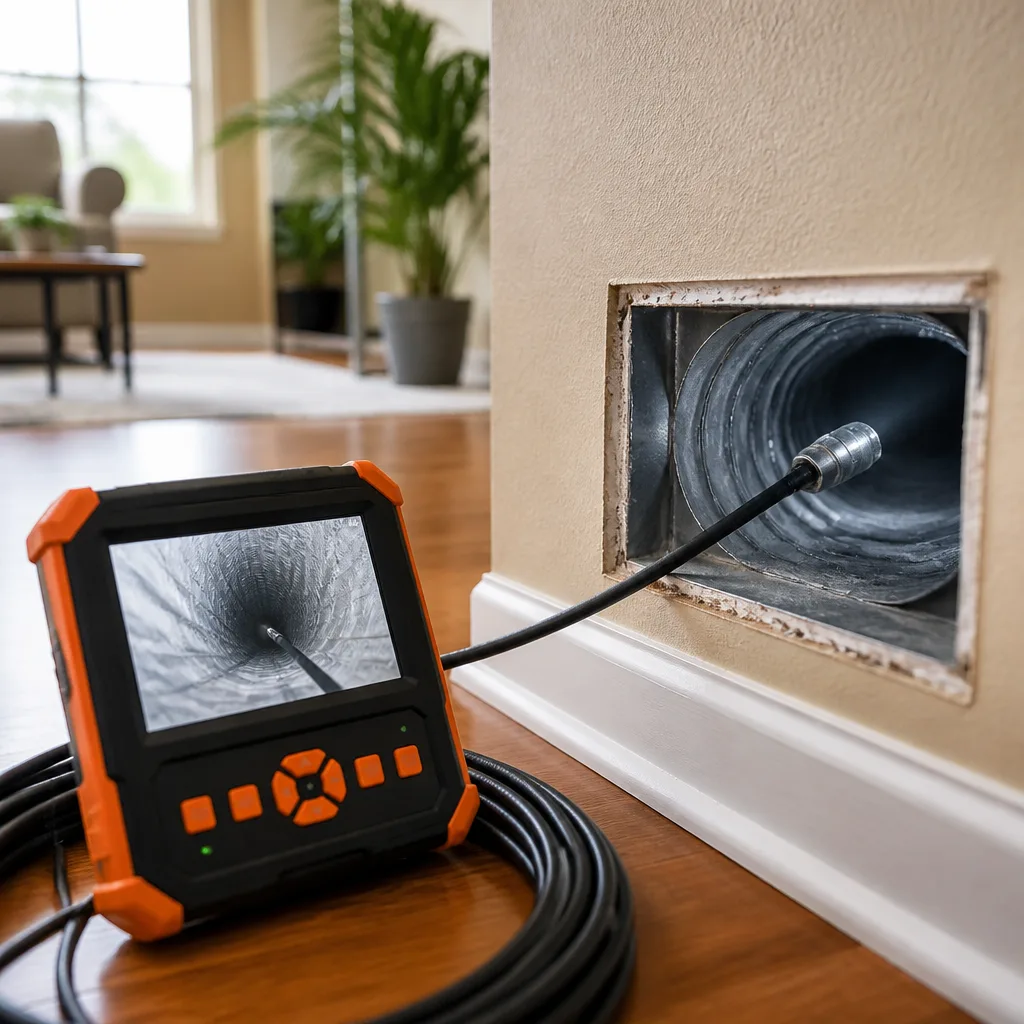
Your smartphone, a flashlight (phone flash is acceptable, a dedicated light is better), and a telescoping inspection mirror ($12-18 at hardware stores) for angles you can’t reach directly. For boots deeper than 18 inches, a cheap borescope camera ($25-40) that connects to your phone via USB or WiFi is worth the investment.
The Documentation Protocol
- Photograph the location label. Before each shot, photograph a piece of paper with the room name, date, and whether it’s supply or return. This prevents the “which duct was this?” problem six months later.
- Standardize the angle. For every boot, take three shots: straight in from the register opening, angled down to show the boot floor, and angled up to show the flex-duct connection. This consistency lets you compare year to year.
- Include a reference object. Place a quarter or a standard business card in the frame for scale. “Dust accumulation” is meaningless without scale; “debris depth equals half the height of a quarter” is evidence.
- Photograph the filter slot. Document the filter brand, MERV rating, and installation date. This catches the “I thought I changed it” error.
- Store with cloud backup. Create a dedicated album. Email yourself the set annually. If you hire a contractor, you have dated evidence of pre-existing condition.
What this documentation protects against: the contractor who shows you a generic “dirty duct” photo from another job. At CleanRun, we welcome customer documentation; Haven Standard Clause 1 requires our written price to reference the specific condition we observed, and customer photos help verify scope accuracy.
DIY-Safe Tasks vs. Work Requiring Negative-Pressure Equipment
The duct cleaning industry has a legitimate safety problem: homeowners who attempt work beyond their skill, and contractors who perform work below professional standard. Here’s the line we draw on every job.
Genuinely DIY-Safe
- Filter replacement: Turn off system, note airflow direction arrow, insert new filter, restart. Document the date.
- Register and grille cleaning: Remove grille, soak in warm water with mild detergent, scrub with soft brush, dry completely before reinstalling. Do not reinstall damp; mold growth in the boot follows within 48 hours in Leesburg’s summer humidity.
- Visible boot surface wiping: Extend a microfiber cloth on a flexible wand to clean the first 6-8 inches of boot interior. Do not push debris deeper; withdraw the cloth if resistance increases.
- Return air chase inspection: Remove grille, photograph, visually inspect for gaps between boot and wall framing. Seal small gaps with foil tape (not duct tape; the adhesive fails in temperature swings).
Requires Negative-Pressure Extraction Equipment
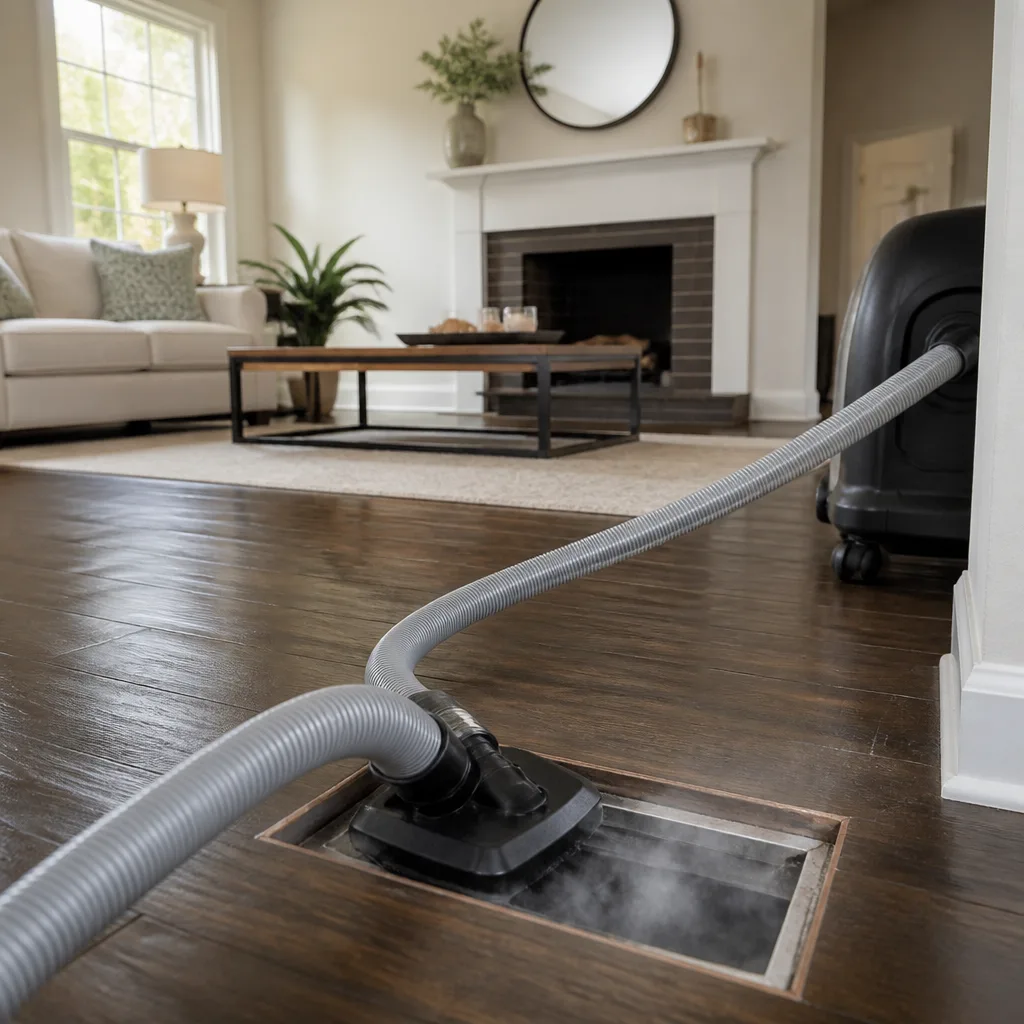
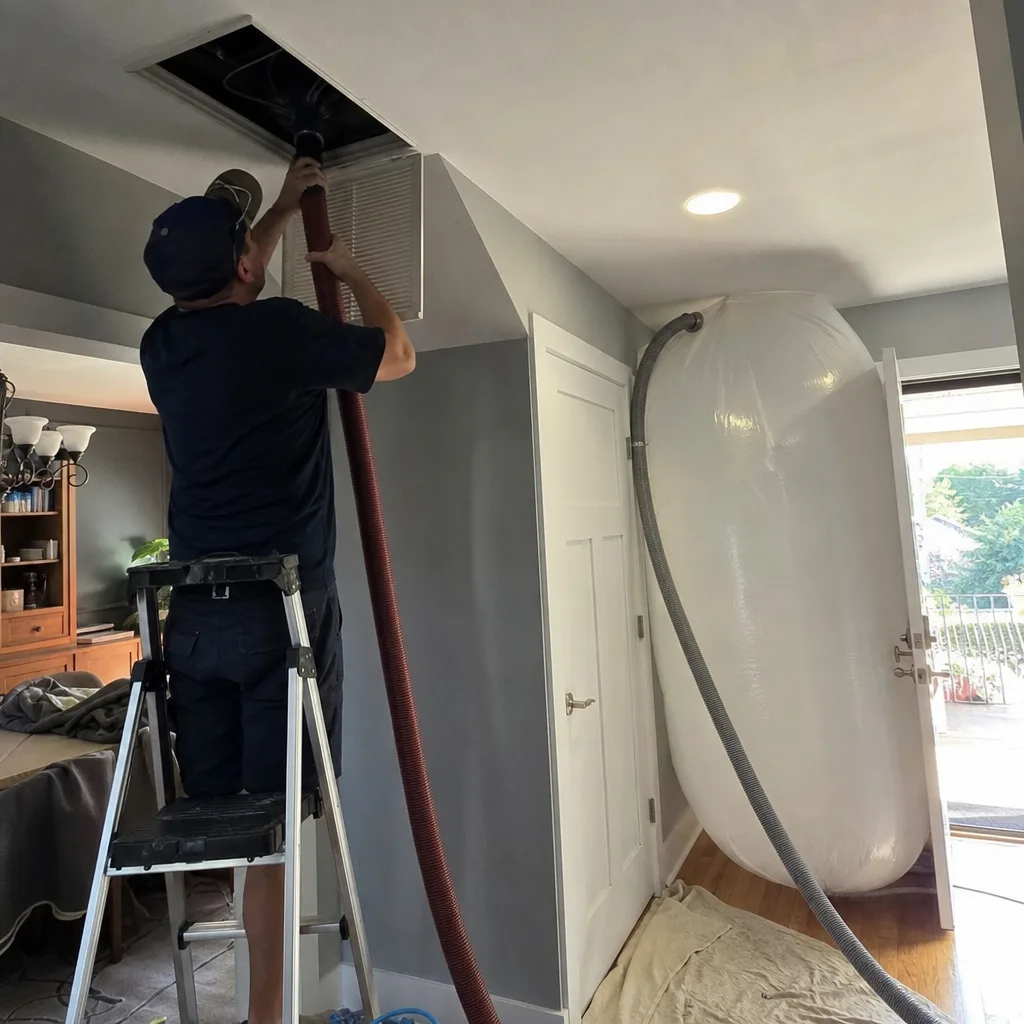
- Full duct run cleaning: Without containment, agitating debris in a duct redistributes it throughout the home. Professional systems use a vacuum collector (typically 5,000+ CFM) attached to the ductwork, creating negative pressure so dislodged material is captured, not expelled.
- Blower wheel and evaporator cleaning: These components require chemical treatment and rinse protocols that protect electrical connections. Improper cleaning voids manufacturer warranties and can damage the blower balance.
- Biofilm remediation: Antimicrobial application requires EPA-registered products, dwell-time protocols, and post-treatment verification. Home-applied bleach solutions corrode metal and produce harmful chloramine gases when they contact organic material.
- Duct repair and sealing: Mastic application, liner replacement, and flex-duct connection repair require trade tools and code compliance. Leesburg falls under Loudoun County building code; alterations to ductwork in unconditioned spaces require permit verification for some configurations.
The equipment that makes professional work verifiable: negative-pressure collectors from Abatement Technologies or Nikro, rotary brush systems from Rotobrush for mechanical agitation, and HEPA filtration on the exhaust side to prevent recontamination. These are not consumer tools, and their absence is how you recognize a shop-vac operation.
Leesburg-Specific Concerns: New Construction, Hard Water, and Attic Ductwork
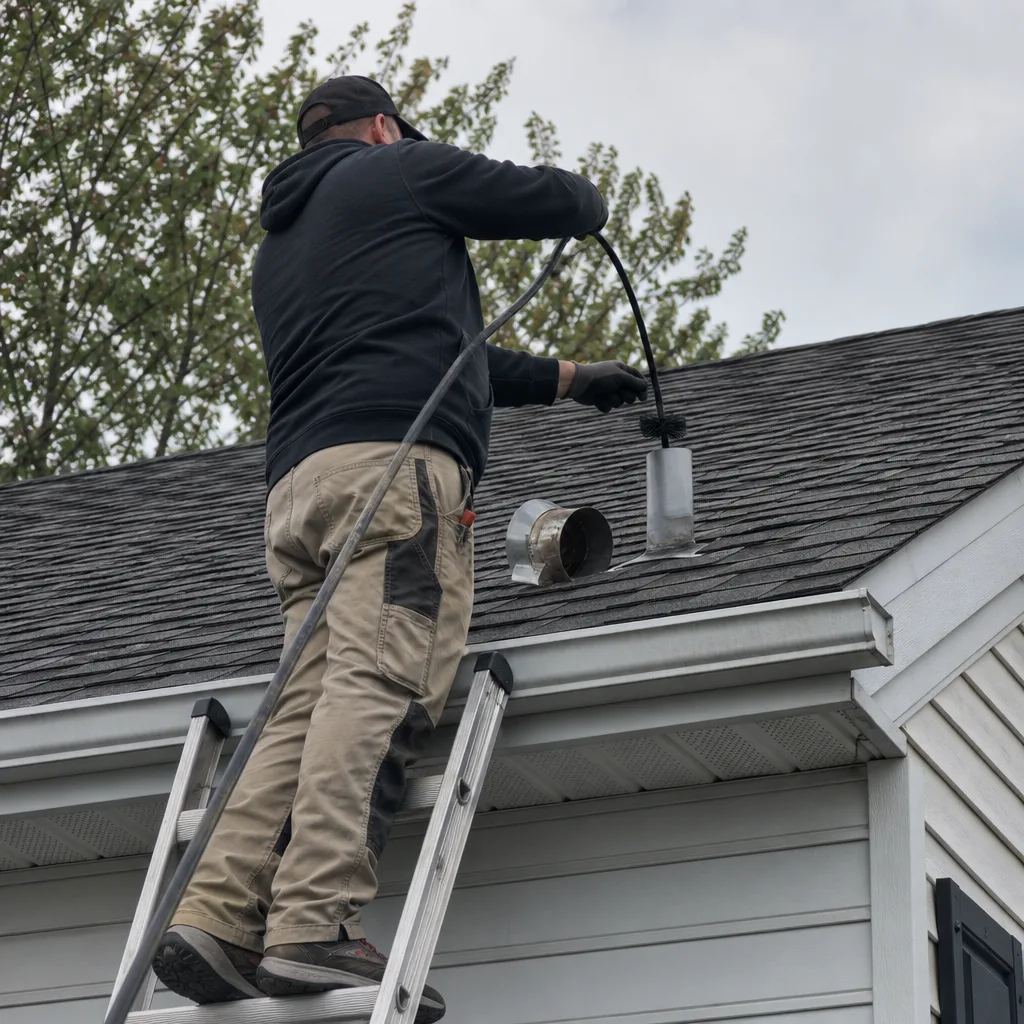
Leesburg’s housing stock has characteristics that change maintenance priorities.
New Construction Residue
Homes built 2015-2025 in developments like Kincora, Village Walk, or along the Route 15 corridor often have ductwork that was “cleaned” once by a construction crew with a portable vacuum before certificate of occupancy. We’ve photographed boots in three-year-old homes with drywall mud chunks and insulation fragments that settled during framing and were never extracted. The first professional cleaning in these homes is often more extensive than in twenty-year-old homes with normal use accumulation, so understanding Air Duct Cleaning Permits, Codes & Inspections in VA: What You Need to Know helps set expectations.
Hard Water and Humidifier Scale
Leesburg’s water supply, drawn from the Potomac River aquifer and local wells in outlying areas, runs moderately hard (7-10 grains per gallon). Whole-house humidifiers with evaporative pads produce mineral scale that migrates into ductwork. Annual humidifier pad replacement and duct boot inspection prevents scale buildup that restricts airflow and harbors bacteria.
Attic Ductwork in Unconditioned Space
The dominant construction pattern in Leesburg’s newer neighborhoods: flex duct in vented attics where summer temperatures exceed 140°F and winter drops below 20°F. This thermal cycling degrades duct tape adhesive, loosens connections, and accelerates liner delamination. Annual inspection of attic trunk lines is essential; we find more disconnected ducts in five-year-old Leesburg homes than in fifteen-year-old homes with basement or conditioned-space ductwork.
Proximity to Agricultural and Developing Land
Leesburg’s western and southern edges border active agricultural and transitioning development. Dust from field operations, construction grading, and unpaved access roads increases particulate load during dry periods. Homes near these areas benefit from more frequent filter inspection and may need MERV 10-11 during active construction seasons.
A Written Maintenance Schedule You Can Post
Print this and tape it inside your filter access door.
| Frequency | Task | Notes |
|---|---|---|
| Monthly | Inspect filter; replace if loaded | Mark date on filter frame |
| Quarterly | Clean supply and return grilles | Remove, wash, dry completely |
| Quarterly | Inspect visible boot interiors | Photograph; compare to baseline |
| Biannually | Inspect return air boot and chase | Check for gaps, seal with foil tape |
| Annually | Full photo documentation of all boots | Date-stamped, cloud-backed-up |
| Annually | Professional inspection with scope | Written scope, written price before work |
| As needed | Professional cleaning | When debris exceeds 1/8″ or airflow restricts |
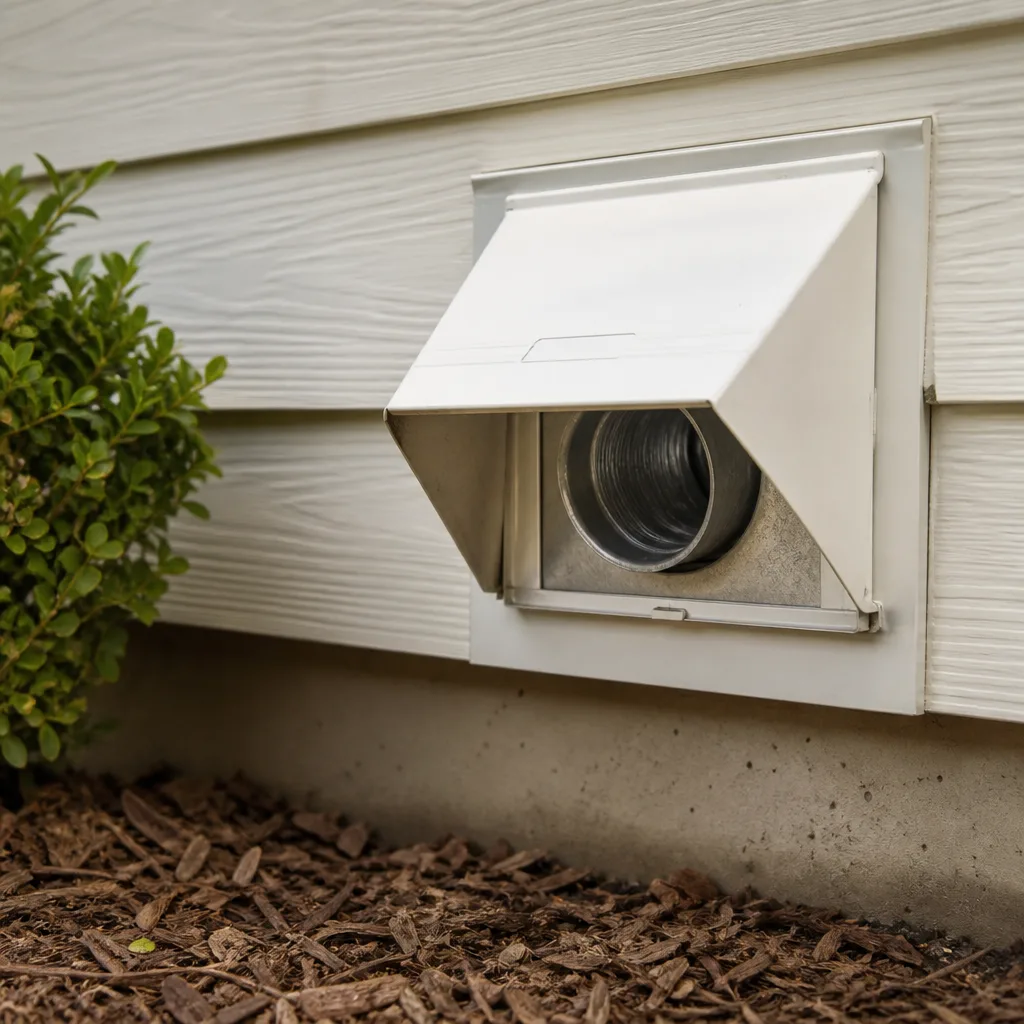
For Dryer Vent Cleaning in Leesburg, add annual inspection of the dryer duct run - a separate system with its own fire safety implications, documented in our dryer vent guide.
Common Mistakes to Avoid
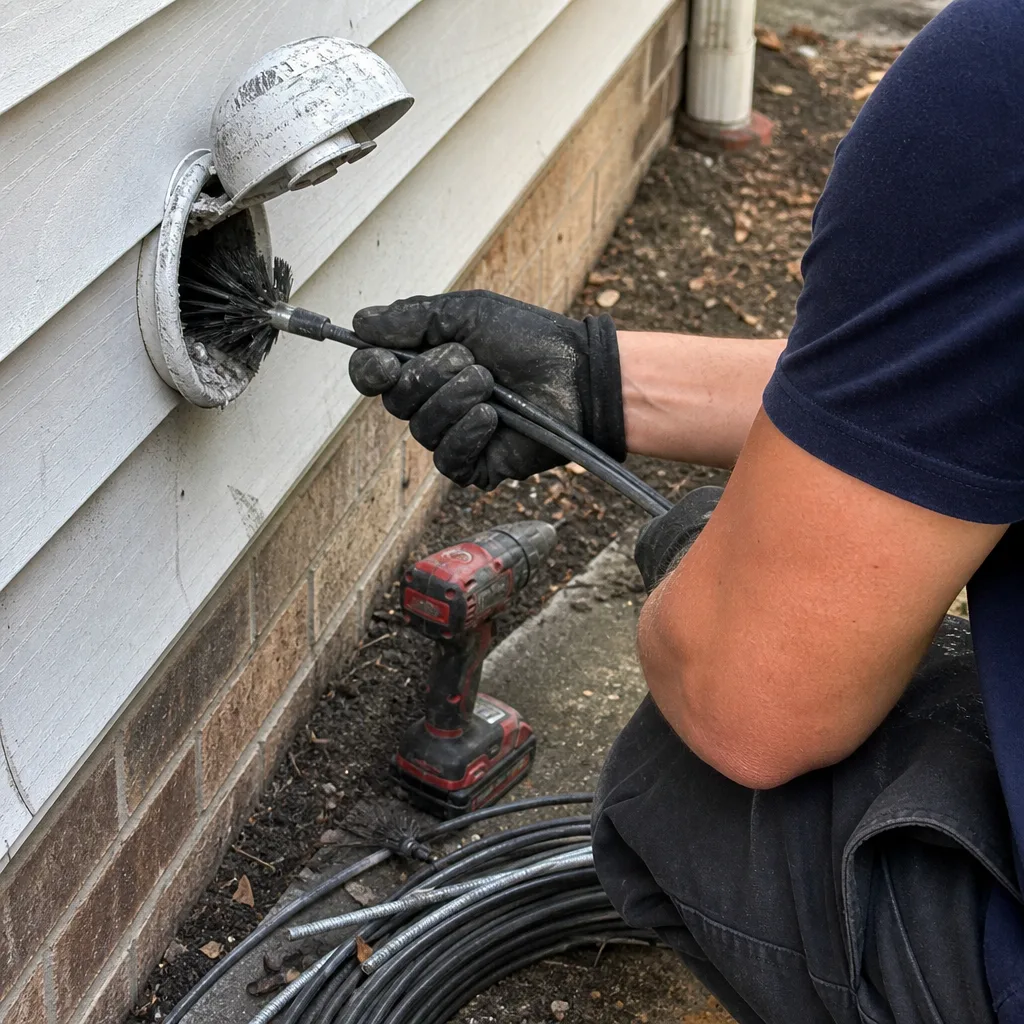
- Using the highest MERV filter available. MERV 13 in a system designed for MERV 8 strains the blower, reduces airflow, and can freeze the evaporator coil in summer. Match filter to system capacity, not marketing.
- Cleaning registers with damp cloths and reinstalling immediately. Moisture in the boot plus Leesburg’s summer humidity equals mold growth in 48 hours. Grilles must be fully dry.
- Blocking return air grilles with furniture. Restricted return airflow increases negative pressure in wall cavities, pulling more debris through gaps around the boot. Keep returns clear by 12 inches minimum.
- Ignoring the air handler cabinet. A clean duct system with a filthy blower wheel recirculates contamination immediately. The blower is part of the air path; include it in your inspection.
- Hiring based on coupon price without verifying equipment. A $79 “whole house special” uses a shop vacuum and a rotary brush with no containment. Ask what equipment brand will be used; Rotobrush, Nikro, and Abatement Technologies are trade-recognized names you can verify independently.
- Accepting “before” photos without date verification. Generic photos from other jobs are common. Request photos with your address visible or dated documentation.
- Skipping annual documentation because “it looks fine.” Gradual accumulation is invisible month to month. Annual photos reveal trends that justify or delay professional service.
When to Call a Professional
Call for professional inspection when you observe biofilm (not dust), rodent evidence, insulation fragments in the airstream, or airflow reduction in specific rooms. Call immediately if you smell burning, electrical ozone, or gas - these are not duct issues but life safety hazards requiring emergency response. For routine professional cleaning, the threshold is generally debris accumulation exceeding 1/8 inch in supply boots or visible restriction at registers.
CleanRun Air Duct Cleaning Leesburg offers free estimates in Leesburg - call (571) 487-7204. Every estimate includes a written price before any work begins, under Haven Standard Clause 1, and every completed job includes a Documented Photo Record of every duct run. We also provide a Free Second Opinion on any written estimate from another contractor.
Frequently Asked Questions
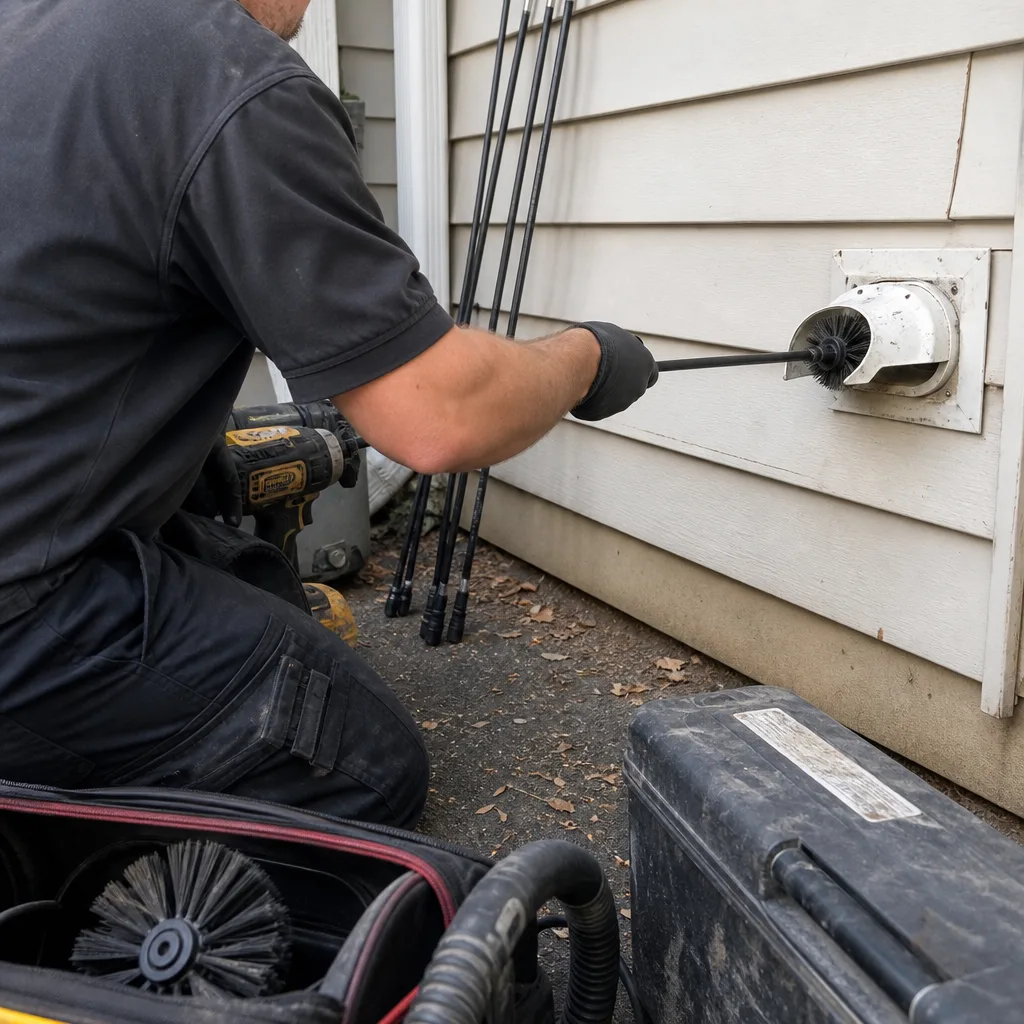
Whole-system air duct cleaning in Leesburg typically ranges from $450 to $850 for a standard single-family home, depending on system size, accessibility, and condition. Homes with multiple HVAC systems, extensive flex-duct in unconditioned attics, or significant construction debris may run higher. CleanRun delivers a written price before any work starts - no exceptions - and includes the Documented Photo Record as standard. Call (571) 487-7204 for an exact quote; estimates are free.
Low quotes typically reflect limited scope: register vacuuming only, no trunk line or plenum access, no blower cleaning, and no photo documentation. A $79 coupon covers 45 minutes of labor with a portable vacuum; professional negative-pressure extraction with a Rotobrush or Nikro system, HEPA containment, and full photo record requires 3-4 hours and proper equipment. The difference is verifiable work versus vacuum noise. Always ask what equipment brand will be used and whether the quote includes every duct run.
Demand a dated photo record of every duct run, before and after, with your home’s identifying features visible. At CleanRun, this is standard deliverable, not an add-on. Haven Standard Clause 1 requires written scope; the photo record verifies execution. If a contractor cannot or will not provide this, the work is unverifiable.
For Leesburg homes with normal occupancy and regular filter maintenance, every 3-5 years is typical. New construction homes may need an initial thorough cleaning at 2-3 years to remove persistent construction debris. Homes with allergy-sensitive occupants, multiple pets, or proximity to active construction may need more frequent service. Annual inspection with your smartphone documentation tells you whether accumulation justifies cleaning or if you can extend the interval; see our more guides & resources for additional maintenance planning tools.
You can clean registers and the first few inches of boot interior safely. Beyond that, agitating debris without negative-pressure containment redistributes contamination throughout your home. Professional equipment captures dislodged material at 5,000+ CFM with HEPA filtration. The risk of DIY deeper cleaning is worse air quality, not better.
Yes. Leesburg’s humid summers (July-August average 70%+ relative humidity) create condensation on attic ductwork that can support biofilm growth. Pollen season (March-May) loads filters faster and increases particulate infiltration through gaps. Hard water mineral scale from humidifiers is a local factor. These conditions don’t necessarily shorten cleaning intervals, but they make annual inspection more important for catching problems early.
The Bottom Line
A useful air duct maintenance checklist tells you what to look for, where to look, and what the findings mean. Start at the air handler, work outward through supply and return runs, photograph everything annually, and know which tasks are DIY-safe versus which require professional negative-pressure equipment. In Leesburg’s climate and construction environment, the return air boot deserves more attention than it typically receives. Document your system, know your baseline, and when you hire professional service, insist on written price, verifiable equipment, and documented results.
For homeowners who want a professional inspection to establish that baseline, CleanRun Air Duct Cleaning Leesburg serves Leesburg with the H.A.V.E.N. Standard: written price before work, background-checked uniformed technicians, and a 365-Day Done Right Promise backed in writing. Call (571) 487-7204 for a free estimate. We also offer HVAC Cleaning in Leesburg for comprehensive system maintenance.
Written by Tomas Reyes, Owner at CleanRun Air Duct Cleaning Leesburg, serving Leesburg since 2013.