
Last updated September 23, 2026
Whole-system duct and dryer vent check with before-and-after photos - you see exactly what came out of your vents
That "$99 whole-house special" is a bait ad - the real number appears once they are in your hallway, or the "clean" is a shop-vac at the register. We photograph the inside of your ducts before and after instead.
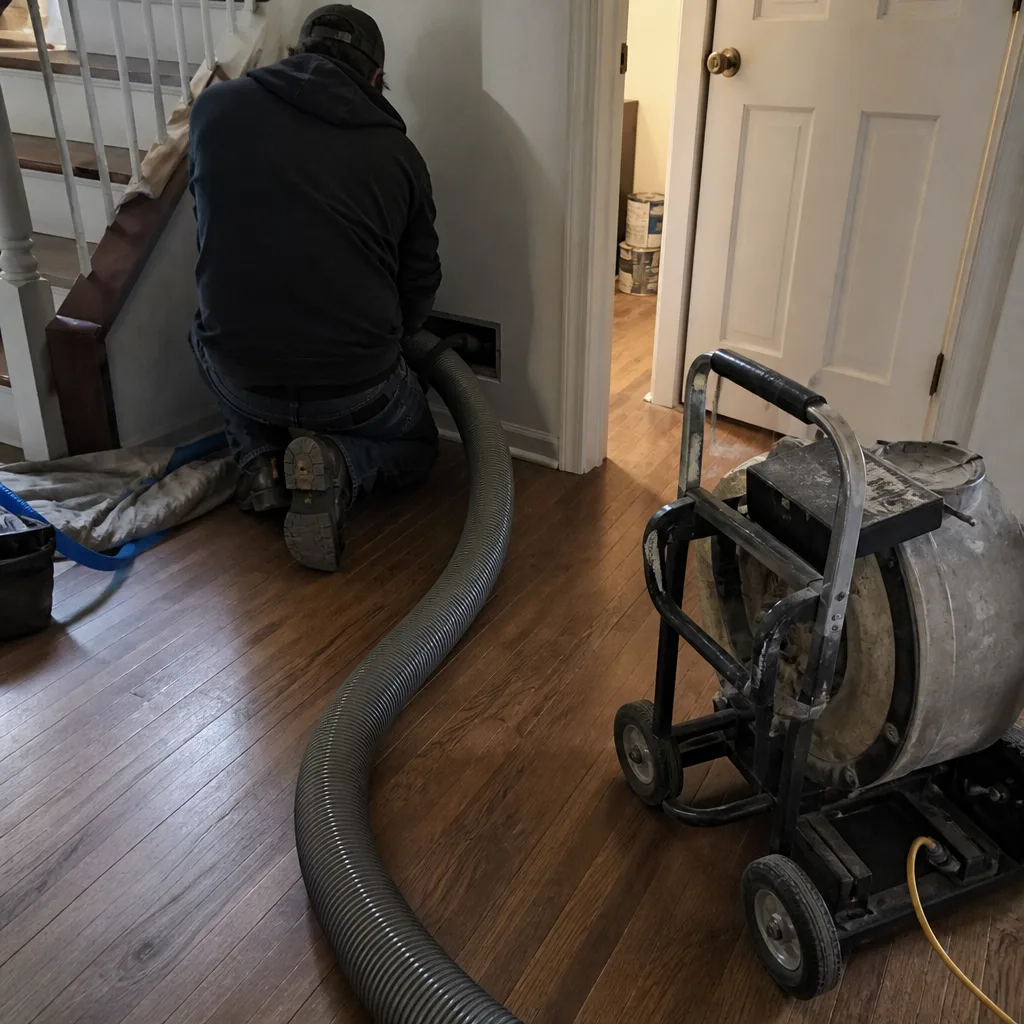 Before
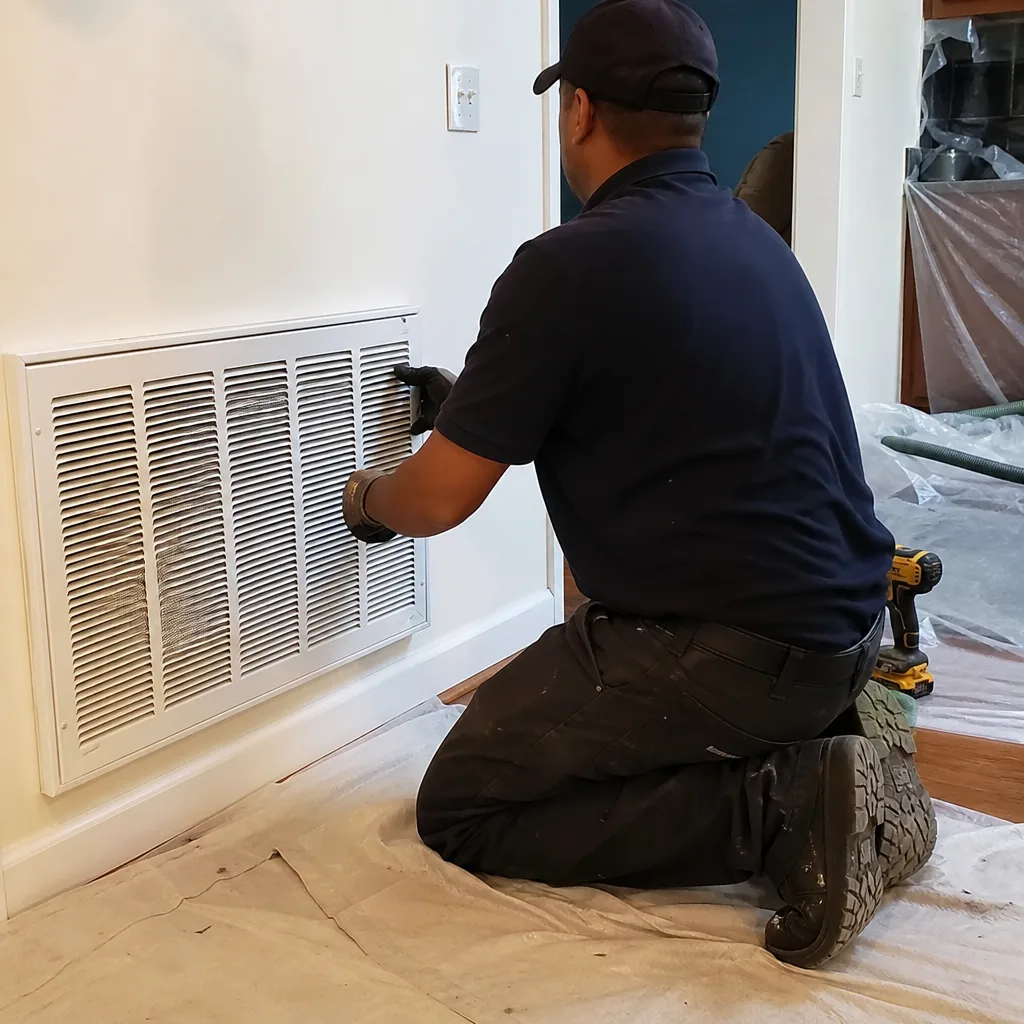 After
After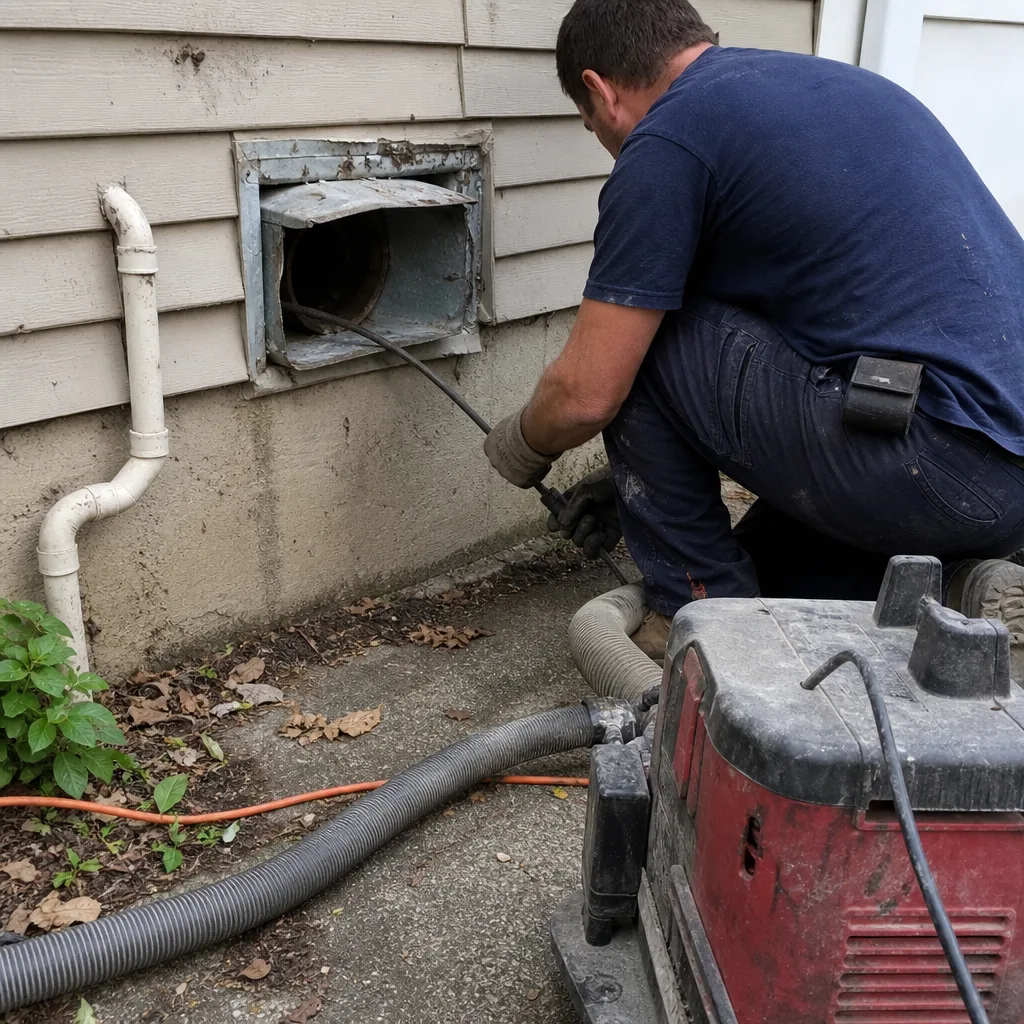 Before
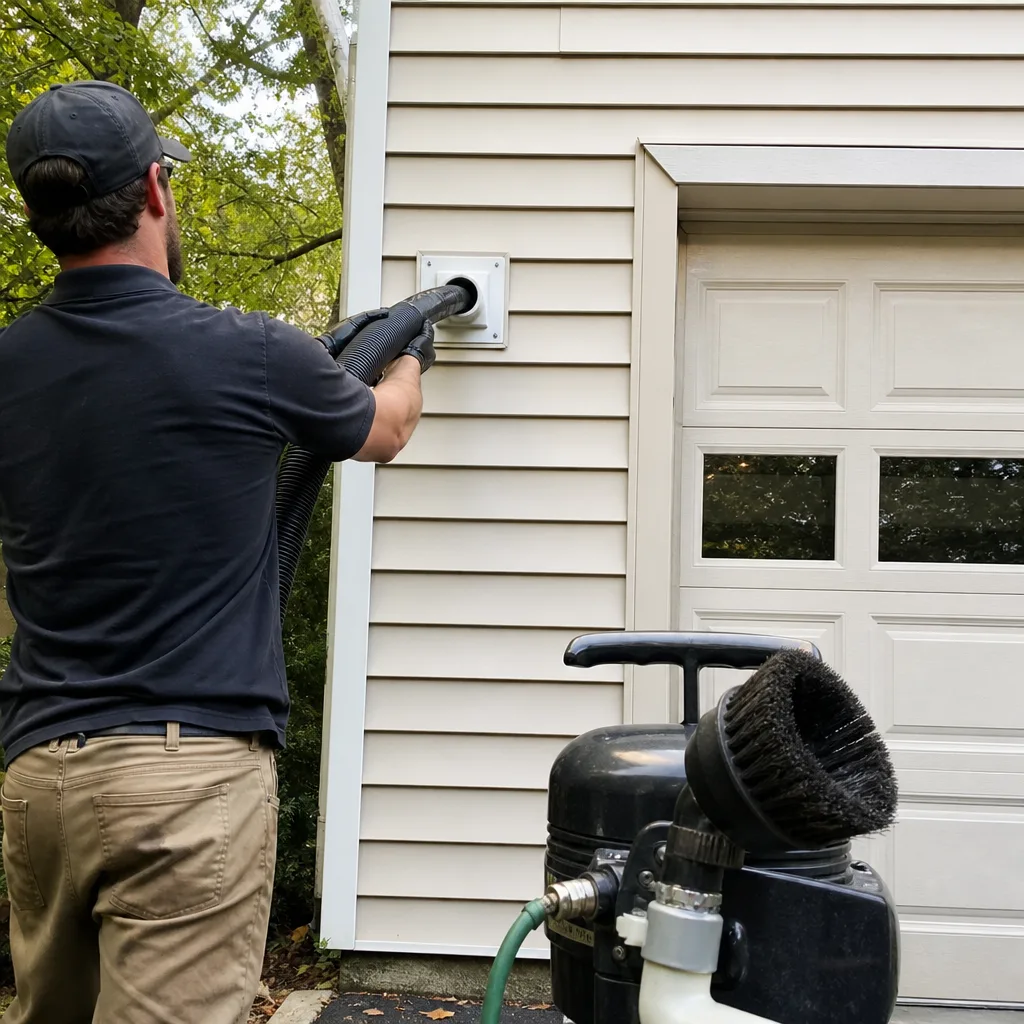 After
After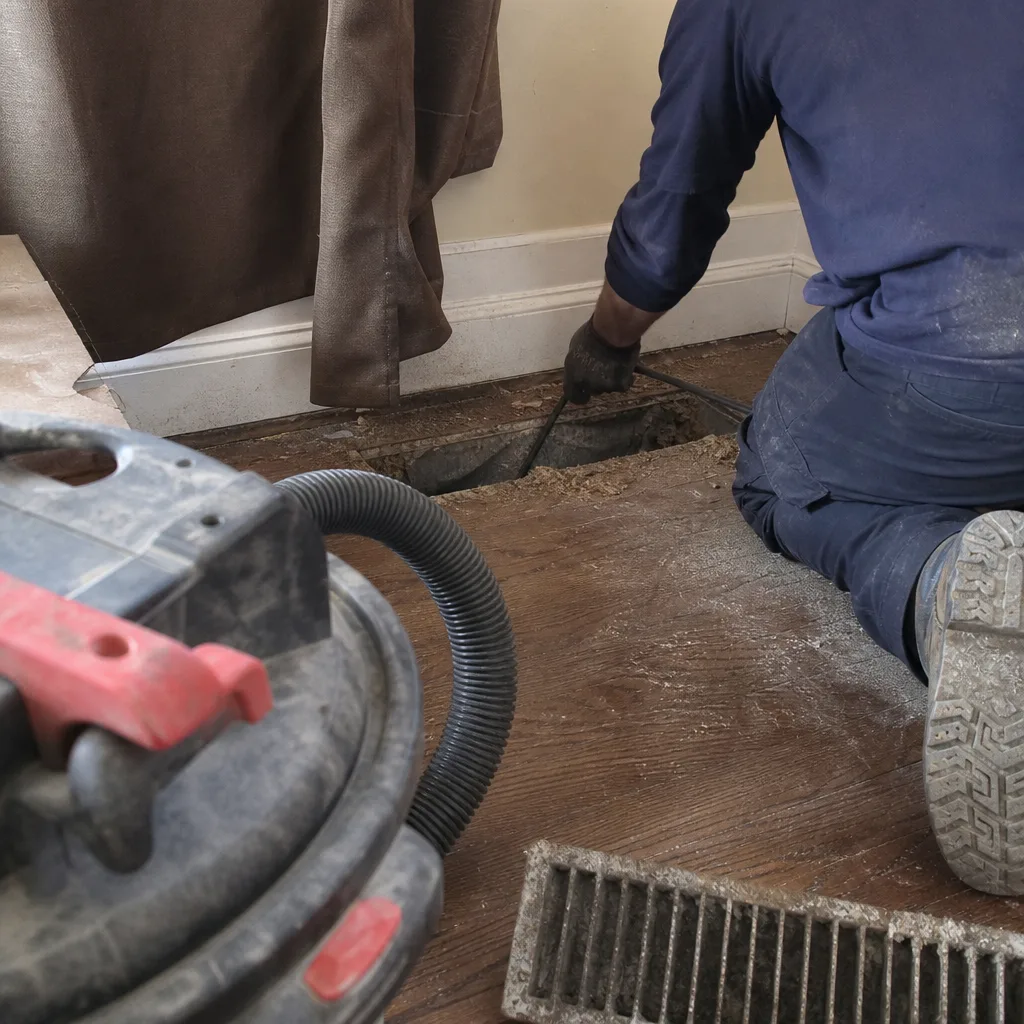 Before
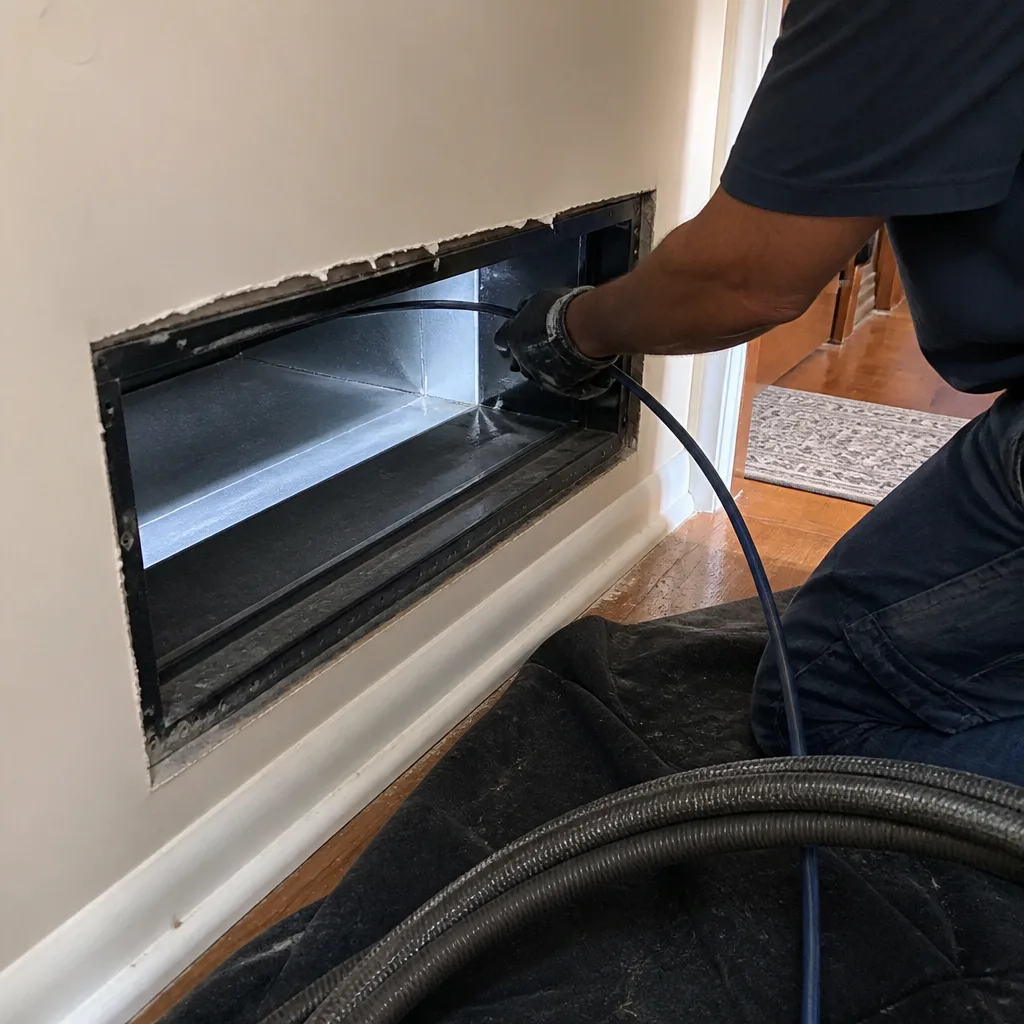 After
AfterHow to Hire a Air Duct Cleaning Contractor in Leesburg: A Step-by-Step Guide
A $79 duct cleaning coupon covers roughly the cost of the truck’s gas to Leesburg. What it does not cover is the negative-pressure extraction equipment, the camera inspection, or the time required to actually clean a home with more than eight duct runs. In our experience serving Leesburg since 2013, the homeowners who get what they pay for are the ones who know which five questions separate a documented-process company from a shop-vac operation. This guide - along with our Seasonal Air Duct Cleaning Care for Leesburg: Year-Round Homeowner’s Guide - walks through those questions, the written items to request before any technician enters your house, and the red flags specific to the Leesburg market that we’ve watched trip up neighbors in neighborhoods from Lansdowne to Woodlea.
Quick Answer
To hire a legitimate air duct cleaning contractor in Leesburg, request five written items before any work begins: an itemized price, a detailed scope of work, an equipment list, a photo documentation policy, and warranty terms. Verify NADCA membership at nadca.com, but understand it certifies the company, not the specific crew dispatched to your home. Expect a pre-job walkthrough of 15-30 minutes where the technician counts registers, inspects the plenum (the main distribution box connected to your furnace), and notes access limitations. Whole-system cleaning in Leesburg typically ranges from $400-$900 for homes built between 1990 and 2020, depending on duct run count and contamination level.
Table of Contents
- Why Written Documentation Matters More Than Reviews
- The Five Written Items to Request Before Any Technician Enters Your House
- How to Verify NADCA Membership and What It Actually Means
- What a Legitimate Pre-Job Walkthrough Looks Like
- How to Compare Two Bids That Look Different on Paper
- Red Flags Specific to the Leesburg Market
- Professional Equipment: A Translation Guide for Homeowners
- Common Mistakes to Avoid
- When to Call a Professional
- Frequently Asked Questions
- The Bottom Line
 Before
 After
AfterWhy Written Documentation Matters More Than Reviews
Reviews tell you how someone felt. Written documentation tells you what they received. In Leesburg’s service market, where homes in Red Rock and Exeter range from 1980s colonials to new construction with complex zoned systems, the gap between feeling and fact is where bait-and-switch operators thrive.
We’ve responded to dozens of homes in Leesburg where a previous contractor left a handwritten receipt reading “duct cleaning – $189” and nothing else. No scope. No equipment noted. No photos. When the homeowner called back because dust was still blowing from the master bedroom register, the company had no record of how many duct runs were cleaned, which ones were skipped, or what method was used. Under Haven Standard Clause 1, every CleanRun job begins with a written price and scope before a single panel comes off. This is not a courtesy. It is the only way to hold a contractor accountable.
The CleanRun Air Duct Cleaning Leesburg home page lists our standard deliverables, but the principle applies regardless of who you hire: if it is not written before work starts, it does not exist for dispute purposes later.
Three documents separate professional work from vacuum noise:
- Written scope of work - a line-item list of every duct run, the plenum, and the return system to be cleaned
- Written price - a single total for the defined scope, not a “starting at” figure with variables unexplained
- Written warranty or promise - terms stating what happens if the work does not deliver the described result
Our 365-Day Done Right Promise is printed on every job record. If the work is not right, we make it right. Not a policy subject to manager approval. A written guarantee.
The Five Written Items to Request Before Any Technician Enters Your House
These five items are non-negotiable. A contractor who cannot produce them on the spot, or who promises to “email them later,” is telling you their process is not documented. In Leesburg, where many homeowners work from home in communities like Raspberry Falls or Belmont Country Club, you have the right to review documentation before allowing access to your HVAC system.
1. Itemized Price
The price should list a single total for the complete scope, not a per-vent rate that balloons once the technician is inside. Per-vent pricing is the industry standard for bait-and-switch: the low advertised rate multiplies across 12, 16, or 20 registers, and suddenly the job costs triple the quote. In Leesburg, whole-system Air Duct Cleaning services for a typical 2,400-square-foot home with 10-14 duct runs ranges from $400-$700. Larger homes in areas like Creighton Farms with 18+ runs or multiple HVAC systems may reach $800-$900. If a quote falls significantly below this range, the contractor is either omitting equipment costs or planning to upsell on arrival.
CleanRun’s written price under Haven Standard Clause 1 is delivered before work starts, every time. No exceptions.
2. Scope of Work
The scope should specify:
- Number of supply duct runs to be cleaned
- Number of return duct runs to be cleaned
- Whether the plenum (the main distribution box) is included
- Whether registers and grilles are removed and cleaned by hand
- Whether the blower compartment and evaporator coil are addressed
A scope reading “clean all ducts” is insufficient. “All ducts” has no measurable meaning. The scope should read like an inventory: “12 supply runs, 3 return runs, plenum, 15 registers removed and hand-cleaned.”
3. Equipment List
The contractor should list the primary equipment to be used. This is not proprietary information. Professional-grade negative-pressure extraction systems from manufacturers like Nikro, Abatement Technologies, and Rotobrush are publicly catalogued and spec’d. If a contractor refuses to name equipment, or describes it only as “commercial-grade” or “industrial-strength,” they are likely using portable shop vacuums with insufficient suction for ductwork.
Our crews operate with equipment from Rotobrush, Nikro, Abatement Technologies, Honeywell, Aprilaire, and Guardsman. Customers can look up these brands independently and verify that the tools match the job.
4. Photo Documentation Policy
The policy should state, in writing, that photographs will be taken inside every duct run before and after cleaning, and that these photographs will be delivered to the customer as part of the standard job record. Not “available upon request.” Not “we can take photos if you want.” Included as standard.
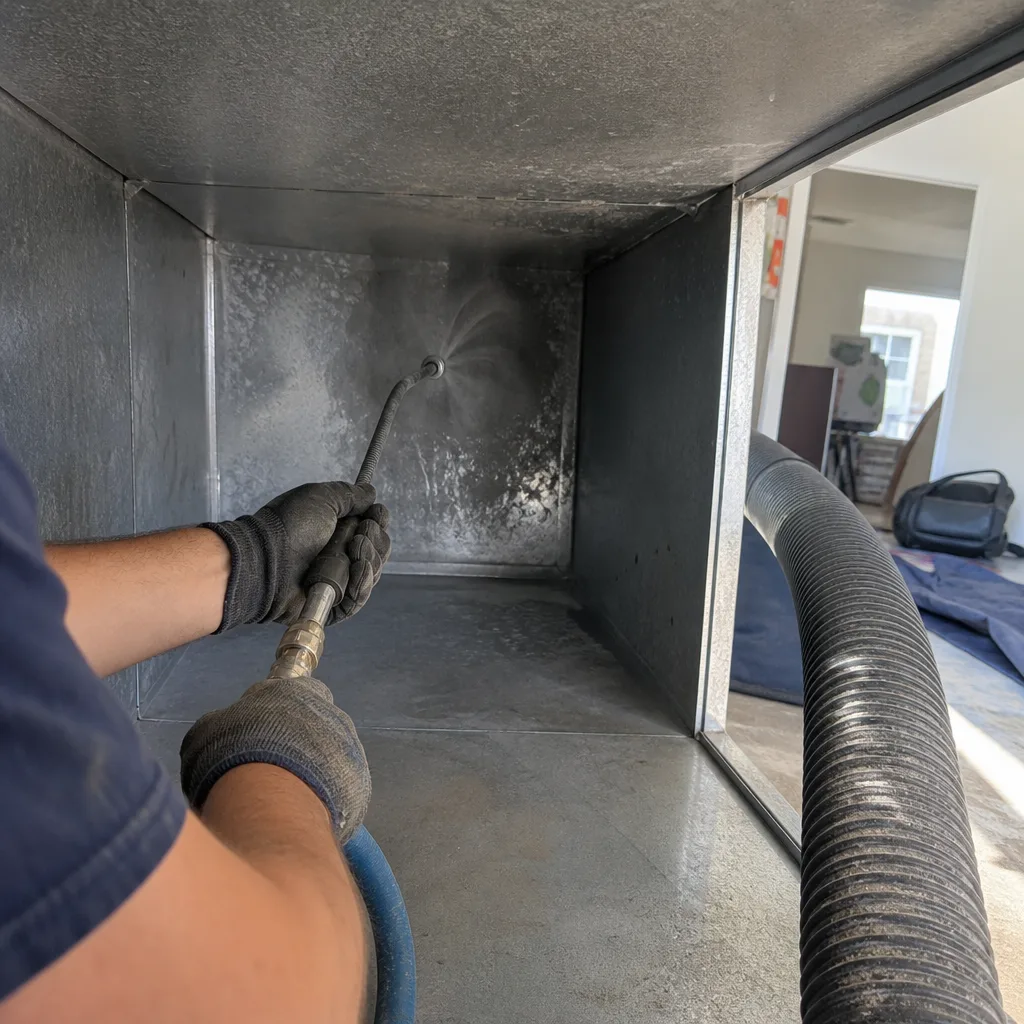
Since our first job in 2013, CleanRun has maintained a Documented Photo Record on every visit. The inside of every duct run is photographed before and after. Customers receive these images as concrete proof of work performed, not as a sales tool for the next customer.
5. Warranty Terms
The warranty should specify duration, coverage, and the process for making a claim. “Satisfaction guaranteed” is not a warranty. “365-Day Done Right Promise - if the work is not right, we make it right, backed in writing on every job” is a warranty. Ask how the contractor defines “not right” and what the remedy process involves.
How to Verify NADCA Membership and What It Actually Means
The National Air Duct Cleaners Association (NADCA) maintains a public membership directory at nadca.com. NADCA membership indicates that a company has agreed to follow association standards, specifically the ACR standard for HVAC system cleaning. This is worth verifying. It is not, however, a guarantee about the specific crew that shows up at your Leesburg home.
Here’s what NADCA membership certifies:
- The company has at least one technician who has passed NADCA’s certification exam
- The company carries general liability insurance
- The company has agreed to follow NADCA’s standards and code of ethics
Here’s what it does not certify:
- That the certified technician is the one dispatched to your job
- That the crew uses NADCA-recommended equipment on every job
- That the company follows through on complaints without NADCA intervention
- That the specific work performed at your home meets ACR standards
We’ve encountered NADCA-member companies in the Leesburg market whose field crews were subcontractors with no direct employment relationship to the member company. The certification applied to an office manager who never left headquarters. Verify membership, then ask: “Will the technician who comes to my home be NADCA-certified, and can I see their certification card?”
The Air Duct Cleaning in Leesburg page includes additional guidance on credential verification specific to our market.
What a Legitimate Pre-Job Walkthrough Looks Like
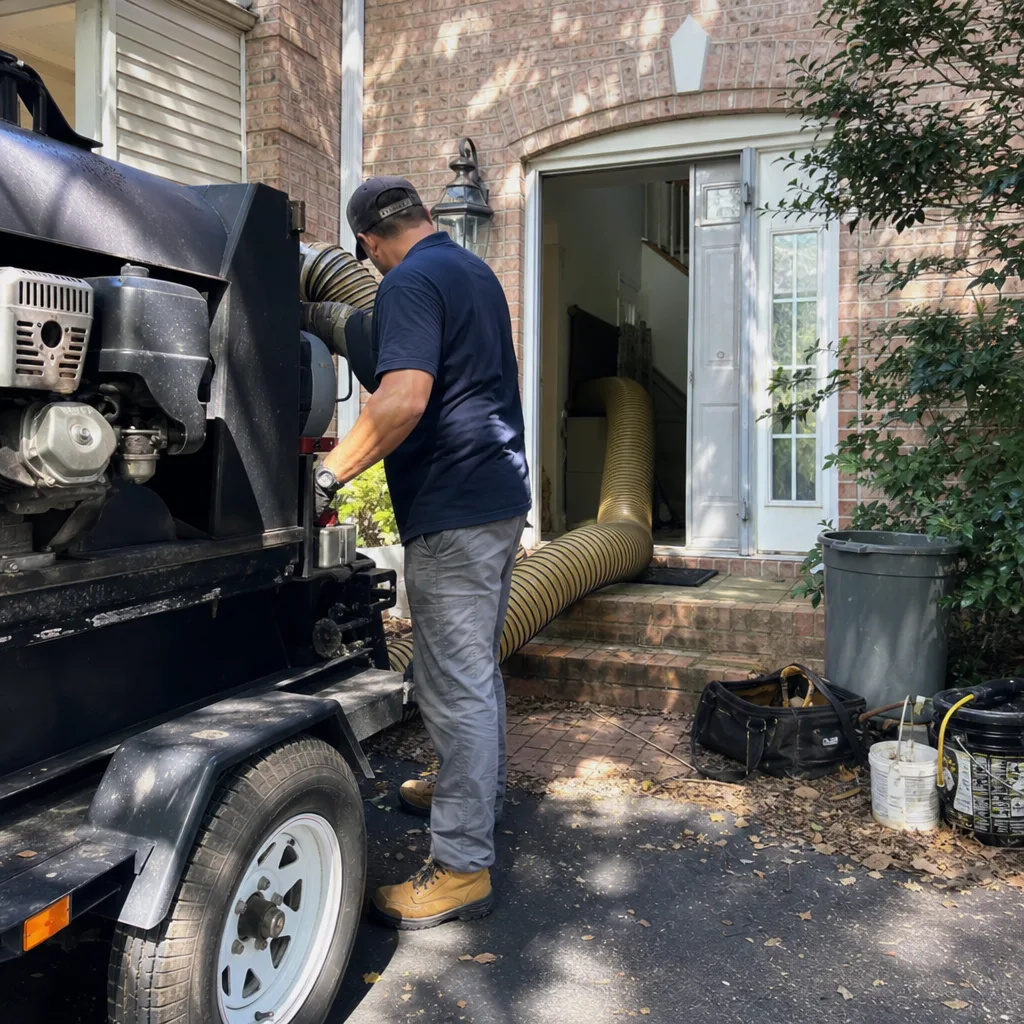
A proper walkthrough takes 15-30 minutes and involves the technician walking the full property, not just glancing at the thermostat. In Leesburg’s variable housing stock - from historic downtown properties with modified gravity systems to new builds in Kincora with sealed ductwork in conditioned attics - the walkthrough is where a competent contractor identifies access challenges and sets realistic expectations.
What the technician should be doing:
- Counting registers and returns. Each supply register and return grille should be noted by location. This count becomes the basis for the scope of work.
- Locating the air handler. The technician should identify the furnace or air handler location, note whether the plenum is accessible, and check for filter size and condition.
- Inspecting the ductwork configuration. Flexible duct, fiberglass duct board, and rigid metal duct each require different cleaning approaches. The technician should identify which materials are present.
- Noting access limitations. Crawl spaces, sealed attics, finished basements with dropped ceilings - these affect both method and price.
- Photographing conditions. The technician should photograph visible contamination at registers or in accessible duct sections to document pre-existing conditions.
- Writing measurements and observations. A clipboard or tablet with notes, not a mental tally. These notes become part of the written scope.
What the technician should not be doing:
- Quoting a firm price without the walkthrough
- Pressuring for an immediate decision
- Claiming mold contamination without laboratory evidence
- Offering a “today only” discount
In our experience across Leesburg, the homes that generate post-job disputes are almost always those where the walkthrough was skipped or rushed. A technician who spends four minutes in your home before presenting a contract is not inspecting. They are selling.
How to Compare Two Bids That Look Different on Paper
Leesburg homeowners often receive bids ranging from $299 to $1,200 for what seems like the same service. The difference is usually not price gouging. It is scope variation hidden in contractor language. Here is a translation guide for common terms into measurable deliverables.
| Contractor Language | What to Ask | Measurable Deliverable |
|---|---|---|
| “Complete system cleaning” | Which components are included? | Number of supply runs, return runs, plenum, registers, blower compartment, coil |
| “Negative-pressure cleaning” | What CFM (cubic feet per minute) does your vacuum produce? | Equipment model and manufacturer-specified CFM; typical professional units operate at 5,000-15,000 CFM |
| “Sanitizing included” | What product is used, and is it EPA-registered for HVAC systems? | Product name, EPA registration number, application method |
| “Camera inspection” | Is this before, during, or after cleaning? Are images provided? | Written confirmation of timing and image delivery method |
| “Mold remediation” | Was mold identified through laboratory analysis? | IAQ test results from a third-party lab; without this, “remediation” is unverified treatment |
A $400 bid that specifies 12 supply runs, 3 returns, plenum, and registers removed and hand-cleaned, with before-and-after photos, is not cheaper than a $900 bid for “complete cleaning” with no component list. For a detailed breakdown of what drives these differences, see our Air Duct Cleaning Cost Breakdown: The Leesburg Homeowner’s Reference for 2026. It is more precise. The $900 bid may include legitimate additional work - coil cleaning, blower service, or duct sealing - but you cannot evaluate this without line-item detail.
CleanRun provides a Free Second Opinion on any written estimate. Bring a competitor’s quote; we put our own number next to it in writing, line item by line item, so you can see exactly what differs.
Red Flags Specific to the Leesburg Market
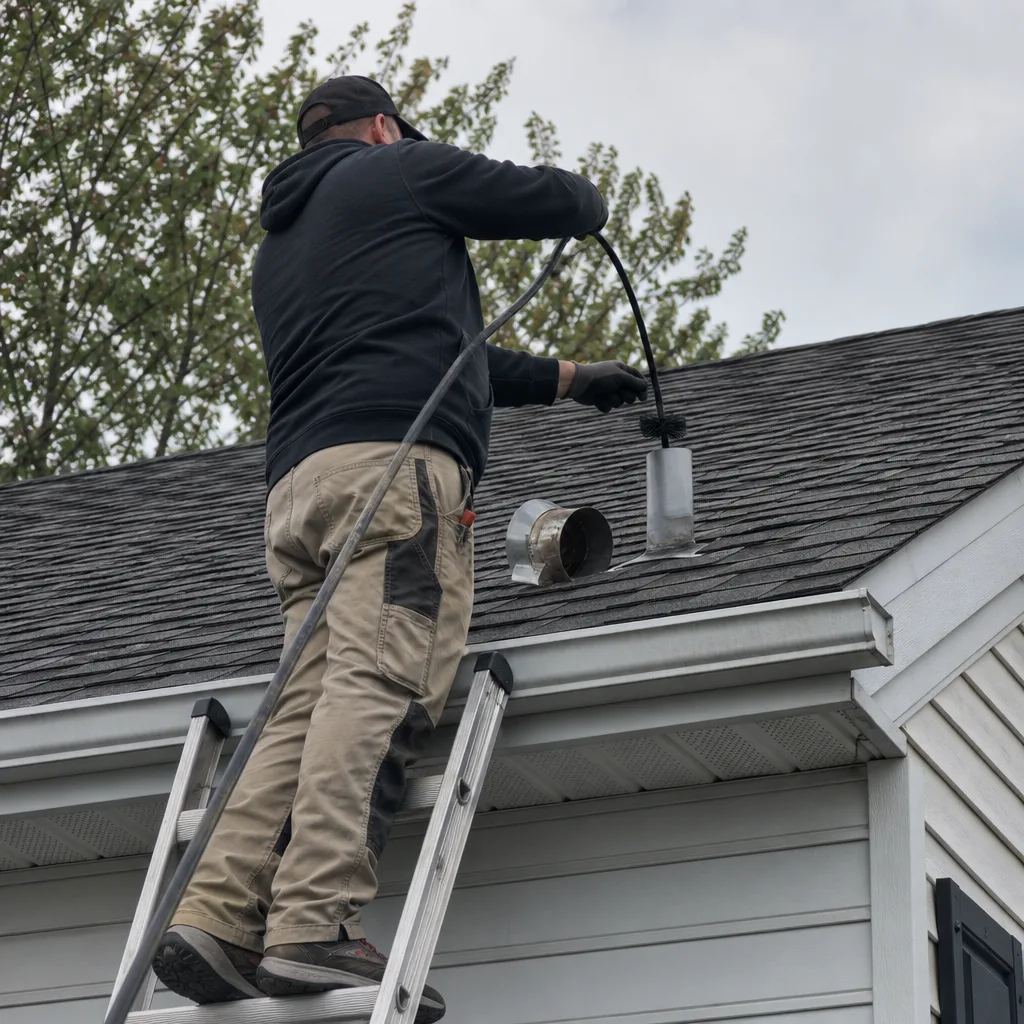
Leesburg’s rapid growth and mix of established neighborhoods with new construction create specific vulnerabilities. These are the patterns we’ve observed in 52,000+ homes served since 2013.
Door-Hangers with No Physical Address
Leesburg’s suburban density makes door-to-door marketing cost-effective. Legitimate contractors include a verifiable business address. A door-hanger listing only a phone number and website, with no local address or license number, is often a transient operator working from a residential address or out of a storage unit. Verify the address through the Loudoun County business license database before calling.
Quotes Given Without a Home Walkthrough
Phone quotes for duct cleaning are inherently unreliable. A 1,800-square-foot ranch in Leesburg’s historic district may have 8 duct runs; a similarly sized home in Lansdowne with a finished basement and addition may have 16. Without seeing the system, any price is a guess designed to get a foot in the door, then revise upward.
Verbal Promises About Mold Remediation Without IAQ Testing
Leesburg’s humid summers and variable basement conditions can promote microbial growth. But “I see mold in your ducts” from a technician without laboratory analysis is a scare tactic, not a diagnosis. Mold remediation requires identification of species and concentration through indoor air quality (IAQ) testing. Any contractor proposing antimicrobial treatment should provide or recommend third-party testing first.
Pressure to Add Services Mid-Job
The classic pattern: technician begins work, then reports “discovered” conditions requiring immediate additional treatment. The homeowner, with panels removed and equipment running, feels compelled to agree. A written scope prevents this. If conditions genuinely differ from the walkthrough assessment, work stops, the scope is revised in writing, and the homeowner reviews before proceeding.
Unmarked Vehicles or Technicians Without Identification
Under Haven Standard Clause 3: Verified Crews, CleanRun technicians are background-checked, uniformed, and identified by name before arrival. This is not merely professional presentation. It is accountability. An unmarked van and a technician who will not provide a full name are indicators of subcontractor labor with no direct employment oversight.
Professional Equipment: A Translation Guide for Homeowners
Contractor equipment vocabulary is often used to impress rather than inform. Here is what the terms mean in practice, and what to expect in a Leesburg home.
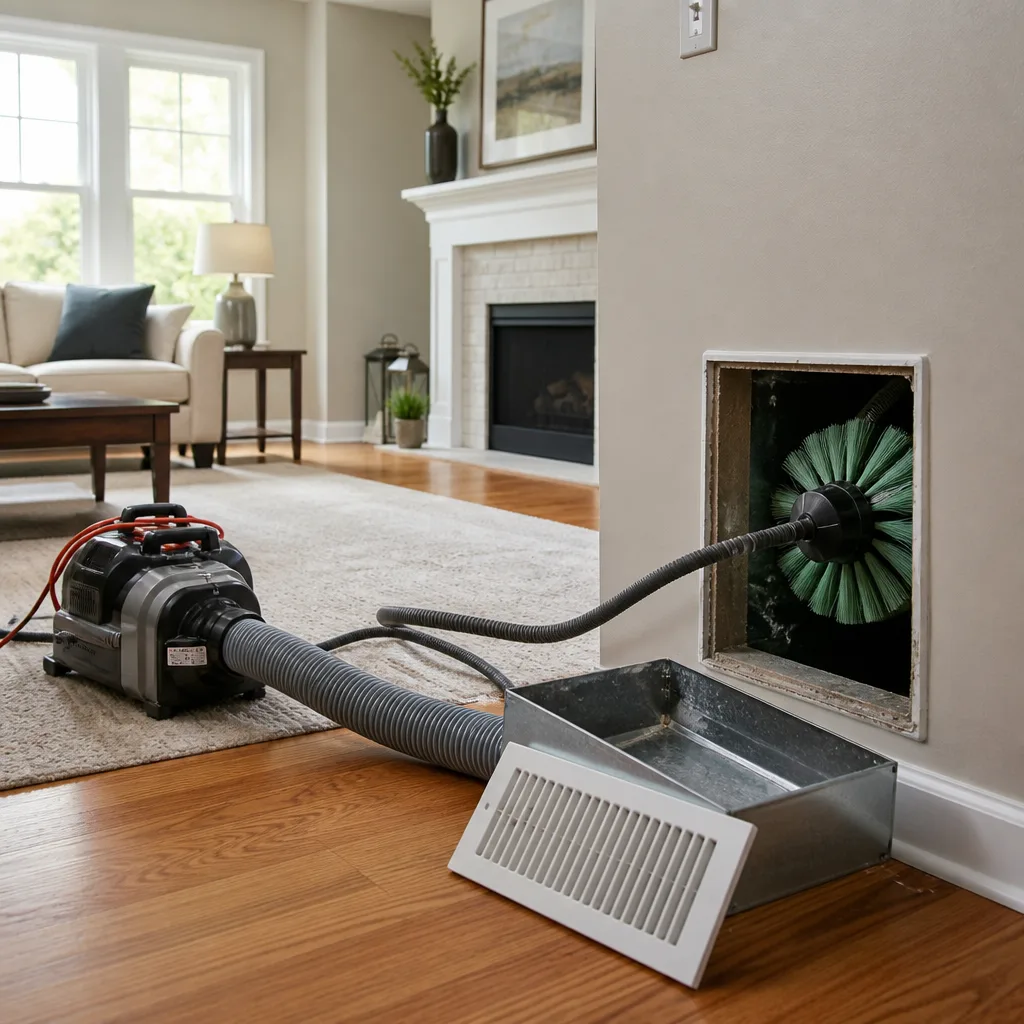
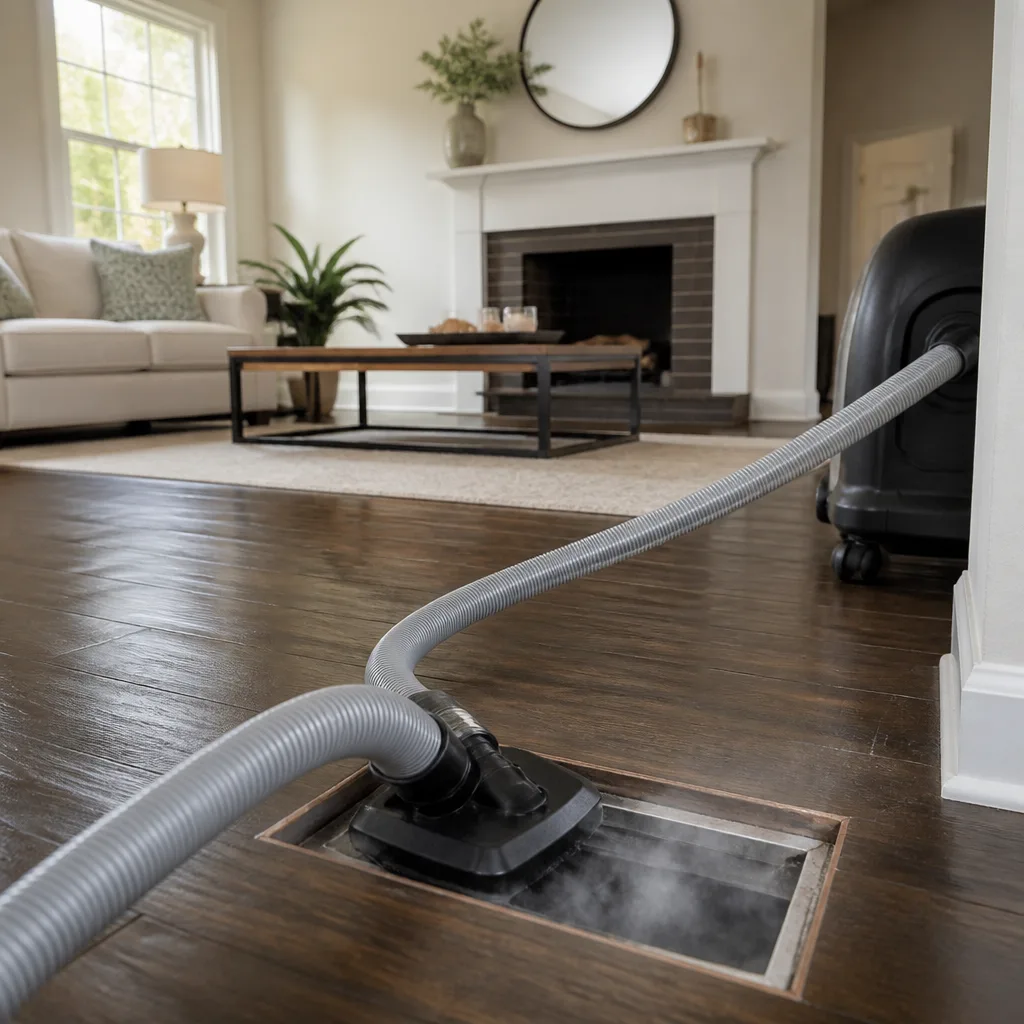
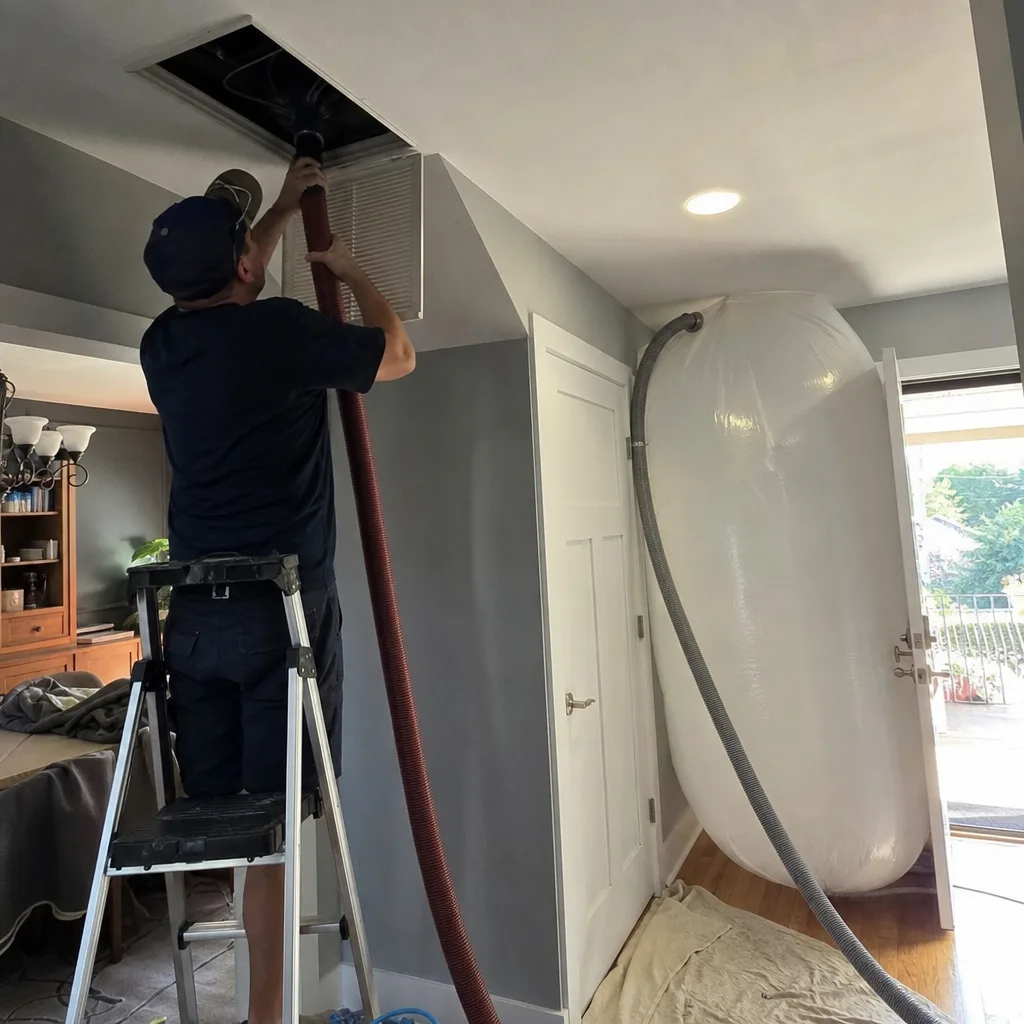
Negative-pressure extraction - the industry standard method. A large vacuum (typically mounted on a truck or as a portable unit) creates suction at the air handler, pulling debris through the entire duct system toward the collection point. Agitation tools - brushes, whips, or compressed air devices - dislodge debris at the register end. The vacuum captures it before it enters living space. Without sufficient vacuum CFM, dislodged debris simply resettles.
Rotary brush system - a flexible cable with a rotating brush head, fed through individual duct runs. Effective for light to moderate debris in metal ductwork. Less effective in flexible duct, where the brush can damage the inner lining if misapplied. CleanRun uses Rotobrush systems where appropriate, matched to duct material.
HEPA filtration - High-Efficiency Particulate Air filters capture 99.97% of particles 0.3 microns and larger. The vacuum exhaust should be HEPA-filtered to prevent redistribution of fine debris. Ask whether the contractor’s equipment includes HEPA exhaust filtration, not just HEPA collection bags.
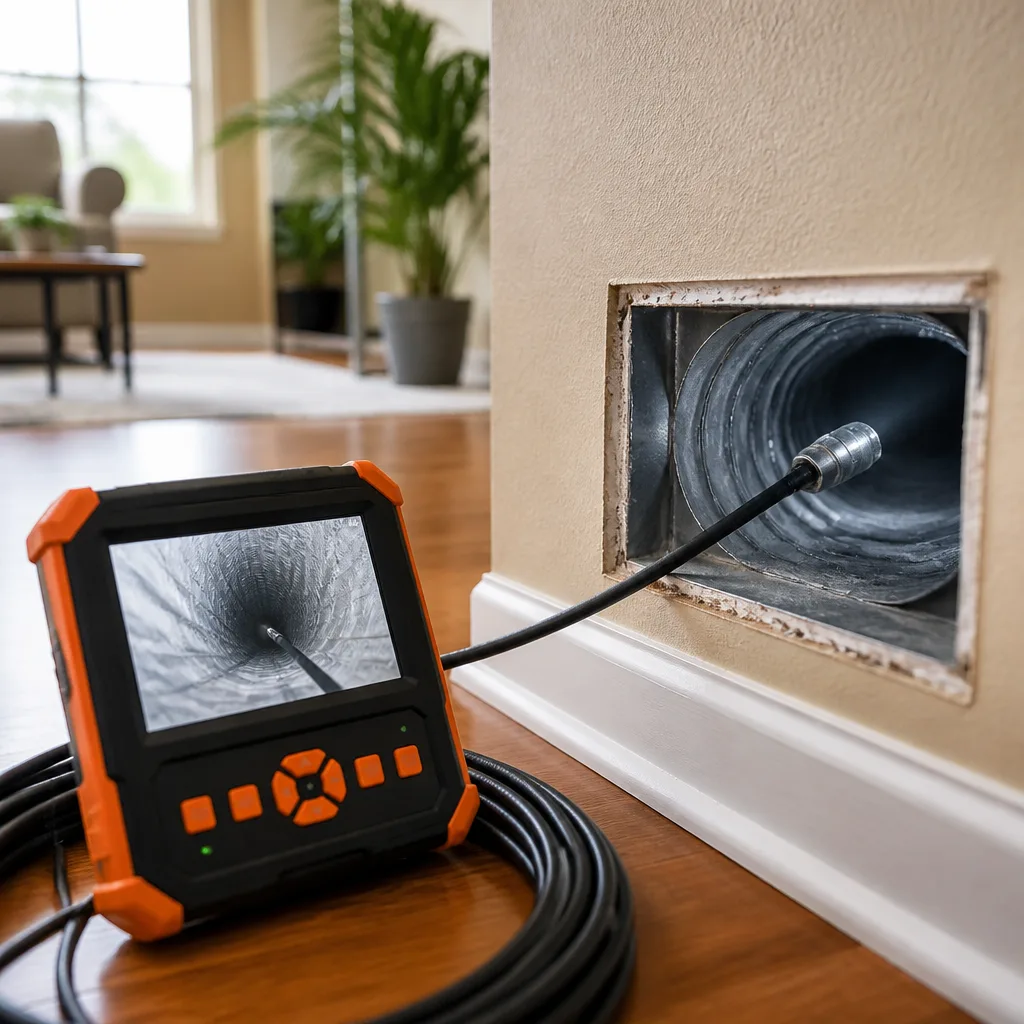
Camera systems - video inspection tools that travel through ductwork to document conditions. Useful for identifying blockages, damage, or contamination patterns. The key question is not whether the contractor owns a camera, but whether they provide you with the images as part of your job record.
Equipment from Honeywell, Aprilaire, and Guardsman represents the air quality and monitoring side of the trade - filtration upgrades, UV purification, and humidity control that may be relevant follow-up services after cleaning reveals system limitations.
The HVAC Cleaning in Leesburg page details how equipment selection varies with system type and age.
Common Mistakes to Avoid
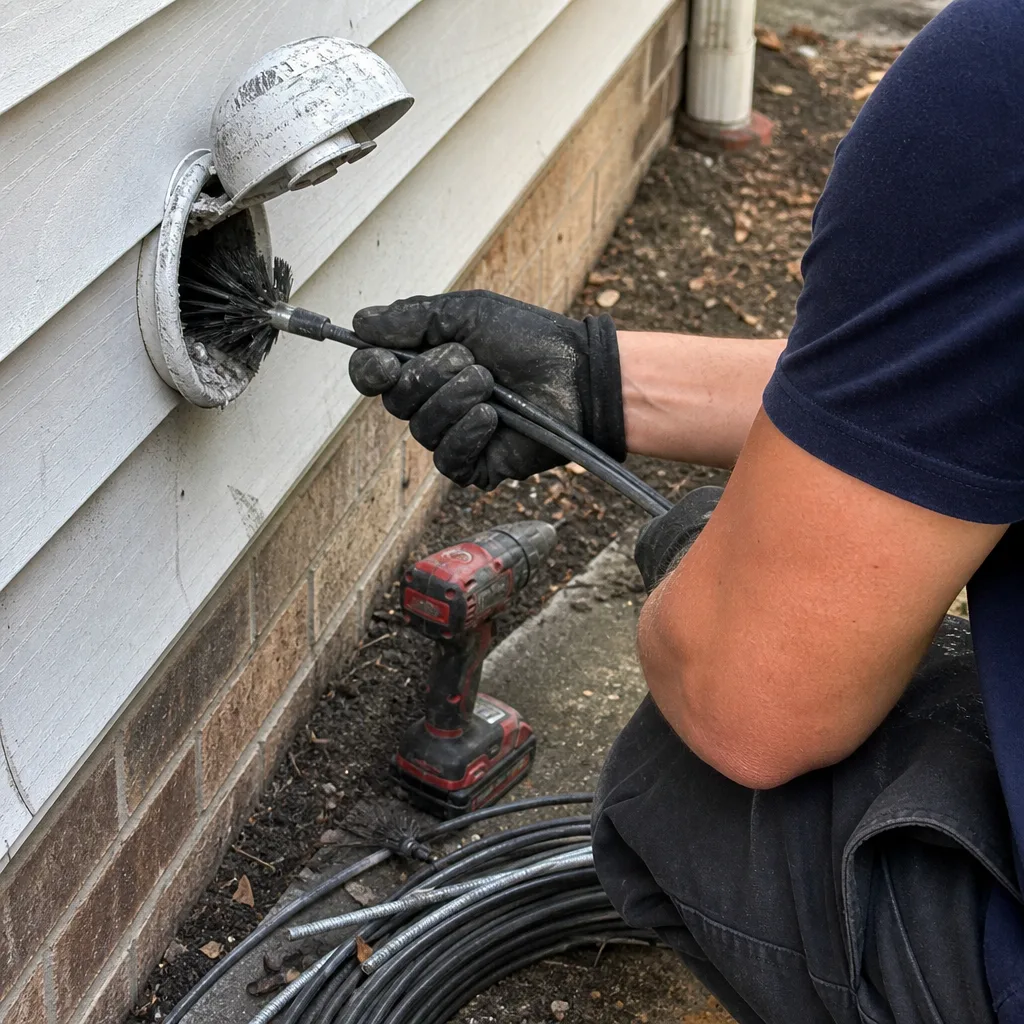
- Choosing by price alone. The lowest bid in Leesburg almost always reflects omitted scope - skipped returns, unopened plenum, registers wiped with a cloth rather than removed and cleaned. A written scope comparison reveals the true cost difference.
- Accepting verbal warranties. “We’ll come back if there’s a problem” is not enforceable. The 365-Day Done Right Promise is printed on every CleanRun job record because verbal assurances evaporate when the truck leaves.
- Ignoring the return system. Many homeowners focus on supply ducts (where conditioned air enters rooms) and neglect returns (where air cycles back to the air handler). Returns often contain more debris and are harder to clean properly. The scope should specify return duct cleaning separately.
- Scheduling cleaning without addressing the underlying cause. In Leesburg’s older homes, particularly near the historic downtown, deteriorating duct seals and insulation gaps pull attic or crawl space debris into the system. Cleaning without sealing is temporary. A competent contractor notes seal conditions during the walkthrough and recommends duct repair and sealing where appropriate.
- Failing to verify insurance. General liability and workers’ compensation protect you if a technician is injured on your property or damages your home. Request a certificate of insurance directly from the contractor’s provider, not a photocopy from the contractor.
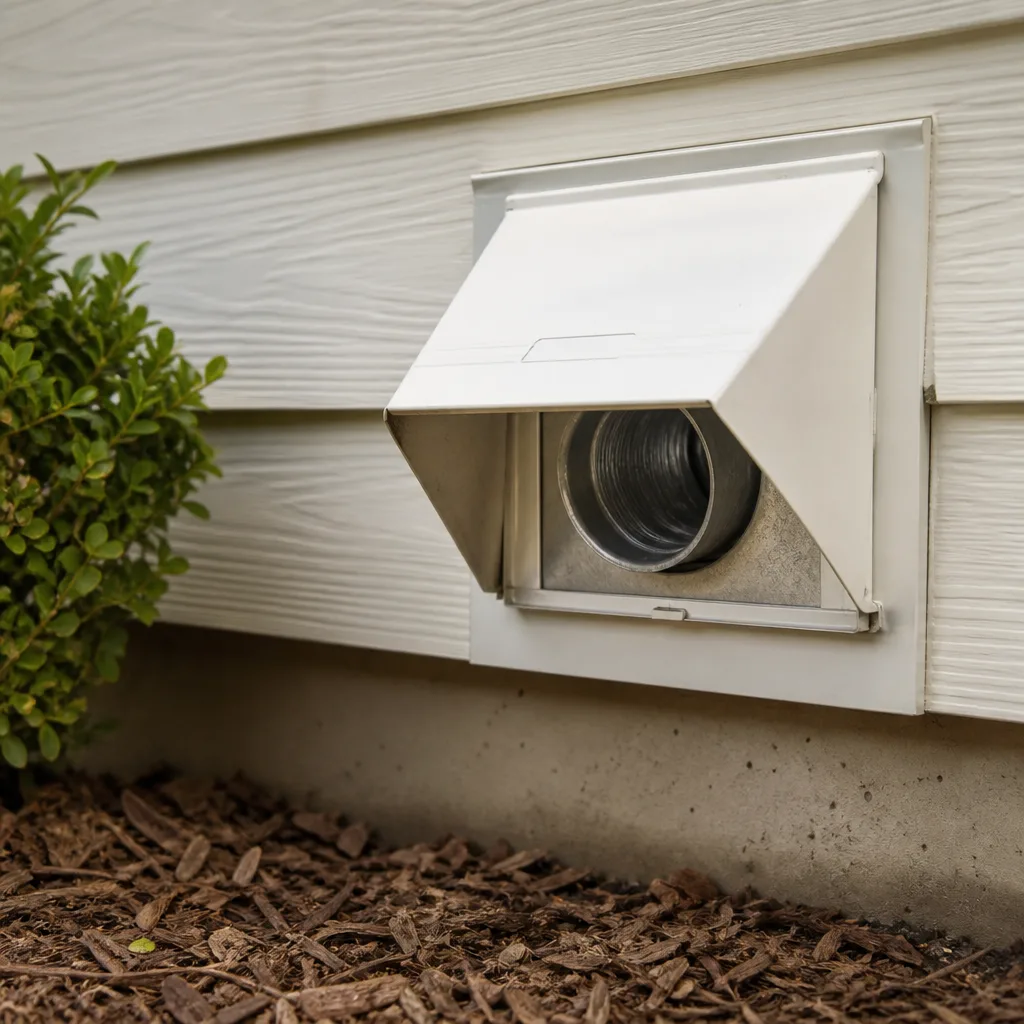
- Neglecting dryer vent cleaning in the same service window. Dryer vents share the same contamination source - lint and moisture - and the same fire risk if neglected. The Dryer Vent Cleaning in Leesburg page explains why bundling these services with the same contractor ensures consistent documentation and accountability.
- Assuming new homes are clean. New construction in Leesburg communities like Kincora and Woodland Park often contains significant construction debris in ducts - drywall dust, insulation fragments, fasteners. Builders’ “duct cleaning” is typically a cursory vacuum of registers. Independent cleaning before occupancy is advisable.
When to Call a Professional
Call a professional when you can see debris at registers, when airflow is noticeably uneven between rooms, when your HVAC filter loads faster than manufacturer specifications suggest, or when you’ve completed renovation work that generated dust. For more guides & resources on maintaining your system, explore our blog. In Leesburg’s climate, with humid summers that can promote microbial growth in poorly ventilated systems, an annual inspection is prudent for homes with basements or crawl space ductwork.
Do not attempt to clean your own ductwork. The plenum and duct runs contain edges that damage flexible cleaning tools, and disturbing accumulated debris without proper negative-pressure extraction can worsen indoor air quality. For dryer vents, the fire risk from improper reassembly exceeds any savings from DIY effort.
CleanRun Air Duct Cleaning Leesburg offers free estimates in Leesburg. Call (571) 487-7204 to schedule a walkthrough, receive a written price before any work begins, and get a documented photo record of every duct run - included as standard on every job.
Frequently Asked Questions
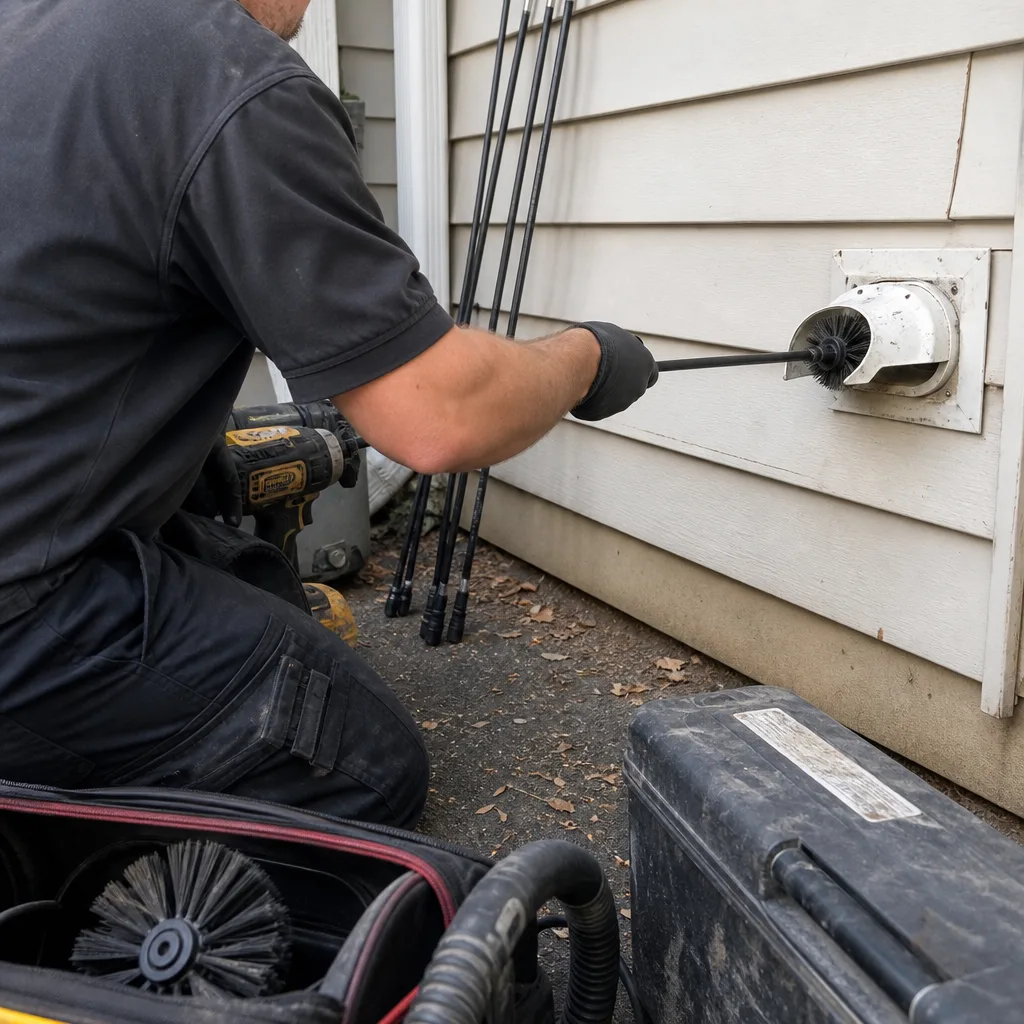
Whole-system air duct cleaning in Leesburg typically ranges from $400-$700 for homes with 10-14 duct runs, and $800-$900 for larger homes with 18+ runs or multiple HVAC systems. Prices below $300 generally indicate omitted scope, per-vent pricing that will increase on arrival, or shop-vacuum equipment insufficient for the job. Call (571) 487-7204 for an exact quote - estimates are free, and the price is written before work starts.
Low quotes usually exclude components that a complete cleaning requires: the plenum, return duct runs, register removal and hand-cleaning, or HEPA-filtered exhaust. The contractor may also use portable shop vacuums rather than negative-pressure extraction systems. Ask for a line-item scope comparison to identify what each bid actually includes. CleanRun provides a Free Second Opinion on any written estimate.
Request before-and-after photographs from inside every duct run, delivered as part of your job record - not shown on a screen and then deleted. Since 2013, CleanRun has included a Documented Photo Record on every visit as standard. If a contractor cannot or will not provide this, the work is unverified.
Every 3-5 years for typical residential systems, or sooner after renovation, pest intrusion, or if occupants have respiratory conditions aggravated by particulate matter. In Leesburg, homes near active construction or with dirt-road access may need more frequent attention due to higher ambient dust loads. The technician should assess this during the pre-job walkthrough, not prescribe a fixed schedule without seeing conditions.
No. NADCA membership certifies that a company employs at least one certified technician and carries insurance. It does not guarantee that the certified technician performs your job, or that the specific work meets ACR standards. Verify membership at nadca.com, then ask whether your assigned technician is certified and request to see their card.
Stop work and request third-party indoor air quality (IAQ) testing before any antimicrobial treatment. Mold identification requires laboratory analysis of species and concentration. In Leesburg’s humid climate, surface staining is often dust or oxidation, not active mold growth. Any contractor proposing immediate “mold remediation” without testing is selling treatment, not diagnosis.
The Bottom Line
Hiring an air duct cleaning contractor in Leesburg is a documentation exercise, not a price hunt. The five written items - itemized price, scope of work, equipment list, photo documentation policy, and warranty terms - separate accountable work from vacuum noise. Verify NADCA membership, but verify the specific technician too. Expect a 15-30 minute walkthrough that produces written notes, not a four-minute sales pitch. Compare bids line by line, not headline to headline. And recognize that Leesburg’s market, with its mix of historic homes, new construction, and rapid growth, attracts operators who rely on homeowner trust rather than written proof. The antidote is the same in every neighborhood from Downtown to Lansdowne: if it is not written before work starts, it does not exist.
Written by Tomas Reyes, Owner at CleanRun Air Duct Cleaning Leesburg, serving Leesburg since 2013.